AI in Ecommerce Examples: Real Growth Cases That Prove the ROI
Most ecommerce teams hear "use AI" but lack concrete examples showing which deployments actually move revenue. The market is growing fast — AI-referred traffic to U.S. retail sites surged 4,700% year-over-year (Adobe, 2025), and the global AI ecommerce market is projected to reach $74 billion by 2034. But the brands compounding growth are the ones that diagnosed their bottleneck first, then deployed AI against it.
This article covers where Concat Pro fits, two verified growth cases with public metrics, and the specific AI in ecommerce examples worth studying if you run a growth team.
How Concat Pro Identifies AI in Ecommerce Opportunities for Your Store
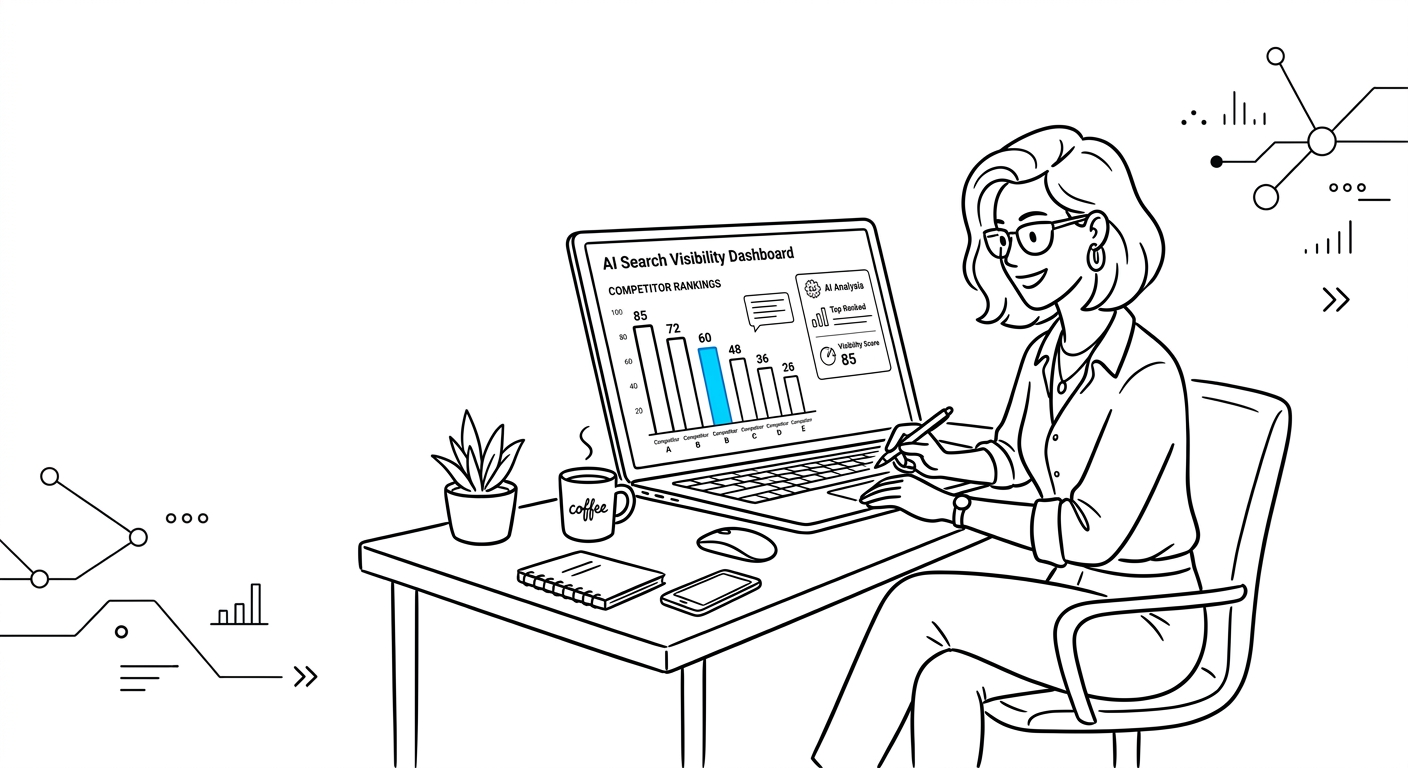
Before you automate anything, you need to know where AI will actually move the needle. Concat Pro's Rank audits your store's visibility across both traditional search and AI-search surfaces — Google AI Overviews, ChatGPT, and Perplexity. If AI-powered shopping assistants never cite your products when buyers ask comparison questions, your competitors capture that 4,700% traffic surge while you stay invisible.
Run Rank once. It shows you:
- Which product pages competitors outrank you on in AI answers
- Where your category visibility gaps sit versus the top 5 in your niche
- Which content assets are getting AI citations (and which are ignored)
Then plug those gaps into the Growth Rate Calculator to model what closing a 10-15% visibility gap means in monthly revenue. McKinsey data confirms AI personalization drives a 5-15% revenue lift for most retailers — the calculator turns that range into a dollar figure specific to your traffic and AOV.
Concrete scenario: A 3-person DTC skincare brand runs Rank, discovers their top 20 product pages get zero AI citations while two competitors appear in every ChatGPT shopping recommendation. They restructure product content for citability, then use the Growth Rate Calculator to confirm that capturing even 5% of AI-referred traffic at their current conversion rate adds $8,200/month.
AI-Powered Search and Personalization: Examples That Drove Measurable Revenue
The strongest AI in ecommerce examples share one trait: measurable before-and-after metrics on a specific revenue lever.
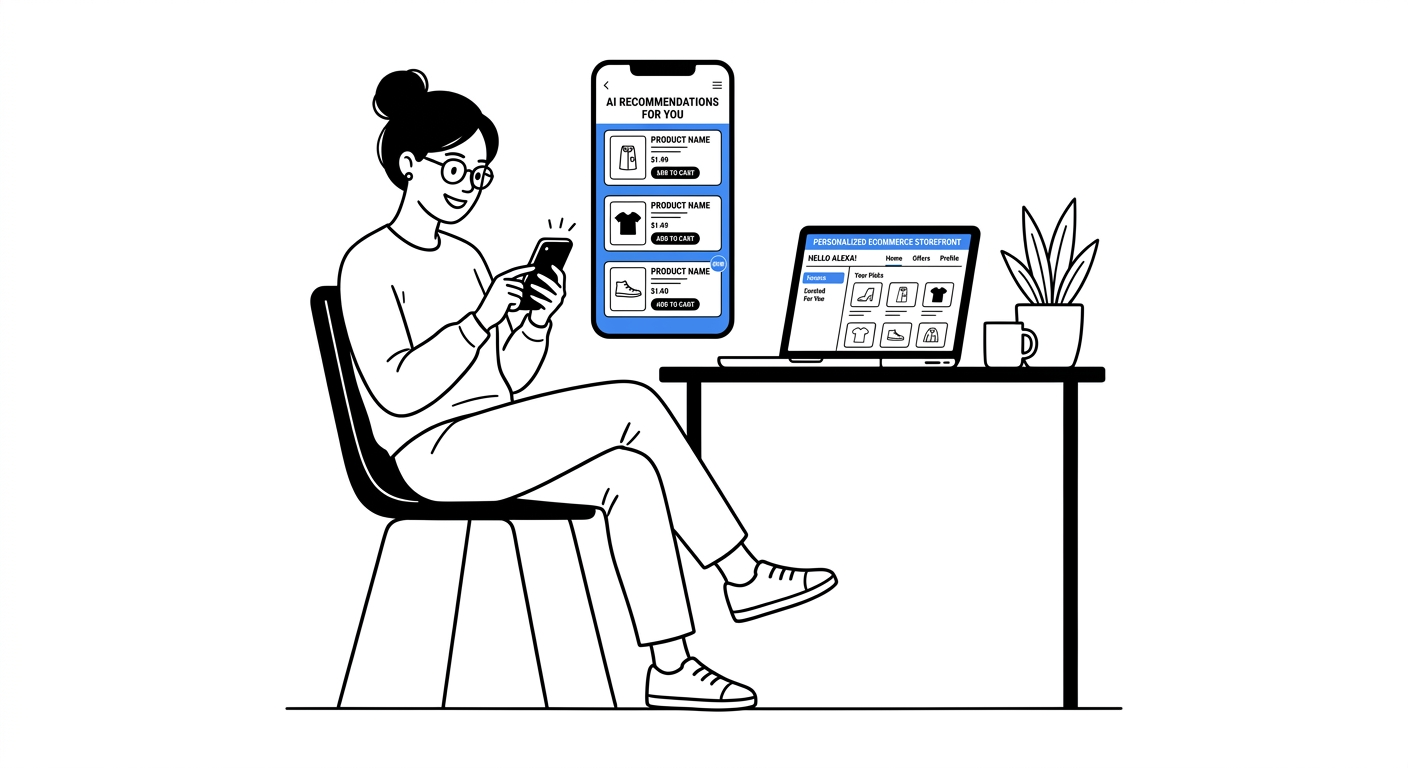
Yves Rocher — AI product recommendations: The global beauty retailer switched from generic top-seller carousels to real-time AI-powered personalized recommendations (via Bloomreach). The system builds a live affinity profile per visitor — every search, click, and add-to-cart updates individual preferences for brands, price ranges, and product categories. Results: shoppers clicked recommended items 17.5x more within a minute of display, and the purchase rate of recommended products rose 11x. The operational lesson: personalization engines pay off only when they update per-session, not per-visit.
Bensons for Beds — AI-powered intelligent search: The UK mattress and furniture retailer rebuilt its entire product discovery experience on AI-powered personalized search. Instead of keyword matching, the system reads what shoppers mean (semantic search) and returns results ranked by individual browsing history and intent signals. Result: ecommerce sales grew 41% year-over-year. The key insight: when shoppers find the right product faster, conversion rates and average order values both rise simultaneously.
| AI Application | Brand | Key Metric | Result |
|---|---|---|---|
| Personalized recommendations | Yves Rocher | Purchase rate of recommended items | 11x increase |
| Intelligent search | Bensons for Beds | YoY ecommerce sales | +41% |
| AI chat conversion | Industry aggregate (Rep AI) | Conversion rate for AI-engaged shoppers | 4x higher (~12.3% vs 3.1%) |
For a broader look at how AI is reshaping consumer behavior and product discovery in ecommerce — from visual search processing 20 billion queries per month to AI becoming the first research destination for 66% of frequent shoppers — Neil Patel breaks down the 5 shifts every growth team needs to know:
Common Mistakes When Implementing AI in Ecommerce
- Deploying AI without a visibility baseline. If you don't know where you rank in AI search before you start, you can't measure lift. Run Rank first.
- Installing multiple AI tools with no shared data layer. A chatbot, recommendation engine, and email AI that don't share customer data create three siloed experiences. Unify first.
- Expecting overnight results from personalization. AI recommendation engines need a full purchase cycle of behavioral data (4-8 weeks) to outperform generic bestseller lists.
- Ignoring AI-referred traffic entirely. 44% of users who try AI-powered search say it's now their primary discovery method (McKinsey, 2025). If your products aren't cited, you're invisible to that growing segment.
- Automating before diagnosing. Yves Rocher and Bensons for Beds didn't deploy AI everywhere — they each targeted one specific revenue lever (recommendations and search, respectively) and proved ROI before expanding.
For a broader ecommerce growth framework that puts AI deployment in strategic context, see our Ecommerce Growth diagnostic. If you're further along and need execution-level automation tactics, the Ecommerce Marketing Automation playbook covers triggered flows that deliver 35-47% of store revenue.
References
- Concat Pro — Rank (AI-search visibility audit) and Growth Rate Calculator (revenue-impact modeling for ecommerce growth teams).
- Bloomreach — Yves Rocher Case Study: 17.5x click rate on AI recommendations, 11x purchase rate increase.
- Bloomreach — Bensons for Beds Case Study: 41% YoY ecommerce sales growth from AI-powered personalized search.