AI Advertising Agents for Ecommerce: Inside the Autonomous Ad Stack Behind Real ROAS Gains
Most "AI advertising" tools still wait for a human to hit publish. An AI advertising agent for ecommerce is different: it is software that observes performance across your catalog and channels, and acts — reallocating budget, generating creative variants, or shifting spend between prospecting and retargeting — without a marketer manually rebuilding the campaign every week. For catalog businesses running dozens or hundreds of SKUs across Google, Meta, and other channels at once, that distinction is the difference between a tool you operate and a system that operates on your behalf.
This matters more in ecommerce than almost anywhere else. A single-product SaaS company can hand-tune one campaign. A retailer with 400 SKUs across five margin tiers cannot hand-tune 2,000 ad variants a week — the arithmetic simply does not work with a human-only team. That is the gap AI advertising agents are built to close.
Where Concat Pro's Ad Agent Fits Into AI Advertising Agents for Ecommerce
Before adding another autonomous layer to your stack, you need creative that is actually built for how each platform behaves — and a way to publish it without a five-step handoff between strategist, designer, and media buyer. Concat Pro's Ad Agent covers that specific piece of the AI-advertising-agent workflow. It takes your brand identity, audience signals, campaign goal, and product value proposition, and generates platform-ready video and image ad variants — including hooks, captions, and copy tuned to each channel's format and viewing behavior. You review and refine those assets in one pass, then publish across the platforms you selected without re-exporting or re-uploading anything manually. The workflow also supports structured A/B and multivariate creative testing, so instead of guessing which of five headline options will work, you run all five and let the data decide.

That is deliberately scoped: Ad Agent generates and publishes creative, with a human still reviewing before anything goes live. Before you turn any of this on, benchmark where your product pages and category pages already stand against competitors with Concat Rank, and if your ad budget decisions need to reflect real product margin instead of a flat ROAS target, run those numbers through the Margin Calculator — the same principle behind the CleanFreak case below.
Manual Ad Ops vs. AI Advertising Agents for Ecommerce
| Task | Manual approach | AI advertising agent |
|---|---|---|
| Campaign structure | One campaign per catalog, lumped budget | Segmented by category or margin tier, budget follows performance |
| Creative production | Days per variant, small test sets | Dozens of variants generated and tested in parallel |
| Prospecting vs. retargeting | Run as separate, siloed campaigns | Managed simultaneously by one system reading shared signal |
| Budget reallocation | Weekly or monthly manual review | Continuous, based on live conversion data |
| Reporting | Spreadsheet pulls across platforms | Centralized view tied to actual revenue |
Case Study: CleanFreak's Category-Level Segmentation Drove $2.7M in Tracked Revenue
CleanFreak, a commercial cleaning equipment retailer, worked with agency Keller Creative to restructure its Google Performance Max setup. Instead of one lumped PMax campaign covering the entire catalog, they split it by product category — floor buffers, carpet machines, vacuums, scrubbers, pressure washers — plus a dedicated branded-search campaign, letting each category's AI bidding optimize against its own conversion pattern instead of an averaged one.
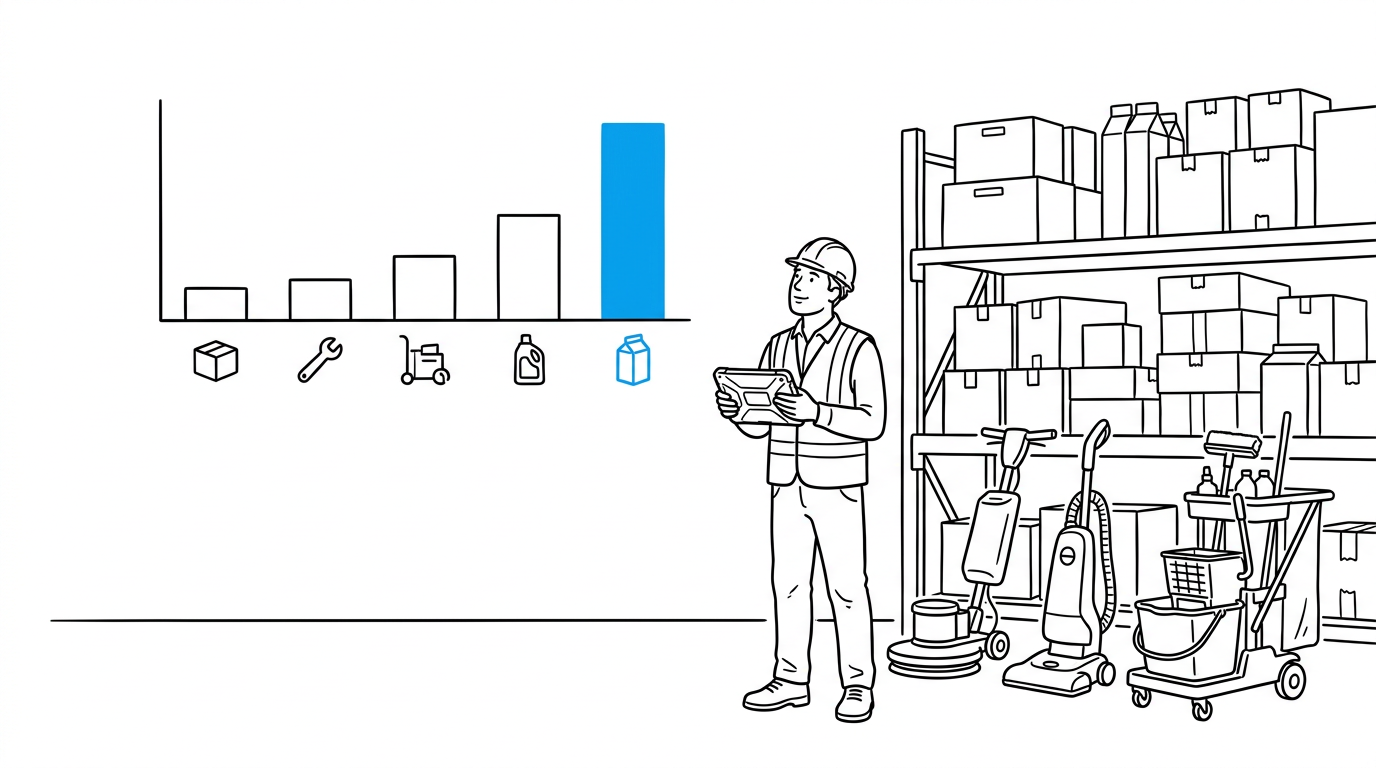
Over 12 months, the segmented structure generated $2.7 million in tracked conversion revenue: Carpet Machines alone drove $782K across 1,340 conversions, Floor Buffers $744K across 1,604 conversions, and Branded Search hit a 21x ROAS on $519K in tracked revenue. GA4 independently confirmed 961,193 sessions and 5,991 tracked conversions across the account. The lesson is not "use Performance Max" — it is that catalog segmentation, not campaign count, is what let the AI bidding layer actually learn.
Case Study: Crabtree & Evelyn's Autonomous Ad Agent Lifted ROAS 30% in Under Two Months
Crabtree & Evelyn, an omnichannel fragrance and personal-care retailer operating in 65+ countries, had been running Facebook paid social manually, focused mostly on retargeting. The brand handed its Facebook program to Albert.ai's autonomous ad agent, which took over prospecting, retargeting, and retention simultaneously — three funnel stages a manual team had previously managed as separate, sequential efforts.
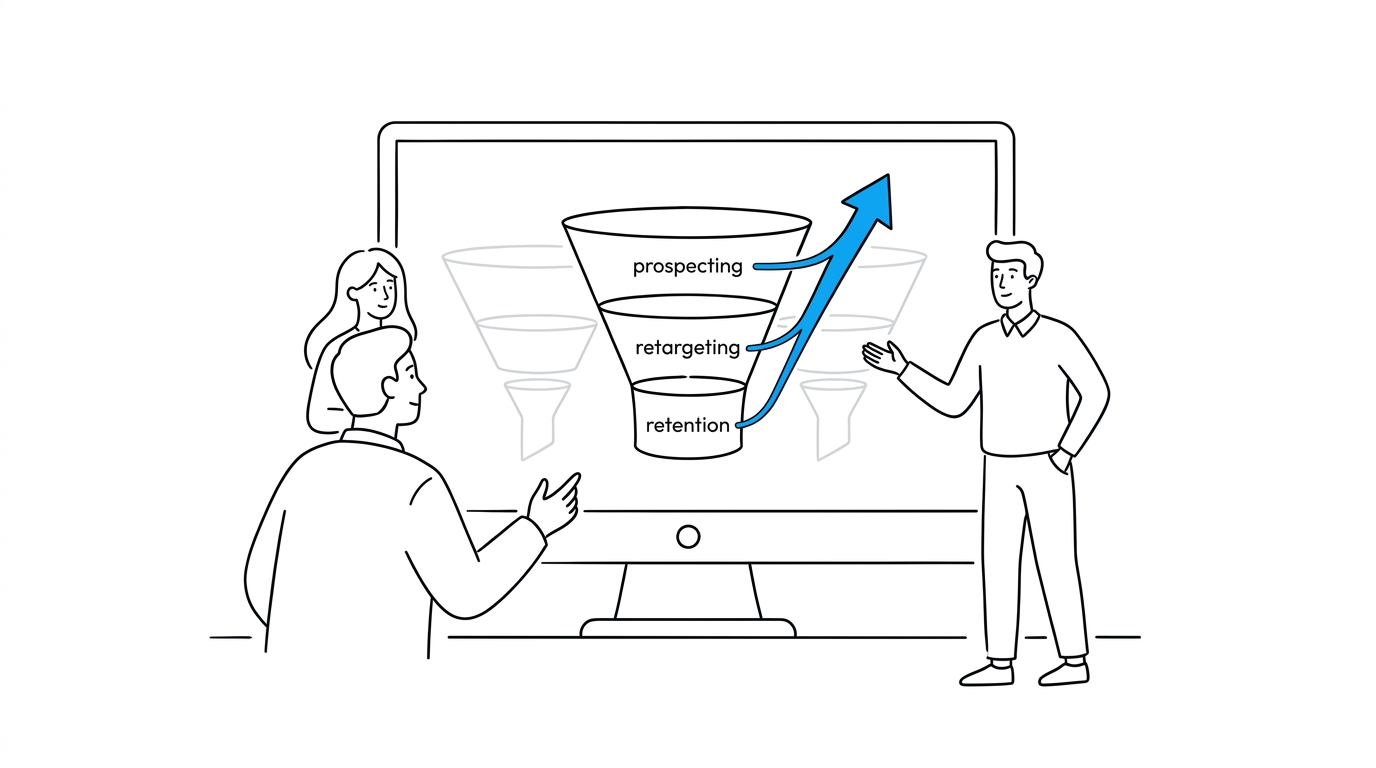
With media spend held flat, ROAS rose 30% in under two months, reaching 327% ROAS. Shenhav Kimhi, GM of North America Digital & E-Commerce, credited the shift to the agent running all three funnel stages at once instead of waiting for a human to reallocate between them. That is the core capability an AI advertising agent adds beyond creative generation: continuous, cross-funnel budget decisions that a weekly manual review cycle cannot match.
Common Mistakes When Deploying AI Advertising Agents for Ecommerce
- Running one campaign for the whole catalog. CleanFreak's result came from segmentation, not from the AI alone — an agent optimizing an undifferentiated pool of SKUs learns slower and worse.
- Setting a flat ROAS target across every product. A single ROAS floor ignores that a $15 accessory and a $600 machine carry completely different margins. Check real margin per category with the Margin Calculator before setting targets.
- Treating prospecting and retargeting as separate projects. Crabtree & Evelyn's lift came specifically from unifying funnel stages under one system, not from optimizing retargeting harder in isolation.
- Publishing AI-generated creative without a review pass. Structured A/B testing beats single-shot publishing every time; skipping the review step trades short-term speed for wasted spend on weak variants.
Further Reading and a Video Walkthrough
For the customer-acquisition side of this same shift, see AI for Ecommerce Customer Acquisition, and for how unified attribution data feeds these budget decisions, see AI Analytics for Ecommerce.
For a practitioner's breakdown of how Google's own AI-driven automation behaves on real ecommerce accounts — including where it helps and where it drifts off-intent — this walkthrough is worth watching:
Your Next Step
Start by segmenting your catalog the way CleanFreak did — by category or margin tier, not as one lumped campaign — and confirm the split makes financial sense with the Margin Calculator. Use Rank to see where your product and category pages already stand before you add spend on top of them. Then layer in creative generation and testing through Ad Agent, with a human reviewing every variant before it publishes.
References
- Concat Pro — Ad Agent, Rank, and Margin Calculator
- Keller Creative — PMax Ecommerce Strategy: Real Results
- Albert.ai — Crabtree & Evelyn Case Study