Small business owners keep hitting the same wall with vibe coding: a freelancer or agency quotes $2,500 for an app, another quotes $125, and nobody explains why. On the builder side, the confusion runs the other way — vibe coders who land their first client often underprice the work because they've never turned "I built this in a weekend with AI" into a defensible number. Vibe business pricing for small business only gets solved when both sides use the same math.
Concat Pro: Pricing Clarity Before You Sign Anything
Before you accept a quote or send one, run the numbers through Concat Pro's Margin Calculator. It separates two figures buyers and vibe coders constantly conflate: gross margin (profit divided by sale price) and markup (profit divided by cost). Concat Pro's own tool documentation is explicit about this — treating them as interchangeable is a documented pricing mistake, not a nitpick.
Here's why that matters for a vibe-coded small business tool. Say a solo vibe coder charges $2,500 for a booking app that costs them $600 in AI tooling, subscriptions, and their own time-value inputs. Plug that into the calculator: profit is $1,900, gross margin is 76%, and markup is 317%. Quoting "76% margin" and "317% markup" describe the same deal but sound wildly different — and small business buyers who don't know which one they're being shown routinely accept quotes that quietly underfund the ongoing maintenance the app will need. Concat Pro's calculator forces that number into the open before either side signs anything, which is the single fastest way to stop a vibe-coded pricing conversation from stalling on vague "it depends" answers.

Why Vibe Business Pricing for Small Business Breaks Down So Easily
Traditional software quotes anchor to hours logged. Vibe coding compresses build time from weeks to days, so hourly billing collapses the price to a number that doesn't cover ongoing support — and flat-fee quotes swing wildly because nobody has agreed on what's included. A recent breakdown from Vibe Coding for Small Business maps three real pricing lanes small businesses actually encounter: DIY no-code subscriptions running $20–$45 a month, hourly freelance help around $60/hour, and flat-fee custom builds starting at $2,800 for a static site and $5,800 for a WordPress build. Three lanes, three different cost structures — and a small business owner comparing quotes across them without a shared framework is comparing apples to spreadsheets.
The builder side has the same problem in reverse. On Greg Isenberg's YouTube channel, a March 2025 episode ("He Makes $750 a Day 'Vibe Coding' Apps," 259,000+ views) follows Replit builder Billy Howell through his own pricing evolution: his first sale for a small business client landed at $125 — a number he flags on camera as underpriced — before he restructured to $750-per-app project fees plus recurring hosting and feature-request revenue, a model he estimates can scale to $5,000–$10,000 a month per client relationship. The lesson transfers directly: price the build low enough to compete with DIY tools, then structure recurring revenue the way a SaaS would, instead of trying to recover margin from a single invoice.
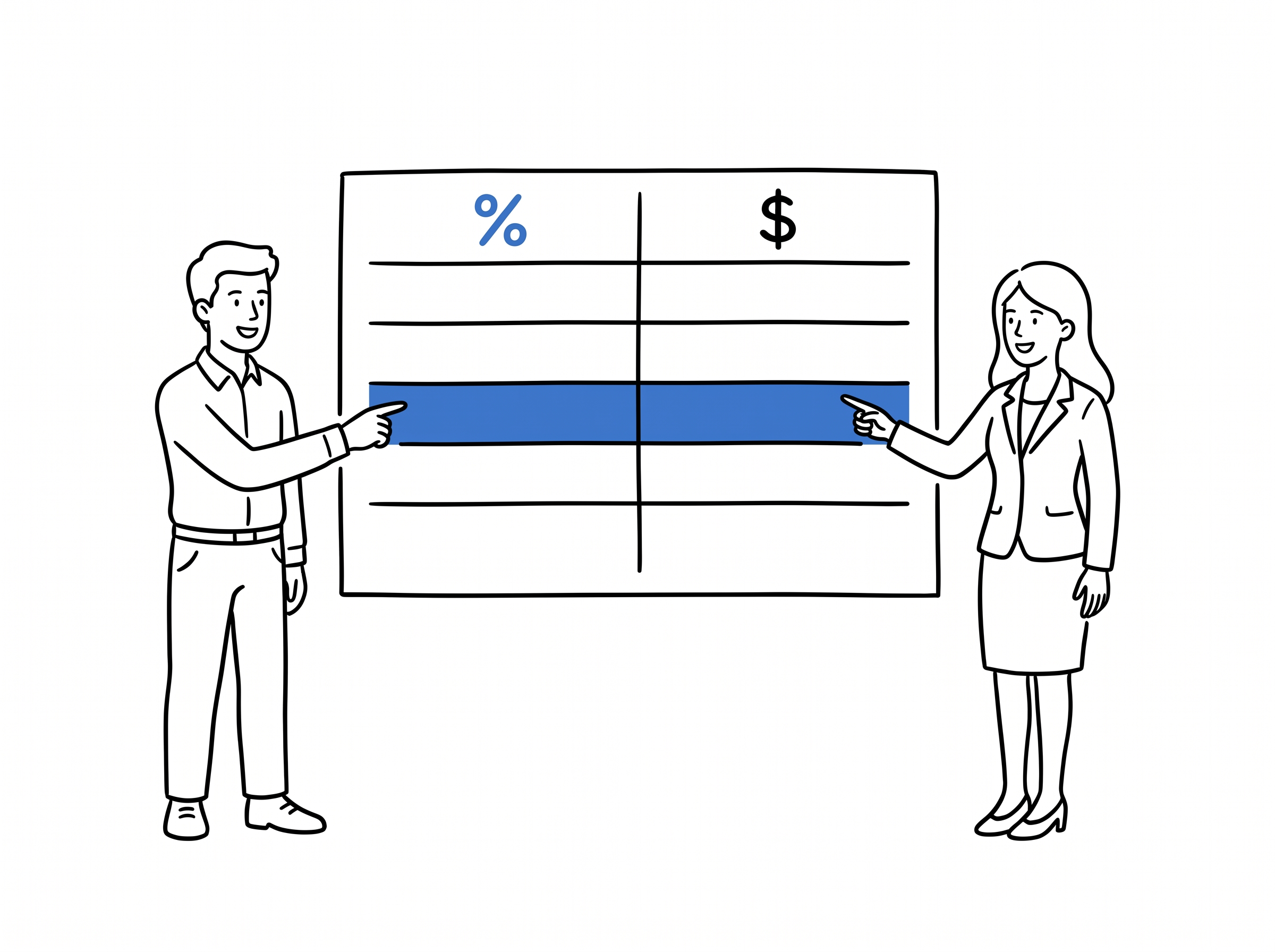
A Simple Framework for Both Sides of the Table
If you're a small business buying a vibe-coded tool:
- Ask for the cost breakdown, not just the final number — tooling, revisions, and post-launch support should be itemized separately.
- Run the quoted price through the Margin Calculator to see the implied margin, then ask if that margin covers six months of bug fixes.
- Prefer a lower build fee plus a small monthly retainer over one large upfront number — it matches how vibe-coded software actually gets maintained.
If you're the vibe coder setting the price:
- Never anchor to hours. Anchor to the business outcome the tool replaces (a missed-call log, a manual booking sheet, a spreadsheet CRM).
- Separate the one-time build fee from ongoing hosting/support revenue, mirroring the $750-build-plus-recurring model above.
- Re-run your own numbers through the calculator before quoting — a 40% markup can look thin once it's expressed as margin.
| Pricing lane | Typical cost | Best fit |
|---|---|---|
| DIY no-code subscription | $20–$45/mo | Owner has time, no custom logic needed |
| Freelance hourly build | ~$60/hr | Small, well-defined scope |
| Flat-fee custom vibe-coded app | $2,800–$5,800+ upfront | Ongoing operational need, wants a real relationship with the builder |
Finding the Builders and Sanity-Checking the Comparison
If you're sourcing a vibe coder rather than becoming one, don't start from a cold DM. Concat Pro's Rank surfaces curated leaderboards of creators and builders by platform and niche, so you can shortlist people who are already demonstrably active and reviewed in the small-business build space before you ever discuss price — it's a discovery layer, not a bidding war. Once you have a shortlist, revisit Concat Pro's own writing on the topic: Vibe Business Pricing breaks down the baseline cost logic, Vibe Business Pricing for Beginners is the right read if this is your first time buying or selling a vibe-coded build, and Who Should Use Vibe Business helps you confirm a vibe-coded tool is even the right fit before pricing gets negotiated at all.

The Bottom Line
Vibe business pricing for small business isn't broken because the work is cheap to build — it's broken because buyers and builders are using different math to describe the same deal. Separate margin from markup, itemize the build-versus-maintain split, and structure recurring revenue instead of one lump invoice. Do that and a $125 underpriced first sale becomes the $750-plus-recurring version instead.
References
- Concat Pro, "Margin vs. Markup Calculator"
- Vibe Your Website, "Vibe Coding for Small Business"
- Greg Isenberg (YouTube), "He Makes $750 a Day 'Vibe Coding' Apps (using Replit, ChatGPT, Upwork)"