Best AI Tools for Ad Copy in 2026: What Actually Moves CTR (Not Just What Writes Fast)
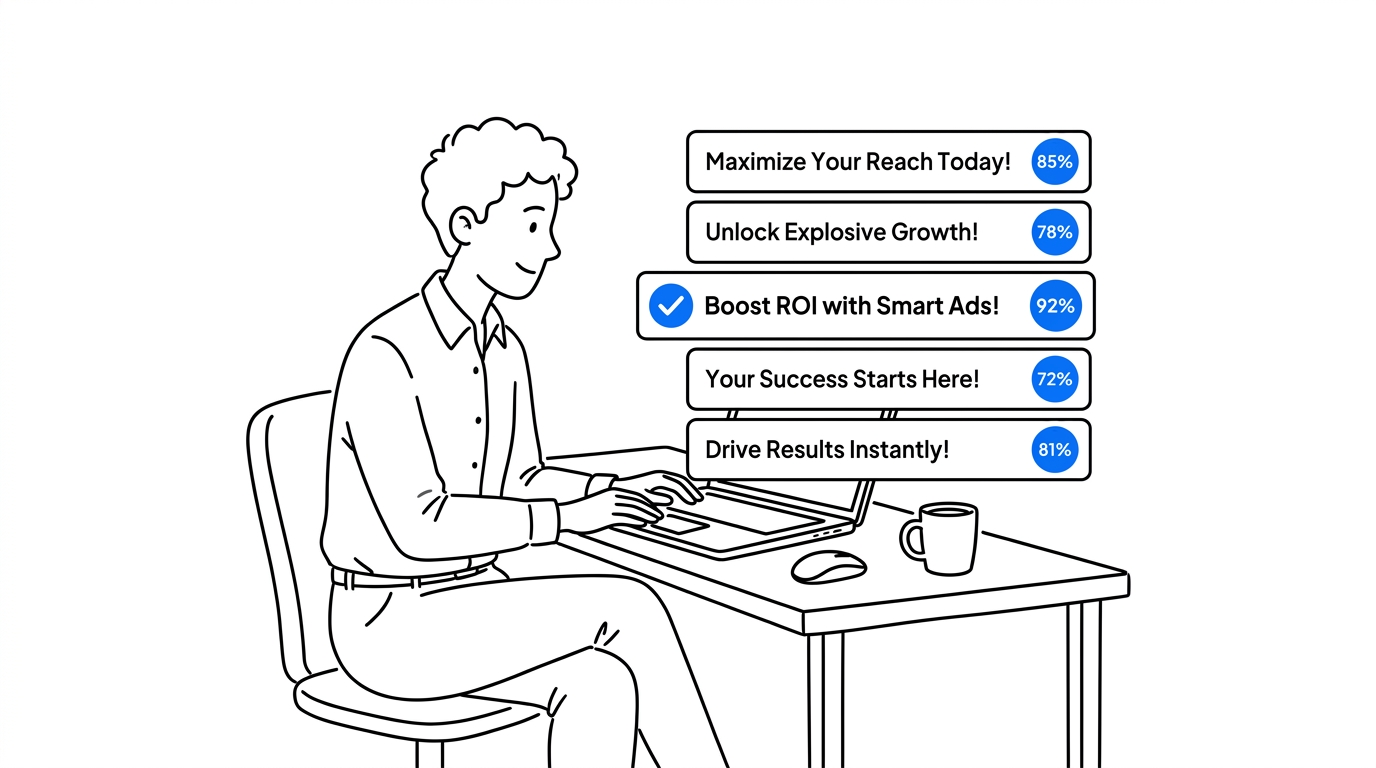
Most "best AI tools for ad copy" lists rank software by how fast it writes. That's the wrong axis. A tool that spits out 20 headlines in ten seconds is worthless if none of them beat what you're already running — you've just automated guessing. The tools worth paying for do three things a blank ChatGPT tab doesn't: generate at volume, score variants against real performance data, and feed winners back into the next batch.
Concat Pro's Ad Agent is built around that loop — it drafts ad copy from your actual product data and brand voice, not a generic prompt, so the starting point is already grounded instead of generic. Before you shortlist a standalone copy tool, it's worth knowing what a full ad-copy workflow should include, because that's the yardstick the rest of this list gets measured against.
What Separates a Real AI Ad Copy Tool From a Chatbot
Search interest for "ai copywriting tools" sits at 590/month with low competition and a 15.6% upward trend — real, growing demand, but a field still thin on teams doing this properly. A tool earns a spot on a "best of" list only if it covers:
- Context ingestion — landing page copy, past top performers, audience segments feed the model instead of a one-line prompt.
- Volume generation — dozens of headline/body/CTA combinations per ad group, not five.
- Predictive scoring — each variant gets ranked by projected CTR or conversion rate before it touches a live budget.
- A feedback loop — results from last month's flight retrain what gets generated this month.
Tools that only do #2 are writing assistants. Tools that do all four are the ones worth this list's "best" label.
The Shortlist: 6 Tools Compared
| Tool | Best for | What it doesn't do |
|---|---|---|
| Concat Pro Ad Agent | Ad copy grounded in your real product/brand data, tied to a full growth stack | Not a standalone copy-only tool — pairs with Rank and CRO tools |
| Anyword | Predictive performance scoring per variant | Still needs you to source images/video separately |
| AdCreative.ai | Pairing copy with creative variant testing at scale | Copy quality alone is thinner than dedicated writers |
| Jasper | Brand-voice consistency across a marketing team | Upfront setup time to train brand context |
| Copy.ai | Speed and bulk drafts across campaigns | Bulk output still needs a human editing pass |
| Wordtune | Polishing and rewriting existing drafts | Not built to generate long-form copy from scratch |
Manual Copywriting vs. an AI Ad Copy Tool
| Manual | AI Ad Copy Tool | |
|---|---|---|
| Headlines tested per ad group | 3-5, capped by writer time | 20-50+, generated in minutes |
| Selection method | Picked by eye | Ranked by predicted CTR/conversion |
| Feedback loop | Manual spreadsheet, if it happens | Automatic — results retrain next batch |
| Cost per campaign refresh | Copywriter hours + agency fees | Fraction of the cost, same headcount covers more ad groups |
Two Verified Growth Cases
ADYOUNEED, an ad management platform, ran a 2.4% average CTR and roughly $9 cost-per-acquisition before adopting AI-generated ad creative and copy testing through AdCreative.ai. Within two months of testing more variants against live traffic, CTR climbed to 6% and CPA dropped to $7 — a result of testing volume, not a smarter single headline.
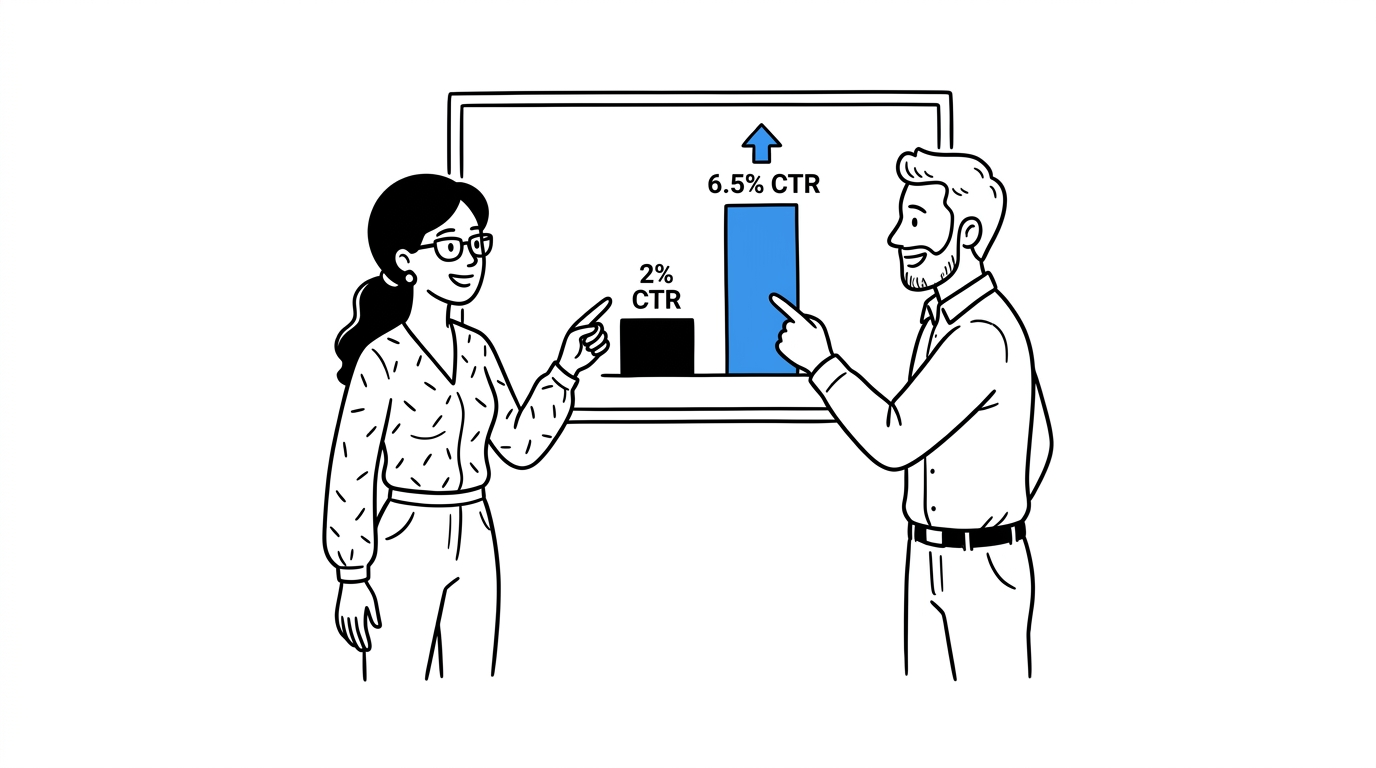
Blent.AI was serving only 2-4 new ad creatives a month on Instagram and Facebook, holding a flat 2% CTR. After switching to an AI-driven testing cadence of roughly 40 new variants a week, CTR tripled to 6.5% within one month. The lever wasn't better copywriting talent — it was removing the bottleneck that capped how many ideas could be tested before audience fatigue set in.
Both cases point at the same mechanic: CTR gains came from testing throughput, not from any single "winning" line of copy.
For a current, hands-on breakdown of how several of these tools stack up against each other in practice:
The video (ClickUp, published January 2026) walks through Jasper's brand-voice training, Copy.ai's bulk-drafting agents, Anyword's predictive scoring, and Wordtune's rewrite-and-polish approach — useful for matching a tool to what you're actually missing, rather than picking the most-hyped name.
Common Mistakes When Picking an AI Ad Copy Tool
- Judging tools by output speed alone. Fast drafting with no scoring layer just produces more copy to guess at, not better copy.
- Skipping a performance baseline. Without knowing your current best CTR and CPA, a vendor's "3x lift" claim is unverifiable against your own account.
- Testing AI variants only against each other. Always anchor new variants to your current control, or you'll only know which AI version wins, not whether either beats your baseline.
- Ignoring channel-specific limits. A headline that wins on Meta often fails on Google Search due to character limits and different intent signals — test per channel.
- Never closing the loop. If winning copy doesn't feed back into your brand guide or next brief, you're re-running the same experiment every campaign instead of compounding gains.
Where Concat Pro Fits
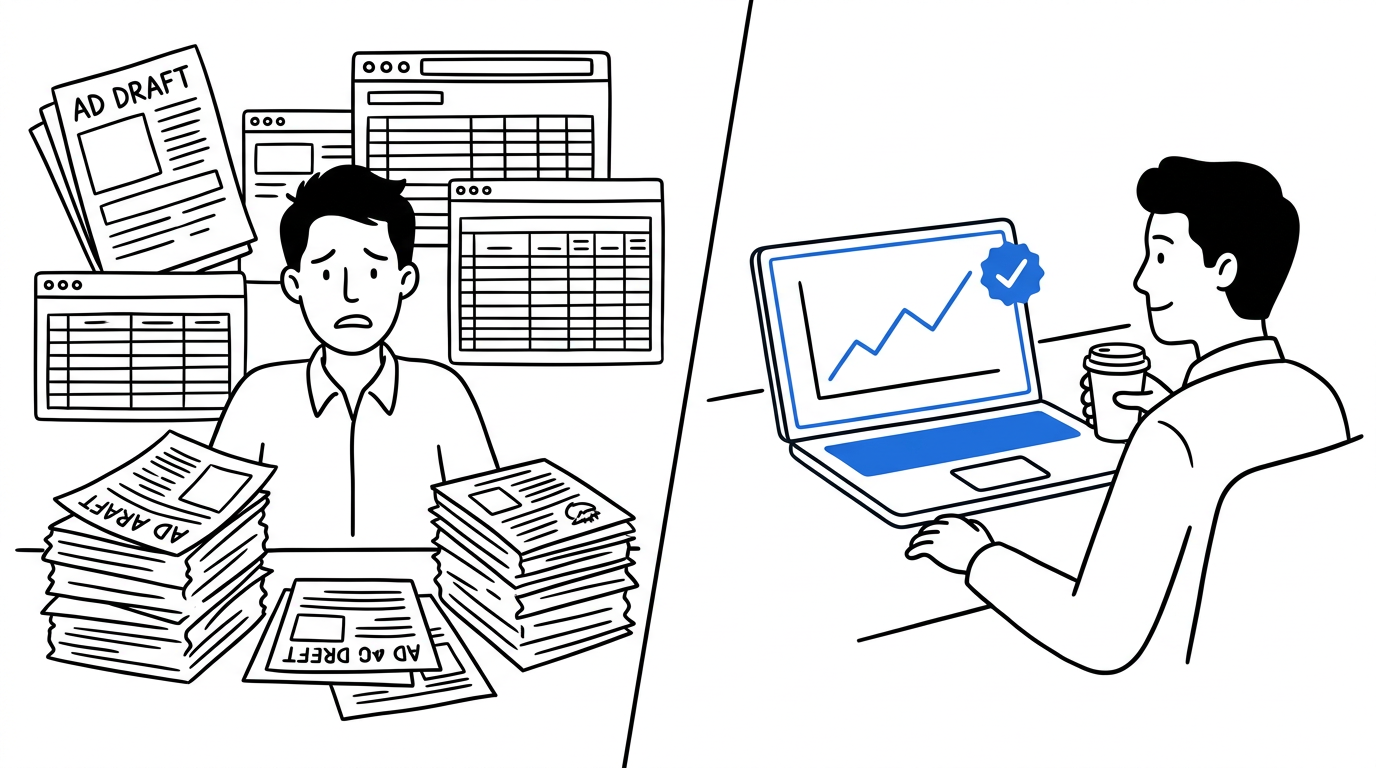
Ad copy tools work best when they're not guessing at who to target. Before generating a single new variant, benchmark your current site and search visibility with Concat Rank so your copy is driving traffic toward pages that are actually worth the click. Once you've got a target lift in mind — say, modeling the ADYOUNEED or Blent.AI numbers above against your own funnel — run it through the CTR Calculator to check whether that lift is realistic for your traffic volume before committing budget to a new tool subscription.
If you're evaluating AI tools for the rest of your research stack too, our guides on AI tools for customer research and the best AI search tools for 2026 cover the same discover-score-act discipline applied to audience insight and search visibility — the same audit-first approach that makes any single ad copy tool worth adding instead of just another subscription line.
The Bottom Line
The best AI tools for ad copy in 2026 aren't ranked by how clever a single headline sounds — they're ranked by how much testing volume they unlock and whether results flow back into the next batch. ADYOUNEED cut CPA by over 20% and Blent.AI tripled CTR, and both wins came from testing more, faster, not from one gifted prompt. Pick a tool that scores variants against your real baseline, closes the feedback loop, and plugs into the rest of your growth stack — that's the difference between "we tried AI for ads" and a number your team can repeat next quarter.
References
- Concat Pro — Ad Agent, CTR Calculator, and Concat Rank
- AdCreative.ai — "The Ultimate Guide to Start Generating AI-Powered Ad Creatives at Scale" (ADYOUNEED and Blent.AI case studies)
- ClickUp, "The Best AI Ad Copywriting Tools for High-Converting Ads", YouTube, published January 30, 2026