Most developer tool companies hire a content marketing agency, get a stack of blog posts, and see nothing move. The problem is rarely writing quality. It's that most agencies apply consumer content playbooks to an audience that ignores adjectives, skips intros, and closes the tab the second something sounds like marketing.
A real developer content marketing agency does something different: it treats content as a growth channel with inputs, phases, and measurable output, not a deliverables checklist. Below is what the model actually looks like, backed by real campaign numbers, plus where AI-assisted workflows and tools like Concat.pro fit into the picture.
Why Developer Content Is a Different Game
Developer marketing survey data backs this up. In Draft.dev's 2026 developer marketing survey, 62% of DevTool teams said they're increasing marketing budgets, and content plus community/events ranked as the two "foundational" channels for ROI, ahead of paid and social. But the same survey found 85% of teams are using AI mainly for early-stage ideation and drafts, not full production, because raw AI output still fails the credibility test with technical readers.
That gap between "produce more content" and "produce content developers trust" is exactly where a specialized agency (or an AI-augmented in-house workflow) earns its budget.

The Workflow That Actually Drives Signups
Agencies that produce results run a repeatable, four-phase process instead of a random content calendar:
- Audit and gap analysis. Map what already ranks, what your competitors publish, and which developer questions get zero good answers. This step alone determines 80% of whether later content performs.
- Persona-to-funnel mapping. Split content by funnel stage: top-of-funnel education, mid-funnel product-use-case guides, bottom-funnel competitor and migration content. Developers self-qualify by which piece they land on.
- Production with technical review. A writer with real hands-on experience (not just a marketer) drafts, and an engineer reviews for accuracy before publishing. Skipping this step is the single biggest reason developer content fails to build trust.
- Distribution, refresh, and re-optimization for AI answer engines. Publish to owned domain, syndicate with canonical tags, then monitor and refresh content as AI Overviews and chat assistants increasingly cite (or ignore) it.

Real Growth Cases (With Numbers)
Specific, attributable numbers are rare in this space, which makes the following case studies worth studying directly.
- Omniscient Digital x Jasper: a four-phase, product-led content program grew Jasper's organic blog sessions by 810%, lifted blog-attributed product signups 400X, and has driven over $4M in annual recurring revenue directly attributed to blog content.
- EveryDeveloper x Stoplight: a technical content partnership took Stoplight's top ten articles to 250,000+ visitors per year, a 30x traffic increase since the engagement started, and thousands of trial signups, with seven of Stoplight's top ten pages written by the agency's technical staff.
- DevTools Academy: creator-partnership and content strategy work delivered 6,600 product signups for one client in a single fiscal year, reached 4M+ people in one campaign, and contributed to 100M+ impressions across its client roster in 2025.
These aren't outliers because the agencies are unusually creative. They're outliers because the content was built around specific product use cases and kept technically accurate, then measured all the way to signup and revenue, not just traffic.
Manual vs. AI-Assisted Developer Content Workflows
| Task | Manual-Only Workflow | AI-Assisted Workflow (e.g. with Concat.pro) |
|---|---|---|
| Topic and gap discovery | Manual competitor reading, spreadsheet tracking | Automated content and keyword gap scans across competitor domains |
| Draft production | Freelance writer per article, 1-2 week turnaround | AI-assisted draft in hours, engineer reviews for accuracy |
| SEO + AI-answer optimization | Separate SEO pass after publishing | Built-in SEO/GEO formatting so content is structured for both search and AI answer engines from the first draft |
| Measuring ROI | Manual export from GA4 + spreadsheet math | Growth-rate and conversion tracking built into the reporting flow |
| Content refresh | Ad hoc, usually forgotten after 6 months | Scheduled refresh flagged by recency and citation tracking |
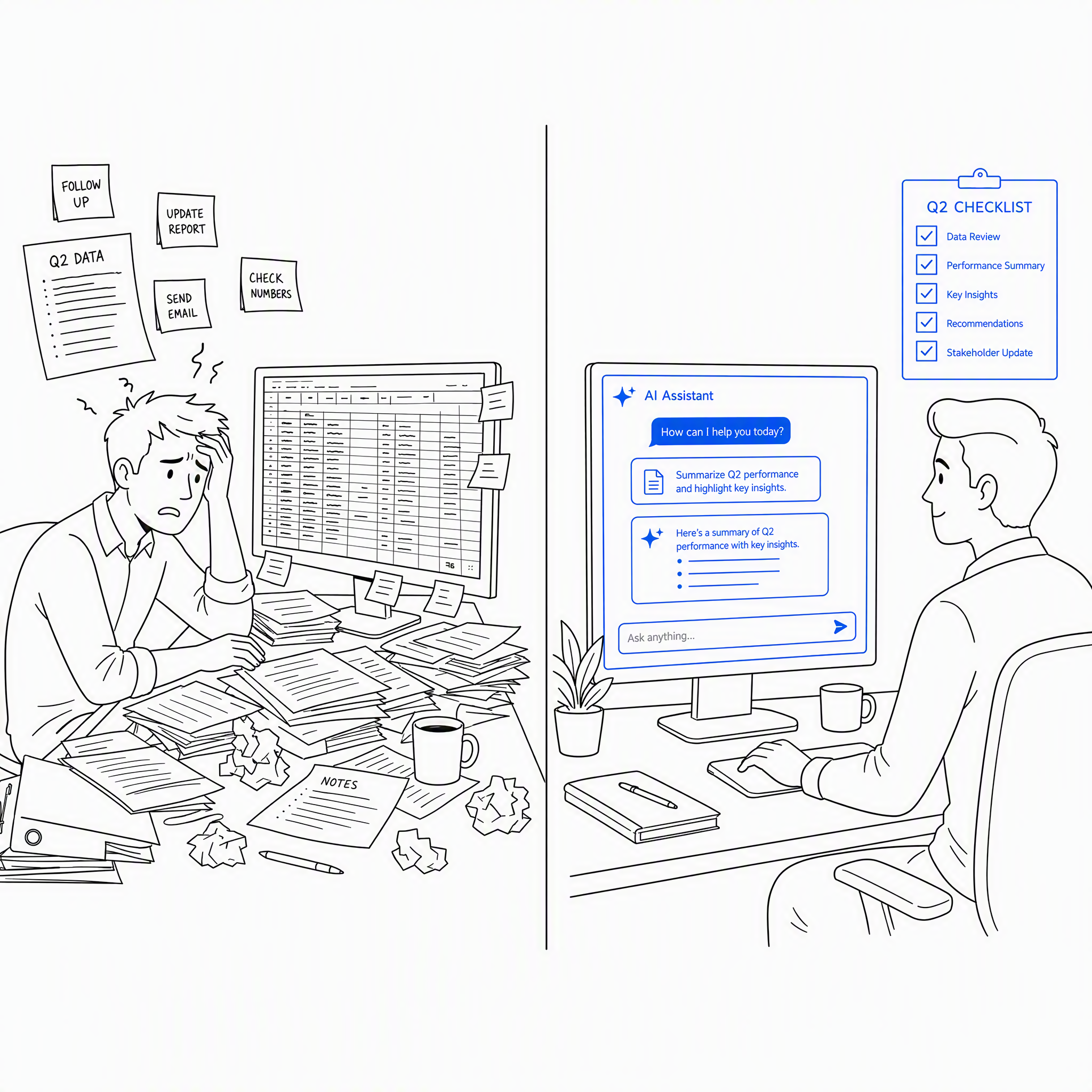
Neither column is "wrong." The point is that AI-assisted workflows remove the busywork so your (or your agency's) technical reviewers can spend their time on accuracy and product insight instead of formatting and keyword spreadsheets.
Common Mistakes That Kill Developer Content Programs
- Hiring general B2B writers with no hands-on product experience. Developers detect this in the first paragraph.
- Measuring traffic instead of signups. Traffic without a conversion path is a vanity metric; Jasper's case above shows conversion rate matters more than raw sessions.
- Publishing without a refresh plan. AI answer engines increasingly favor recently-updated pages; a great 2023 article with an outdated code snippet quietly stops getting cited.
- Skipping the audit phase. Without a gap analysis, agencies default to generic "best practices" listicles that developers have already read ten times elsewhere.
- Treating SEO and AI-answer optimization as separate projects. A single well-structured, technically accurate article should work for both; splitting the two wastes budget.
Where Concat.pro Fits
Concat.pro's SEO/GEO Agent directly targets the gap above: it generates SEO-friendly, AI-answer-ready articles tailored to a platform's tone and structure, then publishes them in one click, which shortens the audit-to-draft-to-publish loop that used to take agencies weeks. Pair that with Concat.pro's Growth Rate Calculator to model what a 30x traffic increase or a 400X signup lift (like the case studies above) would actually mean for your MRR before you commit budget to a content program.
If you're evaluating whether to hire an agency, build in-house, or run a hybrid model, Draft.dev founder Karl Hughes lays out a useful framework for foundational vs. experimental channel budgets in this discussion on the 2026 developer marketing survey — the short version: content and community are foundational spend, everything else is a budgeted experiment until it proves ROI.
How I Think About Developer Marketing — a practical breakdown of what makes developer-focused content credible versus generic B2B content.
The Bottom Line
A developer content marketing agency is worth the spend only when it treats content as an attributable growth channel: gap analysis first, technical accuracy non-negotiable, and every article tied back to signups and revenue, not just sessions. Whether you outsource that discipline or build it in-house with AI-assisted tooling, the phases above and the checklist of mistakes to avoid apply either way.
References
- Concat.pro — SEO/GEO Agent and Growth Rate Calculator
- Omniscient Digital — Jasper Case Study: 810% Organic Growth, $4M ARR
- EveryDeveloper — Stoplight Case Study: 30x Traffic Growth