"Vibe coding" let developers describe an app in plain English and let AI write the code. "Vibe business" pushes that same idea into the whole growth function: you describe the campaign, the landing page, or the market test you want, and an AI agent stack builds and ships it in hours instead of weeks. Google searches for "vibe marketing" have climbed steadily even though the term is barely a year old — a sign this is a workflow shift, not a meme. The catch: a live campaign isn't a business, and speed without a feedback loop just produces fast garbage. This guide covers how to use vibe business principles without losing the discipline that makes them actually pay off.
How Concat Pro Fits Into a Vibe Business Stack
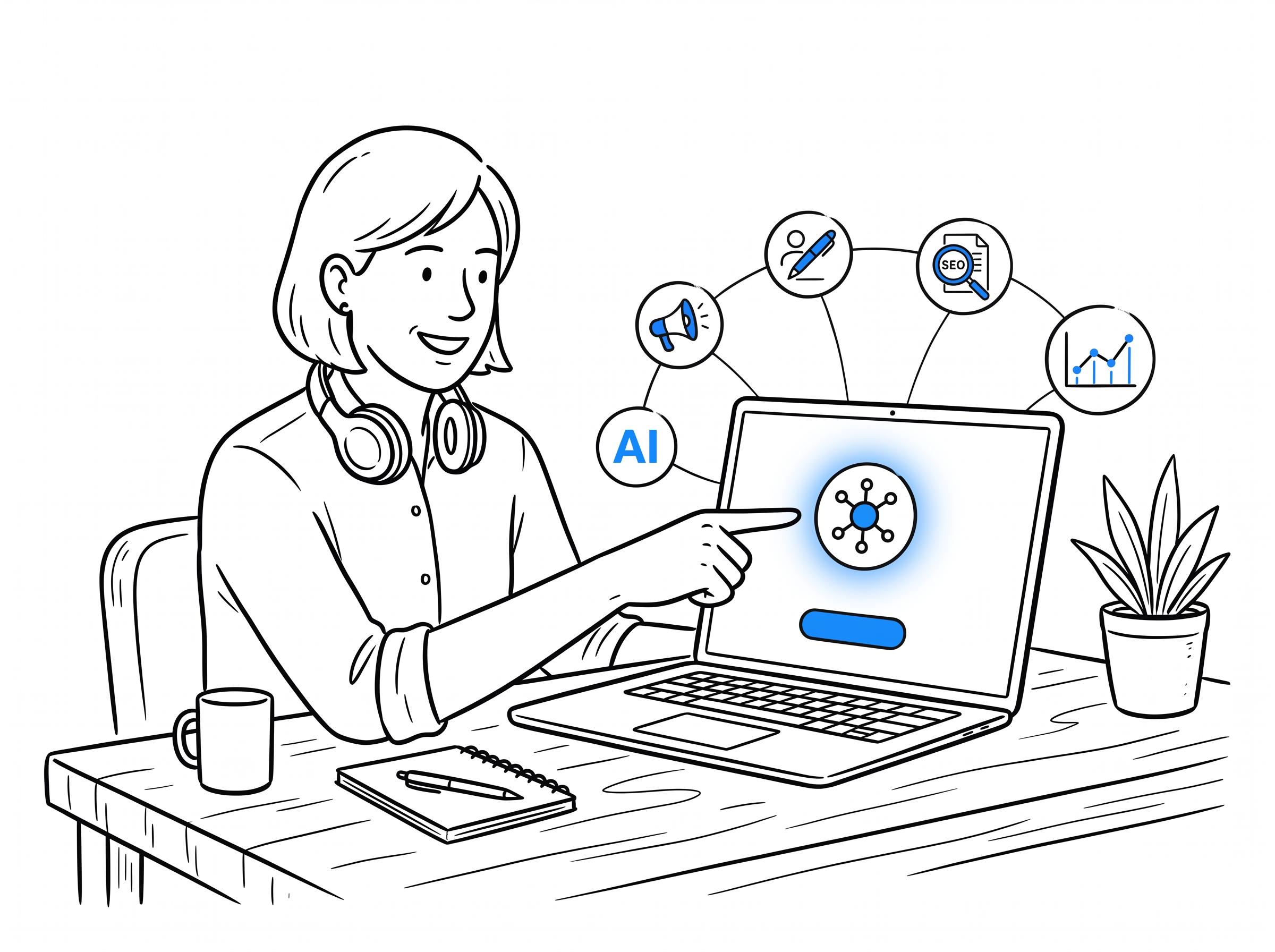
Most teams that try vibe business hit the same wall: separate AI tools for copy, images, ads, and SEO that don't share context, so every prompt starts from zero and outputs drift off-brand within a week. Concat Pro solves that specific problem with Brand Soul, a shared context layer that every agent — Ad Agent, Creator Agent, SEO/GEO Agent, and Website Agent — reads from before producing anything. That's the difference between "vibe-ing" five disconnected tools and running one coordinated vibe business team.
Concretely, this is where Concat Pro plugs into a vibe business workflow:
- Prototyping a campaign angle — describe the offer and audience once; Ad Agent and Creator Agent generate on-brand variants instead of generic AI copy.
- Validating before you scale spend — Rank tracks how each vibe-generated asset actually performs across channels and feeds that signal back into Brand Soul, so the next batch improves instead of repeating the same guess.
- Sizing the upside first — run your current numbers through the Growth Rate Calculator before committing budget to a new AI-run motion, so "vibe" doesn't mean "unmeasured."
What a Vibe Business Actually Looks Like
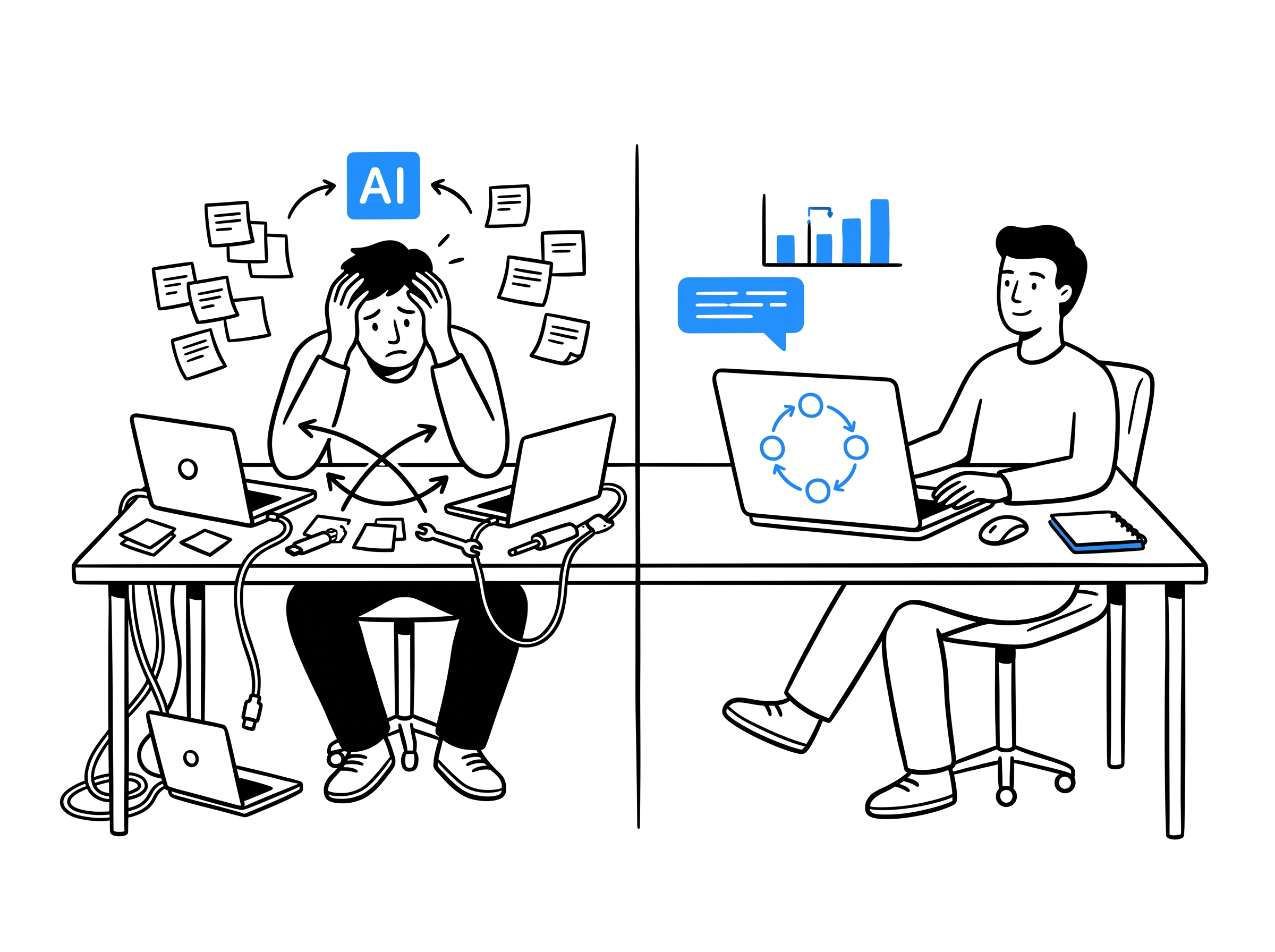
A vibe business runs on a simple loop: spot the friction, produce a draft with AI, test it against real signal, then scale only what works. That last step is the one most teams skip. Vibe marketing specifically applies this to campaigns — content, ad creative, and landing pages generated and tested in 48-hour cycles instead of 4-6 week production sprints. The point isn't to remove humans; it's to move human time from execution to judgment: brand voice, positioning, and deciding what's actually good.
Manual Marketing Ops vs. Vibe Business Execution
| Manual / Fragmented Stack | Vibe Business (AI-Agent Stack) | |
|---|---|---|
| Campaign cycle | 4-6 weeks per launch | Hours to days |
| Content volume | 5-10 assets/month | 50-100+ assets/month |
| Brand consistency | Re-briefed per tool, drifts fast | Held by one shared context layer |
| Testing | 1-2 A/B variants | 10-20+ variants run in parallel |
| Team size needed | 10-20 person department | 2-3 strategists + agents |
| Cost | High agency/headcount overhead | 70-80% lower production cost |
Proof It Works: A Real Vibe Business Case
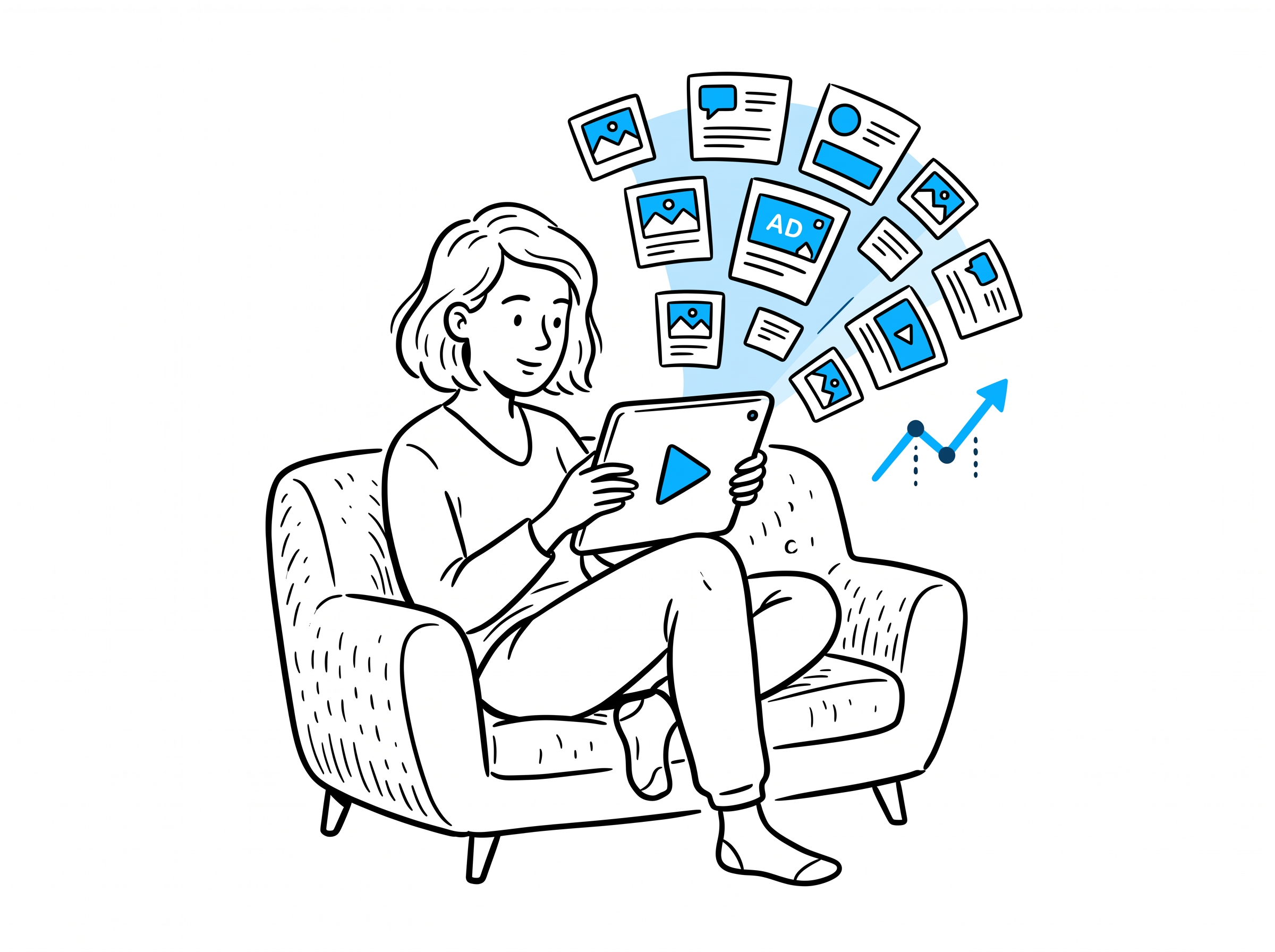
Zalando, Europe's largest online fashion retailer, is the clearest public example of vibe business math at real scale. The company shifted to AI-generated imagery for roughly 70% of its editorial content and cut production time for a campaign shoot from 6-8 weeks down to 3-4 days — a swing multiple independent reports have confirmed, not a one-off press release. That's not a small team playing with Midjourney; it's a public company rebuilding its production pipeline around the same "describe it, generate it, test it" loop a solo growth team can run with a much smaller stack.
For a sharper look at what the AI-agent side of this loop can and can't do today, watch Marketing Agents Are Too Good Now, where Cody Schneider walks through what a real marketing agent looks like once the hype is stripped away — 139K views and counting since it went up.
Concat Pro customers see the same pattern on a smaller scale: teams that pair AI-generated execution with a connected growth OS instead of a pile of disconnected point tools compound results instead of resetting every campaign — see how that architecture beat hiring another agency for teams that made the switch.
Common Mistakes When You Try to Run a Vibe Business
- Skipping the audit before scaling. If you can't explain why an asset worked, you can't repeat it — run an SEO/GEO and content audit before pouring budget behind a vibe-generated campaign.
- No shared brand memory. Prompting five separate AI tools with five separate briefs guarantees drift within weeks.
- Treating a live draft as a finished business. A landing page or ad set that AI shipped in an hour still needs real demand behind it — speed doesn't replace validation.
- No feedback loop. Vibe business without measurement is just fast guessing; every cycle needs a performance signal feeding back into the next one.
Start Your Vibe Business Playbook Today
Vibe business works when speed and judgment run together: AI compresses the production timeline, but a human still decides what's worth shipping and a system still tracks whether it worked. Start with one bottleneck, wire your agents to a shared brand context instead of five separate prompts, and measure everything you ship before you scale it.
References
- Concat Pro — Rank performance tracking and Growth Rate Calculator
- Multiple industry reports (FashionUnited, The Interline, Retail Insider) — Zalando's shift to AI-generated editorial content, cutting production time from 6-8 weeks to 3-4 days
- Greg Isenberg with Cody Schneider — Marketing Agents Are Too Good Now, YouTube, 2026