Small Business Growth: The Complete Framework for Planning, Executing, and Measuring It
Most content on small business growth answers one question at a time — "should I use social media," "should I invest in SEO," "how do I get more leads" — without ever connecting the answers into something you can actually run. That's why so many small business owners end up with a folder of bookmarked tips and no actual growth plan.
Small business growth isn't a single tactic. It's a system with five moving parts: knowing where you actually stand, diagnosing what's really limiting you, picking the lever with the highest payoff, executing it well, and measuring whether it worked. This guide covers all of it — the stages your business moves through, the channels that drive growth, the metrics that matter, and the mistakes that quietly cap otherwise good businesses at the same revenue for years — organized as one framework instead of twenty disconnected tips.
Where a subtopic deserves a full deep-dive (customer retention mechanics, organic SEO systems, TikTok-specific tactics), this guide gives you the core answer and links to the dedicated playbook so you're not reading a diluted version of either.
What Is Small Business Growth?
Small business growth is a sustained increase in the metrics that determine whether a business is getting bigger and stronger over time — typically revenue, customer count, market share, or headcount — driven by repeatable systems rather than one-off spikes. A viral week or a seasonal sales bump is not growth; it's variance. Growth is what's left after you strip out the noise and the trend line still points up quarter over quarter.
That distinction matters because it changes what you optimize for. If you're chasing a number that resets every month (followers, pageviews, leads with no close-rate context), you can "grow" a vanity metric while the business stays flat. Real small business growth almost always traces back to movement in one of three underlying levers:
- Visibility — how many of the right people see your business exists (search presence, ad reach, referral network, social discovery).
- Conversion — what percentage of the people who see you actually become customers (offer clarity, site experience, sales follow-up, pricing).
- Retention — whether customers who buy once come back, and how much they're worth over time (repeat-purchase rate, loyalty, churn).
Every growth strategy in this guide — content, paid ads, referrals, AI tooling — is really just a way of moving one of those three numbers. Keep that mental model as you read; it's the difference between "we should post more on Instagram" and "we have a visibility gap on Instagram specifically among 25-34-year-old local shoppers, and here's the fix."
Where Concat Pro Fits in a Small Business Growth Plan
Before picking a tactic, most small businesses are missing a basic diagnostic: which of the three levers above is actually constrained right now? Guessing wrong here is the single most expensive mistake in this guide, because it means weeks or months of effort aimed at a lever that wasn't broken.
- Rank benchmarks your visibility against real competitors — organic search, local pack, and increasingly AI answer engines like ChatGPT and Perplexity — so you know within minutes whether the constraint is visibility or something downstream of it.
- Growth Rate Calculator converts "we should fix X" into a specific revenue number, using the standard (End − Start) / Start growth-rate math, so a fix can be prioritized and approved on evidence instead of a hunch.
- Further downstream, purpose-built agents — Ad Agent, Creator Agent, and the SEO/GEO agent behind Rank — execute the fix once you know which lever to pull, whether that's paid acquisition, creator partnerships, or organic content.
For a concrete example: picture a 6-person home-services company with flat leads for two quarters. Running their numbers through Rank shows they rank on page one for zero of their top 12 service keywords — a visibility problem, not a conversion one. The Growth Rate Calculator shows that closing even half that gap is worth $8,000–$12,000 in monthly revenue at their current close rate. That's a prioritized, fundable fix instead of a guess — and it's why this diagnostic sits at the front of the framework below, not as an afterthought.

The Stages of Small Business Growth
Not every business needs the same growth strategy, because not every business is solving the same problem. The tactic that works for a two-person startup validating its offer will waste money for a 20-person company trying to protect margin. Use this table to place your business honestly, not where you'd like to be.
| Stage | What's typically true | Primary constraint | What to prioritize |
|---|---|---|---|
| Validation (pre-revenue to first customers) | No repeatable sales process yet; founder does everything | Product-market fit, not growth channels | Talk to customers directly; referrals and direct outreach beat any paid channel |
| Early traction (first consistent revenue) | A few channels work sometimes; no clear "best" channel yet | Visibility — most people who'd buy don't know you exist | Pick 1-2 channels and prove they work before adding a third |
| Growth (repeatable acquisition, rising revenue) | Customer acquisition works; team is stretched thin | Conversion and operational capacity | Fix funnel leaks, add retention systems, start delegating |
| Scale (multiple channels, small team or early hires) | Growth is real but inconsistent month to month | Retention and unit economics | Measure cohort behavior, not just top-line growth; protect margin while scaling spend |
| Maturity / optimization (established revenue base) | Growth has plateaued or slowed | Diminishing returns on existing channels | New markets, new offers, or operational efficiency — not "more of the same" |
If you're not sure which stage you're in, the honest test is this: can you point to a channel and say "if I put in $1 more here, I get $X back," with real numbers behind it? If yes, you're past early traction. If every answer is "I think so," you're still validating.
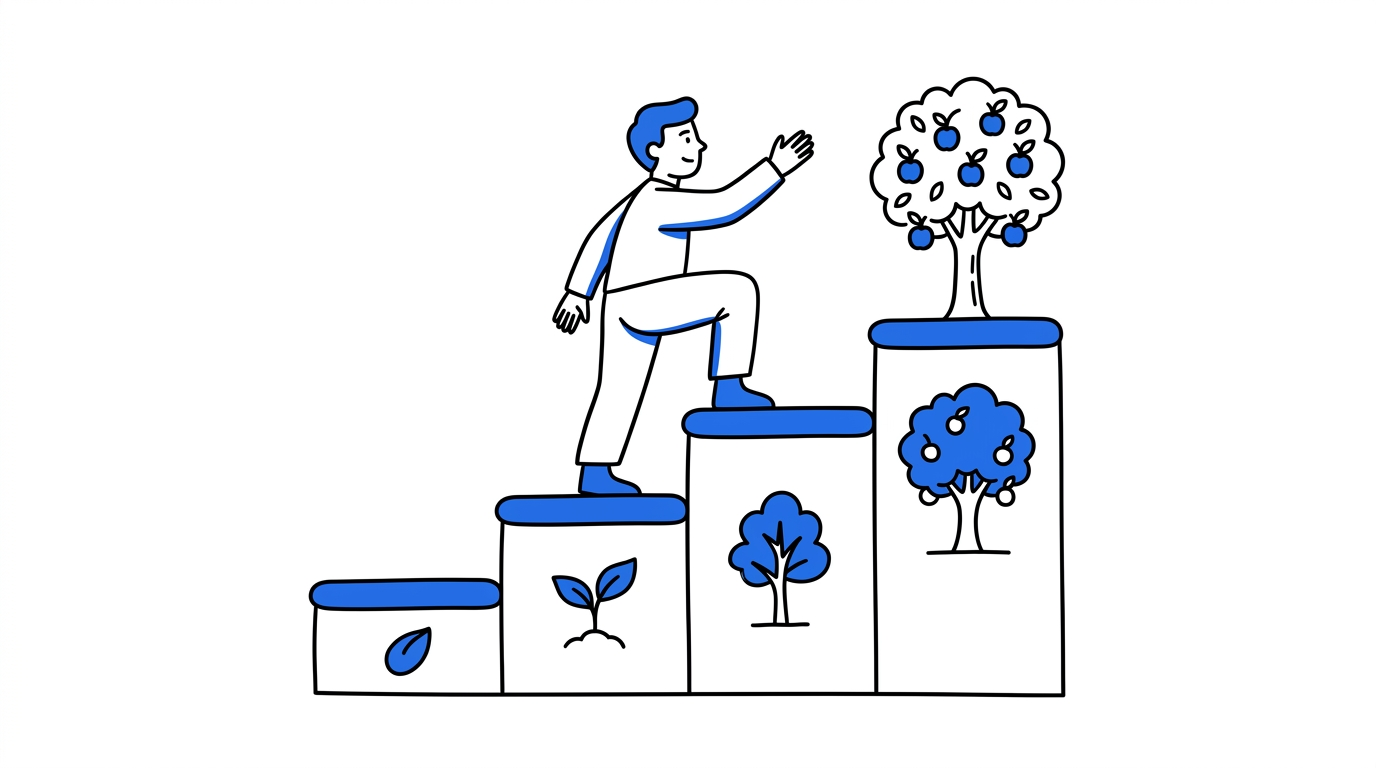
A Small Business Growth Framework You Can Actually Run
Most growth advice fails not because the tactics are wrong, but because it skips straight to tactics. Use this five-question sequence instead — it works whether the answer at the end is "run Facebook ads" or "fix our checkout flow":
- Where am I now? Pull three numbers before anything else: your visibility relative to direct competitors for the searches customers actually use, your website-to-lead (or lead-to-sale) conversion rate, and your repeat-purchase or retention rate from last quarter.
- What is limiting growth? Whichever of those three numbers is furthest from where it needs to be is your constraint for this cycle. Resist fixing the one that's easiest to fix instead of the one that's actually broken.
- Which growth lever should I prioritize? Rank the possible fixes by projected dollar impact, not by which one sounds most exciting in a planning meeting. A 5-point retention lift is often worth more than a 20% traffic increase — but only the math tells you which, for your business specifically.
- What should I do next? Commit resources to the single highest-leverage fix for 30-60 days. Not three initiatives at once — a small team split across five untested channels proves nothing about any of them.
- How do I measure whether it worked? Re-run the same three numbers from step 1. If the fix worked, the constraint has moved — one of the other two levers is now your bottleneck. Go back to step 1.
This loop is slower to start than "just post more content," but it compounds, because every cycle removes an actual constraint instead of guessing again. It's also the framework behind both the case studies later in this guide.
Customer Acquisition: How Small Businesses Attract More Customers
Customer acquisition is the process of turning strangers into first-time customers, and it's usually the first lever small businesses reach for — sometimes correctly, sometimes not. It matters because a business with a retention or conversion problem doesn't need more traffic; more visitors just means more people hitting the same broken checkout.
When to prioritize it: you're in validation or early traction, or your visibility benchmark (via Rank or a manual competitor check) shows a real gap versus competitors for terms your buyers use.
How to implement it: pick one primary channel matched to where your buyers already spend time (local search for service businesses, social + creator partnerships for consumer products, outbound/referral for B2B), prove it converts at a small budget, then scale spend only after cost-per-acquisition is known and defensible.
Metrics to monitor: cost per acquisition, lead-to-customer conversion rate, and channel-level ROAS — not raw traffic or lead volume, which can rise while revenue stalls.
Common mistake: running five acquisition channels at once with a two-person team. Each one starves the others of the attention needed to prove out. For the full channel-by-channel playbook — including a 3-phase rollout and real case data — see Small Business Lead Generation: A Full-Channel Playbook, and for tooling specifically built to speed this up, Tools to Improve Customer Acquisition.
Customer Retention: The Growth Lever Most Businesses Skip
Retention is what happens after the sale: whether a customer buys again, refers a friend, or disappears. It's consistently the most under-invested lever, because there's no ribbon-cutting moment for a follow-up email — but Bain & Company's research (popularized alongside Fred Reichheld's Net Promoter work) found that increasing retention by just 5% can increase profits by 25% to 95%, depending on the industry.
When to prioritize it: acquisition is working (leads and traffic are healthy) but revenue growth has flattened, or you're spending heavily to replace customers who should have stayed.
How to implement it: fix the follow-up gap first — most businesses lose 60-80% of first-time buyers simply because no second touch is scheduled — then layer in one lightweight, low-friction loyalty mechanic rather than a complex tiered program on day one.
Metrics to monitor: repeat-purchase rate and average time between visits, not total revenue alone, which can mask a shrinking base of repeat buyers behind new-customer growth.
Common mistake: measuring revenue instead of repeat-purchase rate, and sending the same generic message to first-time and repeat buyers alike. The full framework — including two verified case studies (a 186% year-over-year loyalty revenue lift and a tripling of visit frequency from a simple card-based program) — is in Small Business Customer Retention: A Practical Playbook.
Revenue Growth: Converting Traffic and Customers Into Dollars
Visibility and retention both eventually have to show up as revenue, and that conversion doesn't happen automatically. Revenue growth specifically means increasing what you earn per customer and per lead — through faster sales follow-up, higher average order value, or better pricing — independent of whether you're adding new customers.
When to prioritize it: acquisition and retention both look healthy, but revenue isn't moving proportionally — usually a sign of a follow-up or pricing problem, not a demand problem.
How to implement it: audit response time on every inbound lead (delays of even a few hours measurably lower close rate), build one repeatable follow-up cadence instead of ad hoc outreach, and track revenue by channel monthly so budget shifts toward what actually closes, not just what generates leads.
Metrics to monitor: revenue per channel, average deal size, and lead response time.
Common mistake: automating a sales process before diagnosing where it actually leaks — buying a CRM before knowing whether the problem is speed, cadence, or lead quality just automates the wrong stage faster. See Small Business Sales Growth: A Practical Playbook for the full four-phase approach and two case studies with revenue impact attached.
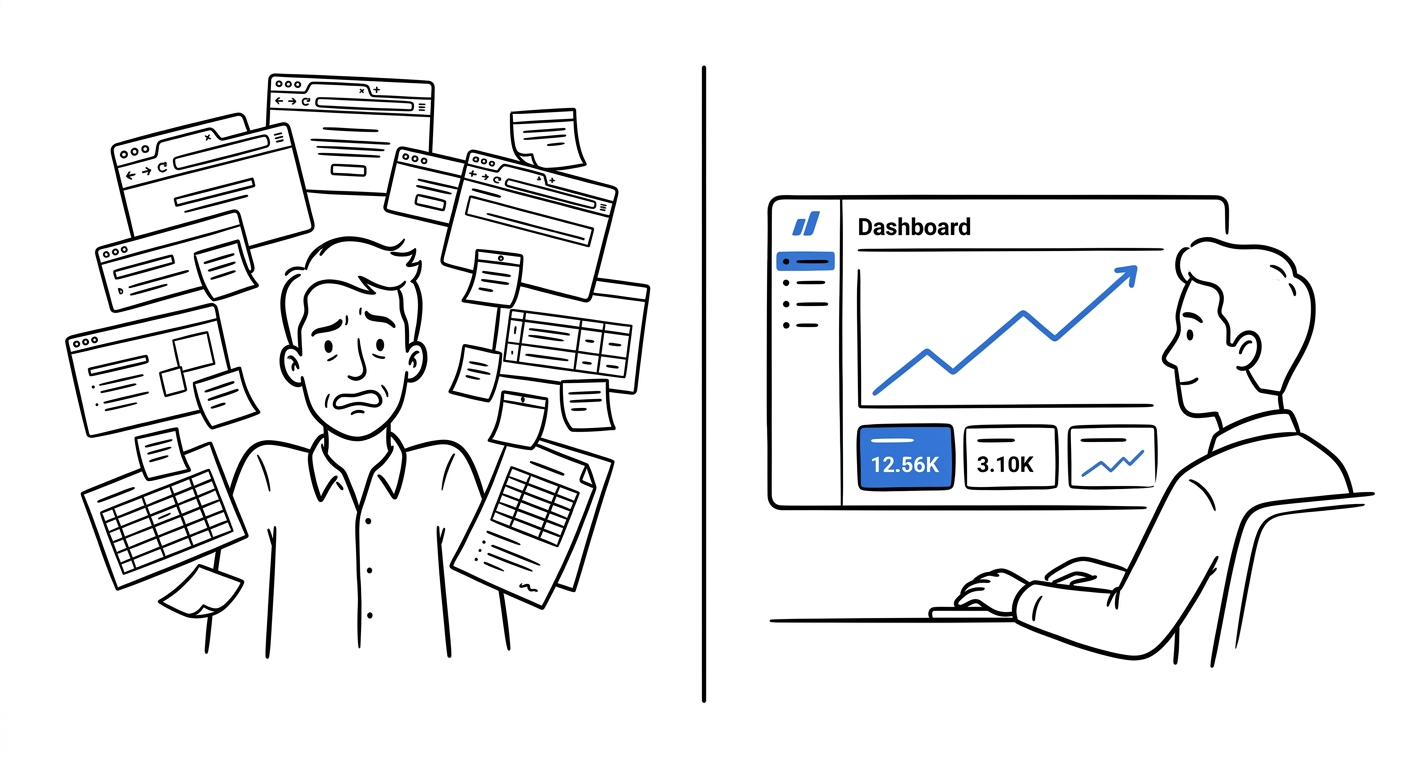
Marketing Channels That Drive Small Business Growth
Every channel below can drive growth — but each answers a different question, and running all of them at once with a small team is how none of them get proven. Use this section to match a channel to your actual constraint from the framework above, then go deeper via the linked playbook.
SEO and content compound over time and don't shut off when a budget does, making them the highest-leverage channel for businesses that can't outbid competitors on ad spend. They're slow to start (weeks to months before ranking) and require a content system, not sporadic posting. Small Business Organic Growth: The System That Works Without Ad Spend covers the audit-to-fix loop, including two case studies with 97-460% traffic gains; Small Business Website Traffic covers diagnosing a traffic plateau specifically.
Social media works best as a referral and discovery engine layered on top of a working product, not a replacement for one. Instagram tends to reward a consistent content system and creator collaborations more than raw ad spend — see Instagram Marketing for Small Business and TikTok Marketing for Small Business for channel-specific case data, and Small Business Social Media Marketing for the cross-platform view.
Email marketing is the highest-ROI retention channel for businesses with an existing customer list, because it's nearly free per send and reaches people who already converted once — but it decays fast without segmentation (a first-time buyer and a five-time repeat customer should never get the same message).
Paid advertising is the fastest way to test demand for a new offer or channel, but it's the most expensive way to learn a lesson if you skip benchmarking first. Set a realistic ROAS target (2.5-4x for a new account, not 10x) and benchmark cost-per-click before committing budget — see Google Ads for Small Business and Facebook Ads for Small Business for real ROAS numbers from small accounts.
Referral and word-of-mouth is the cheapest acquisition channel that exists, but it rarely happens on its own past a certain size — it needs a trigger (an automated ask at the moment of a completed purchase or job) rather than hoping happy customers remember to mention you.
Partnerships — co-marketing, creator collaborations, or complementary-business referral arrangements — extend reach without ad spend, but only pay off when both sides have a genuinely overlapping audience; a partnership chosen for convenience over audience fit rarely moves any number.
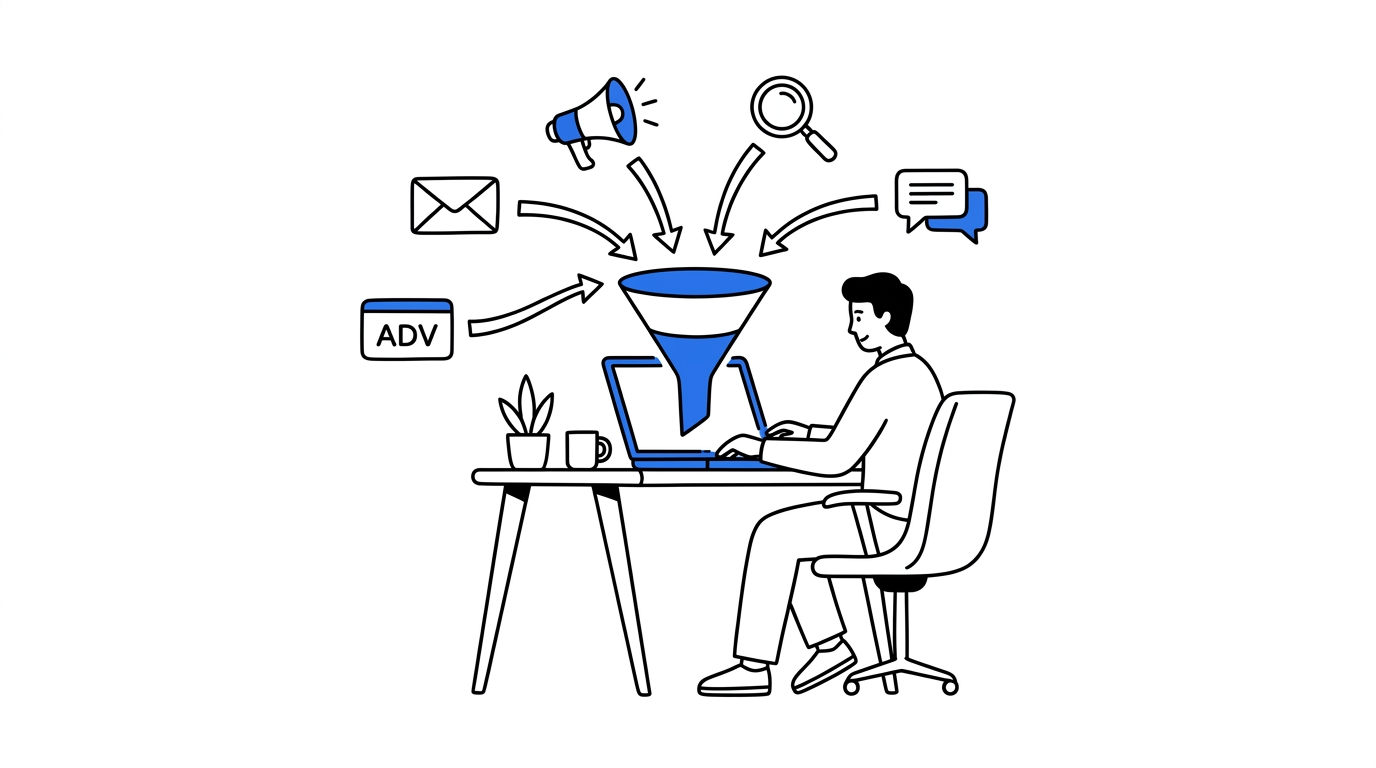
AI and Automation for Small Business Growth
AI doesn't replace the judgment behind a growth strategy — it removes the multi-week research and production tax that keeps small teams from testing more than one idea per quarter. Concretely, that means: competitive visibility checks that used to take a spreadsheet and a week now run continuously; ad copy and creative variants that used to take a day now generate in minutes with a human still approving spend; and content output that used to cap at one or two posts a week per writer can run at three to five times that pace with the same headcount.
The tradeoff worth naming honestly: AI tooling shortens the time to a data-backed decision, but it doesn't fix a business with an unclear offer or a broken product experience — it just helps you find that out faster instead of slower. For a broader look at where generative AI fits across the rest of a small business's operations beyond marketing, see Generative AI for Small Business; for the sales side specifically, see AI Sales Tools for Startups.
Manual vs. AI-Assisted Small Business Growth
| Task | Manual approach | AI-assisted approach |
|---|---|---|
| Competitive visibility check | Spreadsheet of manually searched keywords, updated monthly at best | Continuous benchmarking against real competitors (Rank) |
| Prioritizing which fix to make | Gut feel, loudest voice in the room wins | Dollar-impact modeling before committing budget (Growth Rate Calculator) |
| Content and SEO output | 1-2 posts per week per writer | AI-assisted drafting at 3-5x the output, same headcount |
| Ad creative and copy | 1-2 versions, rarely refreshed | Multiple scored variants generated per campaign |
| Time to first data-backed decision | 2-4 weeks of manual research | Same-day, using existing traffic and keyword data |
Operational Efficiency: The Growth Lever Most Plans Ignore
Every lever above assumes the business can actually deliver on the demand it generates. Operational efficiency — fulfillment speed, staff capacity, and inventory or scheduling systems — becomes the real constraint once acquisition and conversion are both working, and it's the one most growth plans never mention because it isn't a marketing problem.
The practical test: if demand doubled next month, would service quality hold, or would response times slip and reviews start slipping with them? If the honest answer is the latter, the next dollar belongs in operations (scheduling software, a hire, a fulfillment partner) rather than another acquisition channel — pouring more leads into a business that can't service them just accelerates churn and bad reviews, which then undermines the visibility lever you spent money building.
Growth Metrics and KPIs: What to Actually Track
Tracking too many metrics is functionally the same as tracking none — nobody reviews forty numbers every week. Anchor your reporting to the three levers from the framework above, one primary metric each:
| Lever | Primary metric | Supporting metrics | Review cadence |
|---|---|---|---|
| Visibility | Share of voice / ranking position vs. named competitors | Impressions, referral traffic, AI-answer citations | Monthly |
| Conversion | Site or funnel conversion rate | Cost per acquisition, average response time, cart/lead abandonment | Weekly |
| Retention | Repeat-purchase rate | Average order value, time between visits, churn rate | Monthly |
| Revenue (composite) | Growth rate — (End − Start) / Start over a fixed period | Revenue per channel, average deal size | Monthly |
Two rules make this usable: review the same numbers on the same schedule every time (a metric checked sporadically isn't a KPI, it's trivia), and confirm any lift holds for two full cycles before declaring a tactic a win — a lot of "growth" is actually a seasonal spike that regresses the following month.

Real Small Business Growth Case Studies
Frameworks are only useful if they've worked for someone else first. Two verified, recent examples:
CyDeploy (Baltimore, MD), a cybersecurity and IT-testing startup founded by Tina Williams-Koroma in 2020, posted a 100% year-over-year increase in customers. The team used Google Analytics to find exactly which pages were driving traffic and where visitors were dropping off, then fixed those conversion leaks directly instead of spending more on acquisition — the visibility-vs-conversion diagnosis from this framework, in action. (Source: Google Public Policy, "How a Baltimore-based cybersecurity company helps organizations protect their infrastructure".)
Akeptus (Glenwood, MD), an AI-powered energy-bill-analysis platform founded by Nana Wilberforce in 2018, grew 75% from 2023 to 2024 and now employs 12 people. Up to 60% of the company's website traffic comes from paid search, and the team uses AI-assisted analysis to turn that traffic data into product and messaging decisions rather than just watching a dashboard. (Source: Google Economic Impact Report, Maryland.)
Neither company started with a bigger budget than competitors. Both started by measuring the right lever first. For a breakdown of the six real levers behind fast, sustainable growth (beyond "run more ads, post more content"), this video is a useful companion to the framework above:
Common Mistakes That Stall Small Business Growth
- Fixing conversion when the problem is visibility (or vice versa). Redesigning a landing page won't help if nobody is finding it — diagnose before you build.
- Chasing every channel at once. Splitting a small team across five untested channels means none of them get enough attention to prove out.
- No dollar model before committing spend. "This should help" is not a plan; attach a projected number to every fix before you fund it.
- Treating one good month as proof. Seasonal spikes get mistaken for systemic growth — confirm a lift holds for two full cycles before declaring victory.
- Ignoring retention entirely. Acquisition-only growth plans plateau fast; both case studies above paired acquisition work with retention or conversion fixes.
- Scaling spend before operations can absorb the demand. More leads into a business that can't deliver just produces bad reviews and churn.
- Running the same channel test twice without changing the variable. If a fix didn't move the number, diagnose why before spending the same budget again on the same lever.
How to Build a Sustainable Small Business Growth Plan
Turn everything above into a plan you can actually execute, not a document that sits in a drive folder:
- Diagnose your stage and your constraint. Use the stages table and the three-lever framework to name, specifically, what's limiting growth right now — not what you'd like to work on.
- Pick one primary channel or fix per quarter. Match it to your constraint using the channel section above, and resist adding a second initiative until the first has a real result.
- Set a measurable target before you start. A growth rate, a conversion-rate point, a retention percentage — modeled in dollars so leadership (even if that's just you) can evaluate it against alternatives.
- Execute for a fixed window — 30 to 60 days. Long enough to see a real signal, short enough to redirect quickly if it's not working.
- Re-measure against your original three numbers. If the constraint moved, you have a new bottleneck — restart the framework. If it didn't, diagnose why before repeating the same tactic.
- Document what worked and why. The plan compounds only if next quarter's decision uses this quarter's evidence instead of starting from a blank page again.

Small Business Growth Framework Checklist
- Pulled current visibility, conversion, and retention numbers — not guessed at them
- Identified which of the three levers is genuinely the constraint this cycle
- Modeled the dollar impact of the top 2-3 possible fixes before choosing one
- Committed to one primary fix or channel for a fixed 30-60 day window
- Set a measurable target (growth rate, conversion %, retention %) before starting
- Confirmed operational capacity can absorb the demand this fix is meant to generate
- Scheduled a re-measurement date on the calendar, not "eventually"
- Documented the result — win or loss — before starting the next cycle
Frequently Asked Questions
What is small business growth, in one sentence? A sustained, repeatable increase in revenue, customers, or market share — driven by systems rather than one-off spikes — usually traced back to movement in visibility, conversion, or retention.
How long does it realistically take for a small business to grow? It depends on the lever: paid acquisition can show signal in weeks, organic SEO and content typically take 3-6 months to compound, and retention improvements often show up within one full purchase cycle. Expect the diagnose-fix-measure loop in this guide to take 30-60 days per cycle.
What is the single best growth strategy for a small business? There isn't one — the right strategy depends on which lever (visibility, conversion, or retention) is actually constrained for your business right now. A business with a conversion problem gains nothing from more traffic; a business with a retention problem gains little from more acquisition spend.
How much should a small business spend on marketing to grow? There's no universal percentage that fits every stage or industry. A more useful question is whether you can point to a specific channel and say "for every $1 I spend, I get $X back" with real data — if you can't yet, the priority is proving that on a small budget before scaling spend, not choosing a target percentage.
Can a small business grow without paid advertising? Yes — organic search, content, referrals, and partnerships have all driven real, documented growth (including the case studies in this guide) without ad spend. It typically takes longer to compound than paid channels but doesn't shut off when a budget does.
What metrics matter most for tracking small business growth? One primary metric per lever: share of voice or ranking position for visibility, conversion rate for conversion, and repeat-purchase rate for retention — reviewed on a fixed schedule, plus an overall growth rate calculated as (End − Start) / Start over a consistent period.
How does AI actually help small business growth? Mainly by compressing research and production time — competitive benchmarking, content drafting, and ad-creative generation that used to take days or weeks can run same-day — so a small team can test more ideas per quarter. It doesn't replace the underlying judgment about which lever to prioritize.
Bottom Line
Small business growth isn't about doing more marketing — it's about knowing which of three levers (visibility, conversion, retention) is actually constrained, matching your stage to the right strategy, and fixing the highest-leverage item before adding a second initiative. Diagnose with Rank, quantify the payoff with the Growth Rate Calculator, execute through the specific channel playbook that matches your constraint, then re-measure. That loop is what took CyDeploy to 100% year-over-year customer growth and Akeptus to 75% growth in a single year — and it's the same loop behind every deep-dive linked throughout this guide.
References
- Concat Pro — Rank, Growth Rate Calculator, Ad Agent, and Creator Agent
- CyDeploy case study — Google Public Policy: "How a Baltimore-based cybersecurity company helps organizations protect their infrastructure"; for the full diagnostic approach behind these results, see Small Business Sales Growth: A Practical Playbook
- Akeptus case study — Google Economic Impact Report, Maryland; for the full framework, see Small Business Sales Growth: A Practical Playbook
- Customer retention and profit-impact research (Bain & Company / Fred Reichheld) — for the complete framework and two verified case studies, see Small Business Customer Retention: A Practical Playbook
- Codie Sanchez, "How To Grow Your Business SO Fast It Feels Illegal" — for a deeper breakdown of growth-strategy sequencing and prioritization, see Small Business Growth Strategies