Most people typing "small business websites" into Google aren't looking for a definition. They're asking a harder question: is this actually worth the money, or can I keep running the business off an Instagram page? The data has a clear answer, and it's more specific than "yes, get a website."
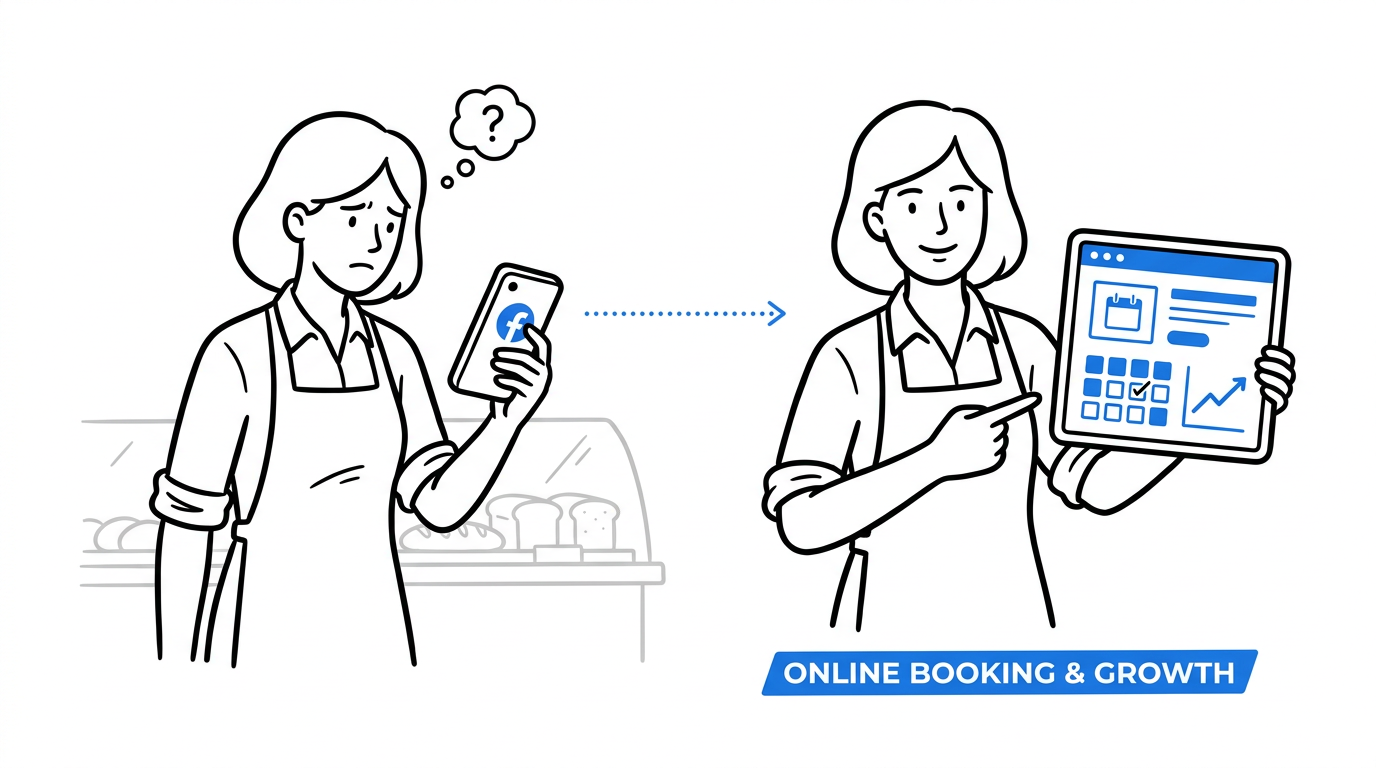
What the Numbers Actually Say
Clutch's State of Small Business Websites 2025 report surveyed 406 US small business owners and found 83% now have a website, up from 64% in 2018. That number matters less than what it correlates with: businesses with a website report SEO as their #1 lead source (40%), while businesses without one lean on referrals (40%) because they have no other discovery channel. A parallel Google/Deloitte study of 4,500+ small businesses found companies with a website are 2.8x more likely to report revenue growth than those without one.
Cost objections are fading too. In Clutch's 2018 survey, 26% of website-less owners cited cost as the blocker; by 2025 that dropped to 16%. The real barrier now is 34% saying "not relevant to my industry" — a belief the data doesn't support once you look at what happens after launch.
A Real Growth Case: Lana Skyn
Lana Zevnik runs Lana Skyn, a beauty clinic in Amsterdam. Working with agency Unnamed Project, she moved off a bare Squarespace page onto Wix and rebuilt around organic search plus an integrated booking flow instead of paid ads. Over 18 months:
- Organic traffic: 135 → 2,000+ visitors/month (+1,381%)
- Monthly bookings: 3 → 35 (+1,066%)
- Blog CTA clicks: 232 → 702 (+202%)
- Paid ads: dropped from her primary channel to under 10% of total traffic
Nothing here was a redesign trick. It was consistent SEO content plus a website that could actually convert a visitor into a booked appointment without a phone call.
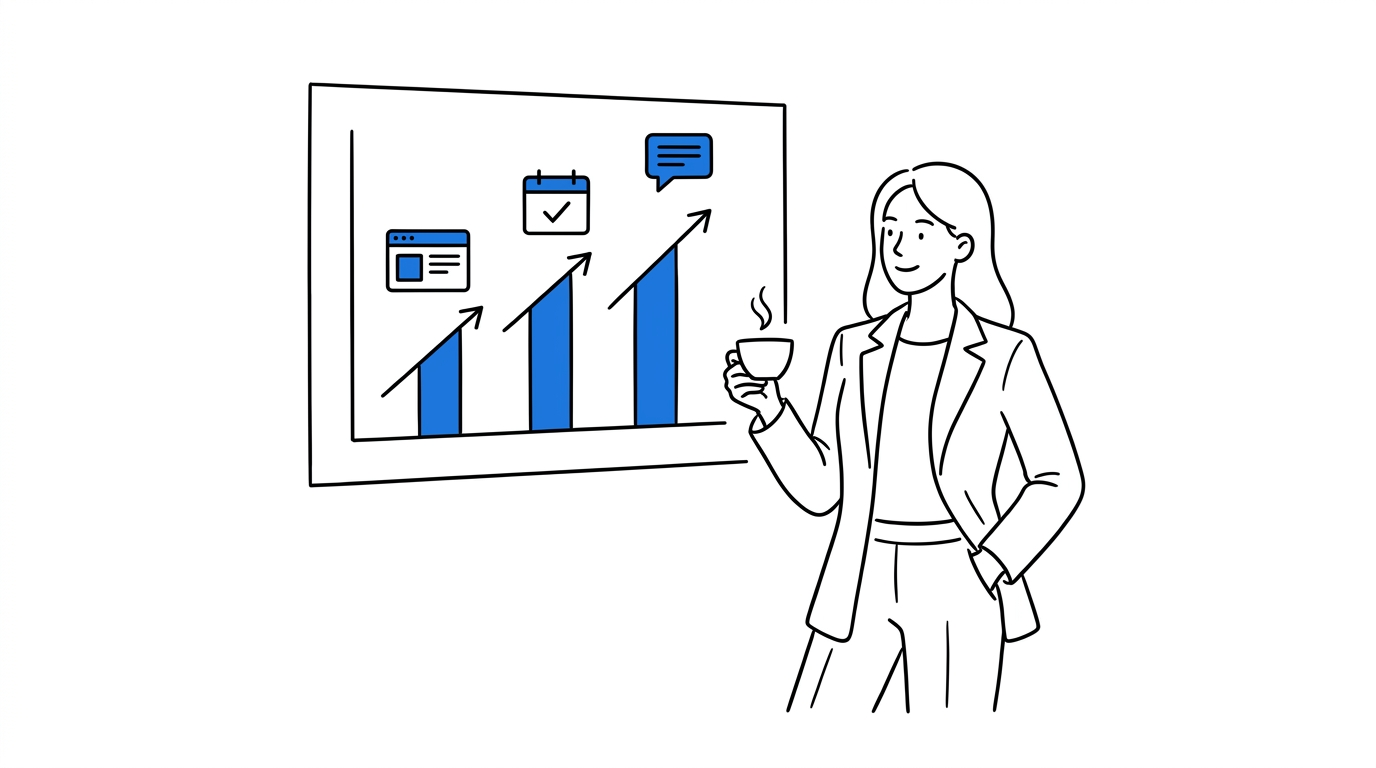
What a Website Actually Costs You in 2026
| Route | Typical Cost | Time to Launch | Who It Fits |
|---|---|---|---|
| DIY builder (Wix/Squarespace) | $15-$40/mo | 1-2 weeks | Solo owners, simple service pages |
| No-code + freelancer | $1,500-$5,000 one-time | 3-6 weeks | Local businesses needing booking/e-commerce |
| Agency custom build | $5,000-$20,000+ | 2-4 months | Multi-location or complex catalogs |
| AI-assisted build (e.g. Concat Pro Website Agent) | Days, not months | 1-5 days | Owners who want agency output without agency timelines |
Clutch's data backs this split: 41% of small businesses use no-code builders, 34% use low-code platforms like WordPress or Shopify, and only 12% go custom. The gap between those tiers used to be "how much can you pay." In 2026 it's closer to "how much time do you have," because AI-assisted builders now generate structure, copy, and basic SEO scaffolding in the same pass a human would take days to draft.
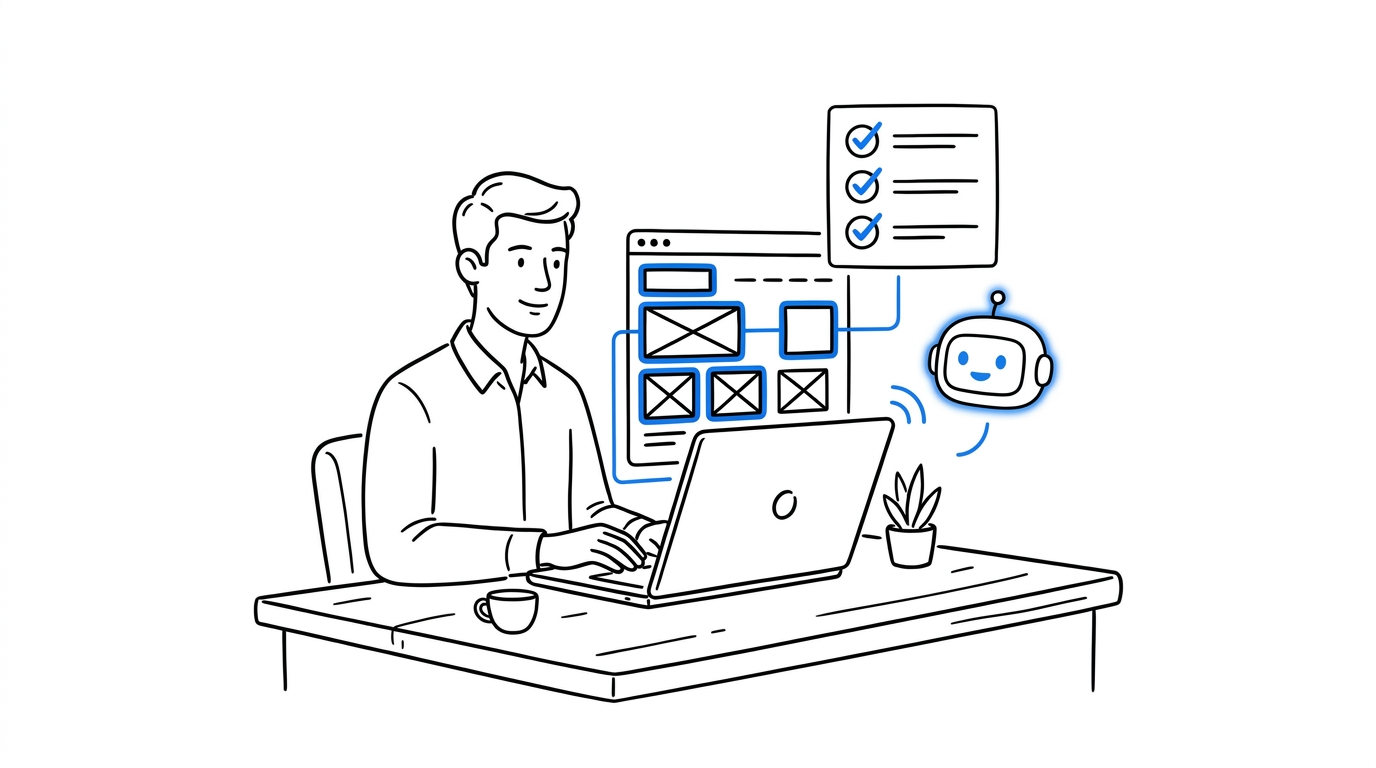
Manual Website Build vs. AI-Assisted Build
| Task | Manual Process | AI-Assisted (Concat Pro) |
|---|---|---|
| Site structure & copy draft | 1-2 weeks with a freelancer | Generated in hours from a brief |
| On-page SEO setup | Separate audit, often skipped | Built in during generation |
| Conversion elements (booking, forms) | Bolted on later, often broken | Modeled on what converts from day one |
| Ongoing updates | Ticket to a developer | Owner edits directly |
| Tracking ROI | Spreadsheet guesswork | Calculator-backed baseline (visitors, conversion rate, revenue) |
Common Mistakes Small Business Owners Make
- Treating the website as a brochure, not a lead channel. No booking form, no clear CTA, no phone-free path to conversion.
- Skipping the SEO layer entirely. A site that isn't indexed well never shows up next to the 40% of customers searching, not scrolling social feeds.
- Over-investing before validating. A $15,000 custom build before you know your conversion rate is a bet, not a plan.
- No update cadence. 61% of businesses with a website update it weekly; stale sites lose both rankings and trust.
- No ROI baseline. If you don't know your current visitor-to-customer conversion rate, you can't tell if a new site actually worked.
Do You Actually Need a Website Right Now?
Not every business needs a full site on day one, but the decision tree is simpler than most owners think. If customers already find you through Google Maps, referrals, or a marketplace listing and you're at capacity, a website is optional short-term — though you're still leaving SEO-driven leads on the table long-term. If you're not at capacity, or if you fall into the 34% who say a website is "not relevant to my industry," the data above says otherwise: you're competing against the 83% of small businesses who already have one, and the 40% of them citing SEO as their top lead source.
The clearer signal is what happens after launch, not before. Clutch's 2025 data shows 87% of small businesses with a website sell directly through it — 38% physical products, 30% digital products, 19% services — and 90% plan to invest further over the next 12 months, with mobile speed (45%), SEO (37%), and ecommerce (32%) topping the list. That's not a one-time cost; it's a channel owners keep funding because it keeps paying back.
A simple rule of thumb: if your business already runs on repeat customers and referrals, a lean one-page site with clear contact and booking info is enough to start. If you're actively trying to grow past your current customer base, you need the SEO layer, not just a page — which is exactly where the cost and platform choice below starts to matter.
Where Concat Pro Fits
If you're deciding whether to build, rebuild, or finally move off a social-only presence, don't guess at the numbers. Concat Pro's Website Agent builds an SEO-structured site in days instead of weeks, and the Conversion Rate Calculator lets you baseline your current traffic-to-customer math before you spend a dollar on a rebuild — so the investment decision is based on your numbers, not a hunch.
For where search visibility is actually headed, Neil Patel's How To Train Google's AI to Send You Customers — 194,000+ views on his 1.59M-subscriber channel — breaks down why ranking #1 on Google no longer guarantees traffic, and why getting cited inside AI Overviews is the new battleground. It's exactly the kind of visibility a properly structured small business site, not a bare social page, is built to win.
Bottom Line
"Small business websites" isn't a yes/no question anymore — 83% of owners have already answered it. The real question is whether yours is built to be a discovery and conversion channel or just a digital business card. The data says the gap between those two outcomes is worth 2.8x revenue growth and, in Lana Skyn's case, 10x the bookings.
References
- Concat Pro — Website Agent and Conversion Rate Calculator
- Clutch — State of Small Business Websites 2025
- Wix — Lana Skyn customer case study