"Vibe coding" made headlines for one demo at a time. The more useful question for operators is what happens after the demo — which vibe business use cases actually turn into revenue, and which ones turn into a 2 a.m. incident call. Real builders have now shipped enough of these to answer both halves.
Below are real, sourced examples — the ones that shipped clean and made money, and the ones that shipped fast and then cost real dollars to fix — plus where a tool like Concat Pro fits before you bet a launch on either outcome.
Vibe Business Use Cases Where Concat Pro Fits
Before picking a use case to copy, you need two numbers most builders skip: is anyone already searching for this, and is your growth curve actually better than noise. This is where Concat Pro's Rank and Growth Rate Calculator fit into vibe business use cases specifically, not as generic marketing tools.
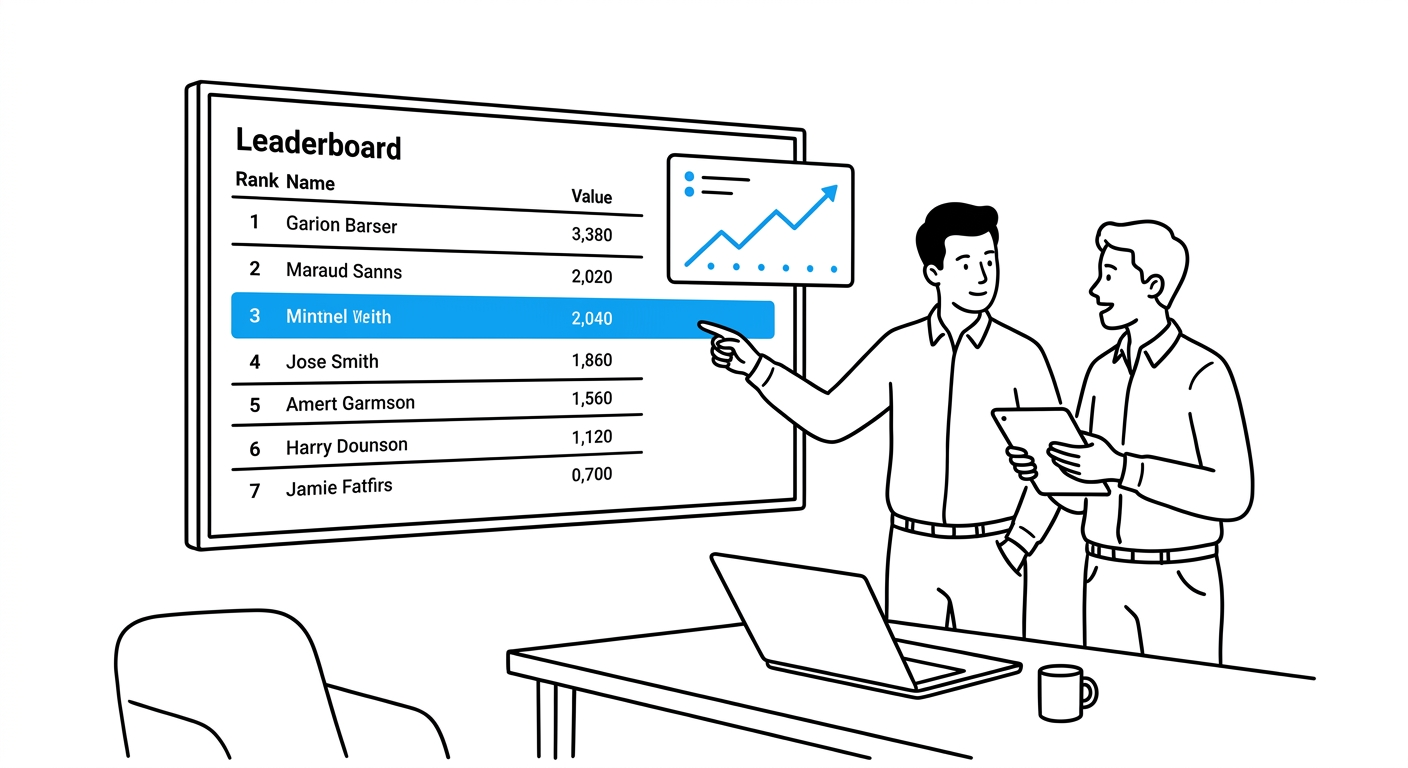
Rank pulls curated leaderboards of top creators and channels by platform and niche — a starting point for competitive and creator research before you commit to a niche use case (say, a creator-economy tool vs. a B2B ops dashboard). If several vibe-coded competitors already dominate the creator-tool leaderboard, that's a signal to differentiate, not to copy the exact pitch.
The Growth Rate Calculator turns a raw signup or MRR curve into a period-over-period trajectory you can benchmark. A vibe-coded MVP that goes from $2K to $8K MRR in a month looks impressive until you calculate the rate against a realistic ceiling — the calculator is the fast way to tell a real growth use case from a launch-week spike that will flatten.
Use Cases That Shipped Clean
Developer Justin McKelvey documented ten real vibe-coded builds, split evenly between wins and failures — a rare dataset because most "vibe coding success" posts only publish the winners. Four of the wins map directly to common small-business use cases:
- A marketing site built in about three hours via Bolt, replacing a $500/month Squarespace-plus-agency setup — a straightforward "kill a recurring vendor bill" use case.
- A SaaS MVP that raised a $500,000 seed round before a single line was hand-written, proving investors will fund a working vibe-coded prototype if the problem and traction are real.
- A nonprofit event registration app that processed over 2,000 registrations — a narrow, unglamorous use case that AI coding tools handle well because the business logic is simple and well-defined.
- A personal finance tracker built and used daily by its non-technical creator, the classic "scratch your own itch" use case that never needed outside users to be worth building.
A newer example from the creator economy: a solo builder shipped an AI content tool for creators in 14 days, launched to 250 paying customers on day one, and hit $50,000 in revenue within six weeks — now tracking toward a $3 million annual run rate, as told to Business Insider. The common thread across all five: a narrow, well-understood problem, a fast build, and revenue validation within weeks, not months.

Use Cases That Needed a Rescue
The same dataset documents five vibe-coded apps that shipped fast and then failed in production — with real dollar costs attached, not vague warnings:
- An ecommerce app exposed a live Stripe API key in client-side code; the fix and cleanup ran roughly $3,500.
- A booking app let two customers double-book the same slot because concurrency was never tested; resolving it cost around $5,000.
- A SaaS product shipped an authentication bypass that let any logged-in user view other accounts' data — an $8,000 rescue.
- A content platform's unoptimized database queries (N+1 queries at scale) degraded page loads badly enough to cost users; the performance fix ran about $6,000.
- A marketplace's broken webhook handling silently dropped payment confirmations, the most expensive rescue in the set at roughly $15,000.
None of these were exotic failures. Each is a known, well-documented class of bug — the kind a security or performance review catches before launch, not after a customer notices.
Manual vs. AI-Assisted: Where the Line Actually Sits
| Task | Fully manual | Vibe-coded / AI-assisted |
|---|---|---|
| First working prototype | 2-6 weeks, dev hire or agency | Hours to days, solo founder |
| Cost to first revenue | $10K-$50K+ (agency, dev salary) | $0-$500 in tool subscriptions |
| Security/auth review | Often built in from day one (if using a framework with defaults) | Frequently skipped — root cause of most rescue cases above |
| Scaling past MVP | Predictable, incremental | Requires a hardening pass before real traffic |
| Validating real growth | Spreadsheet, manual cohort math | Growth Rate Calculator-style trend check in minutes |
Common Mistakes Across These Use Cases
- Skipping a security pass before storing real customer data. The Stripe-key and auth-bypass cases above both shipped to real users with the flaw already live.
- Reading week-one signups as validated growth. A launch spike is not a trend — check the actual rate before reallocating budget.
- Copying a popular use case without checking saturation. If a leaderboard shows several similar tools already ranking, differentiation matters more than speed.
- Skipping load or concurrency testing before opening signups publicly. The double-booking case above is a direct result of this.
For a longer walkthrough on turning one of these use cases into a defensible business rather than a weekend demo, see Concat Pro's guide on how to build a vibe business strategy, the breakdown of what actually belongs in a vibe business stack, and the practical framework for pricing a vibe-coded product once one of these use cases starts generating revenue.
Watch: Real Vibe-Coded Apps, Ranked
The Bottom Line
The split between these two lists isn't luck. Every "shipped clean" example solved one narrow, well-scoped problem and got real usage data fast. Every "needed a rescue" example skipped a review step that would have caught a known class of bug before it touched a real customer. Pick a use case that matches the first pattern, verify the opportunity and the growth curve before you scale, and budget for a hardening pass — the cost of skipping it, per the cases above, runs $3,500 to $15,000 after the fact.
References
- Concat Pro — Rank and Growth Rate Calculator
- Justin McKelvey, "Vibe Coding Examples: 10 Real Apps ($500K Win, $15K Fail)", justinmckelvey.com
- AI LABS, "8 Vibe Coded Apps That Generated Millions Overnight", YouTube