Most ecommerce teams do not have an AI marketing strategy problem — they have an AI marketing menu problem. Personalization engines, predictive pricing, AI ad creative, chat-based shopping assistants, lifecycle automation: every vendor pitches theirs as the priority. Pick the wrong one for your stage and you burn budget proving a tool works before you have proven the plan works.
This article breaks AI marketing strategies for ecommerce into five distinct plays, shows two verified case studies with real numbers, and gives you a sequence for rolling them out without wasting a quarter on the wrong bet.
Where Concat Pro Fits Into Your AI Marketing Strategy for Ecommerce
Before testing any AI channel, a growth team needs two things: a shortlist of who can amplify the message, and a way to prove the effort actually moved revenue. Concat Pro covers both, early — not as a report after the campaign already ran.
Finding who to reach. Rolling out an AI marketing strategy usually means pairing it with creator or influencer content — an AI shopping-assistant launch needs demo videos, an AI pricing test needs trust-building UGC. Concat Pro's Rank publishes curated leaderboards of top creators and channels across YouTube, Instagram, TikTok, and X, organized by industry and niche. Instead of a week of manual profile-scrolling, a team pulls a ranked list as a starting point for creator research, then narrows it to a handful worth an outreach message.
Proving the strategy is real. Once a play is live, "engagement is up" is not a result. Concat Pro's Growth Rate Calculator takes a starting value and an ending value (plus an optional number of periods) and returns the simple growth rate or the compound growth rate (CAGR). Drop in revenue before and after an AI pricing rollout, or conversion rate before and after adding a chat assistant, and get a defensible number instead of a gut-feel claim — the number that actually wins next quarter's budget.
Neither tool writes your pricing algorithm or builds your chatbot. They solve the two problems every AI ecommerce marketing play hits first: who should carry the message, and how do you know it worked.
5 AI Marketing Strategies for Ecommerce, Ranked by Growth Stage
| Strategy | What it does | Best fit |
|---|---|---|
| AI personalization & merchandising | Matches shoppers to products using behavior data | Stores with 100+ SKUs, steady traffic |
| Predictive / dynamic pricing | Adjusts prices in near-real time based on demand signals | Stores with price-sensitive categories and volume |
| AI creative & ad optimization | Generates and rotates ad variants across channels | Any team running paid social or search |
| Conversational commerce | AI chat assistants guide product discovery and Q&A | High-consideration or gift categories |
| AI-driven retention & lifecycle | Predicts churn, times messages, personalizes flows | Stores with an existing repeat-purchase base |
The sequencing rule: fix the biggest leak first. A pricing engine on a 40-SKU store with flat demand data wastes engineering time; a chat assistant on a site with no product-page traffic has nothing to guide.
Real Results: Two Ecommerce Brands That Made AI Pricing and Conversational Commerce Pay Off
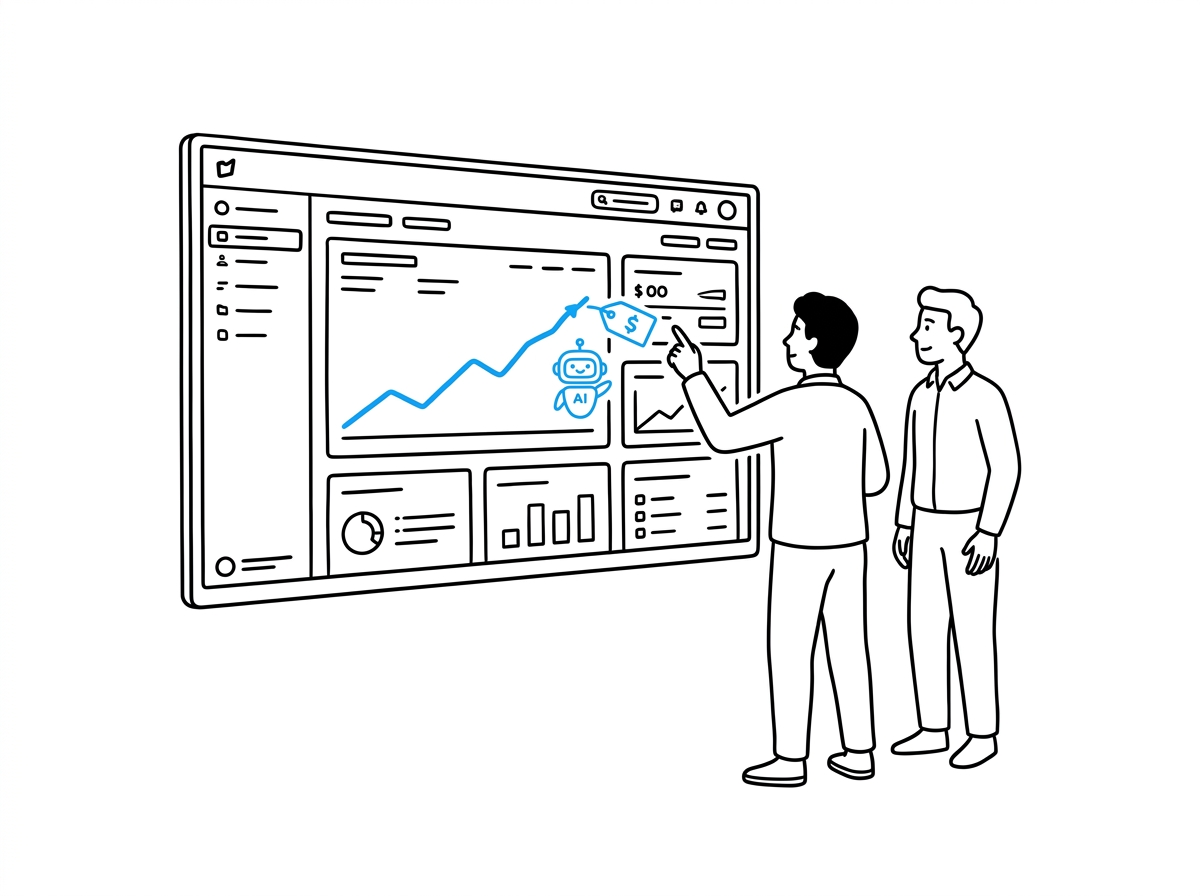
Fashionette, a European premium fashion and accessories retailer, worked with pricing platform 7Learnings to replace manual, rule-based pricing with an AI system that continuously predicts demand elasticity per SKU and adjusts prices accordingly, instead of a team re-pricing catalog segments on a fixed weekly cadence. The result: a 10% uplift in profit from AI-optimized pricing, without a broad discounting push that would have eroded margin.
The Foschini Group (TFG), a major South African fashion retailer, deployed Bloomreach's Loomi AI conversational shopping assistant to let shoppers describe what they wanted in natural language instead of filtering through category pages. During a Black Friday weekend, the assistant drove a 35.2% increase in online conversion rate and a 39.8% increase in revenue per visitor compared to shoppers who did not use it.
| Brand | AI Strategy | Headline Result |
|---|---|---|
| Fashionette | AI predictive/dynamic pricing (7Learnings) | +10% profit uplift |
| The Foschini Group | AI conversational shopping (Bloomreach Loomi) | +35.2% conversion, +39.8% revenue per visitor |
Neither brand ran a generic "AI marketing" initiative. Each picked one strategy that matched a specific bottleneck — margin leakage for Fashionette, discovery friction for TFG — and measured it in isolation before expanding.

Manual vs. AI-Driven Ecommerce Marketing
| Task | Manual Approach | AI-Driven Approach |
|---|---|---|
| Price adjustments | Fixed-cadence manual re-pricing by category | Continuous demand-based adjustment per SKU |
| Product discovery | Category filters and search bars | Conversational assistant guiding intent |
| Ad creative testing | 1-2 variants per week, built by hand | Multiple variants generated and rotated automatically |
| Creator/influencer sourcing | Hours scrolling profiles per niche | Ranked leaderboard as a research starting point (Rank) |
| Growth reporting | Screenshot-and-guess in a spreadsheet | Start/end value in, growth rate or CAGR out |
How to Roll Out an AI Marketing Strategy for Ecommerce: 4 Phases
- Diagnose the actual bottleneck. Margin leakage points to pricing AI. Stalled basket size points to personalization or conversational commerce. Flat repeat-purchase rate points to lifecycle AI. Guessing here is the single most expensive mistake in this list.
- Pilot one strategy against a baseline. Run it on a defined segment or time window, and calculate the real growth rate before expanding — not a blended, store-wide number that hides the effect.
- Feed the pilot with the right content. A conversational assistant launch or a pricing test both perform better paired with creator content that builds trust; use a tool like Rank to shortlist who to brief.
- Compound with a second lever. Once one strategy is proven, layer a complementary one — pricing AI plus retention automation compounds better than two personalization tools stacked on the same layer.
Common Mistakes in AI Marketing Strategies for Ecommerce
- Buying a pricing or personalization tool before diagnosing whether the bottleneck is actually discovery, price, or retention.
- Rolling out a conversational assistant with no fallback path to human support — shoppers abandon when the bot loops.
- Measuring "engagement" instead of revenue-per-visitor or margin, which hides whether the strategy paid for itself.
- Running every AI play at once, which makes it impossible to tell which one drove the result.
For a deeper look at two of these plays in practice, Andy Stauring's recent breakdown of building an AI-run ecommerce brand walks through where AI actually changes day-to-day marketing decisions versus where it just adds dashboard noise:
AI does not replace an ecommerce marketing strategy — it lets one well-diagnosed play run continuously instead of on a weekly manual cycle. Pick the strategy that matches your actual bottleneck, measure it against a real baseline, and only then add the next one.
For more ecommerce-specific plays, see Concat Pro's guides on AI social media marketing for ecommerce, AI email marketing for ecommerce, and AI marketing tools for ecommerce.
References
- Concat Pro — Rank and Growth Rate Calculator — creator/channel discovery and revenue-impact modeling for ecommerce growth teams.
- Bloomreach — Conversational Shopping Case Study: The Foschini Group — +35.2% conversion rate and +39.8% revenue per visitor via Loomi AI during a Black Friday weekend.
- Andy Stauring — How to Start an AI Ecommerce Brand in 2026 (Full Guide) (YouTube, 87K+ views).