AI SEO Agents for Ecommerce: What They Actually Automate (With Real Results)
Most ecommerce SEO backlogs never get worked through. A three-person growth team can audit maybe one product category a month, patch a handful of schema errors, and rewrite a dozen collection pages — while the catalog adds fifty new SKUs in the same window. AI SEO agents for ecommerce exist to close that gap: not by writing more blog posts, but by running the audit-fix-publish-verify loop that used to take an agency retainer, directly against the live site, on a schedule no human team can match.
Where Concat Pro Fits Into AI SEO Agents for Ecommerce
Before deploying any agent against your catalog, you need to know where you are actually losing visibility — to competitors on Google, and to competitors inside ChatGPT, Perplexity, and AI Overviews. Concat Pro's SEO/GEO Agent includes an AI Search Visibility Report that tracks brand mentions, entity signals, and LLM citation visibility across both surfaces, so you're not guessing which SKUs or collections are invisible before an agent starts touching code.
Once the report names the gap, the same SEO/GEO Agent runs the execution side: a technical and content audit of your site, a Content Opportunity Report that flags missing schema and thin category pages, and platform-ready output your team can publish without a separate briefing cycle. That's the same audit-first sequencing behind the case studies below — find the named page and the named cause, fix it, then verify it moved. Before you commit a quarter's SEO budget to any of this, run the projected traffic lift through Concat Pro's Growth Rate Calculator so the case for an agent-driven rollout is a number, not a hunch.
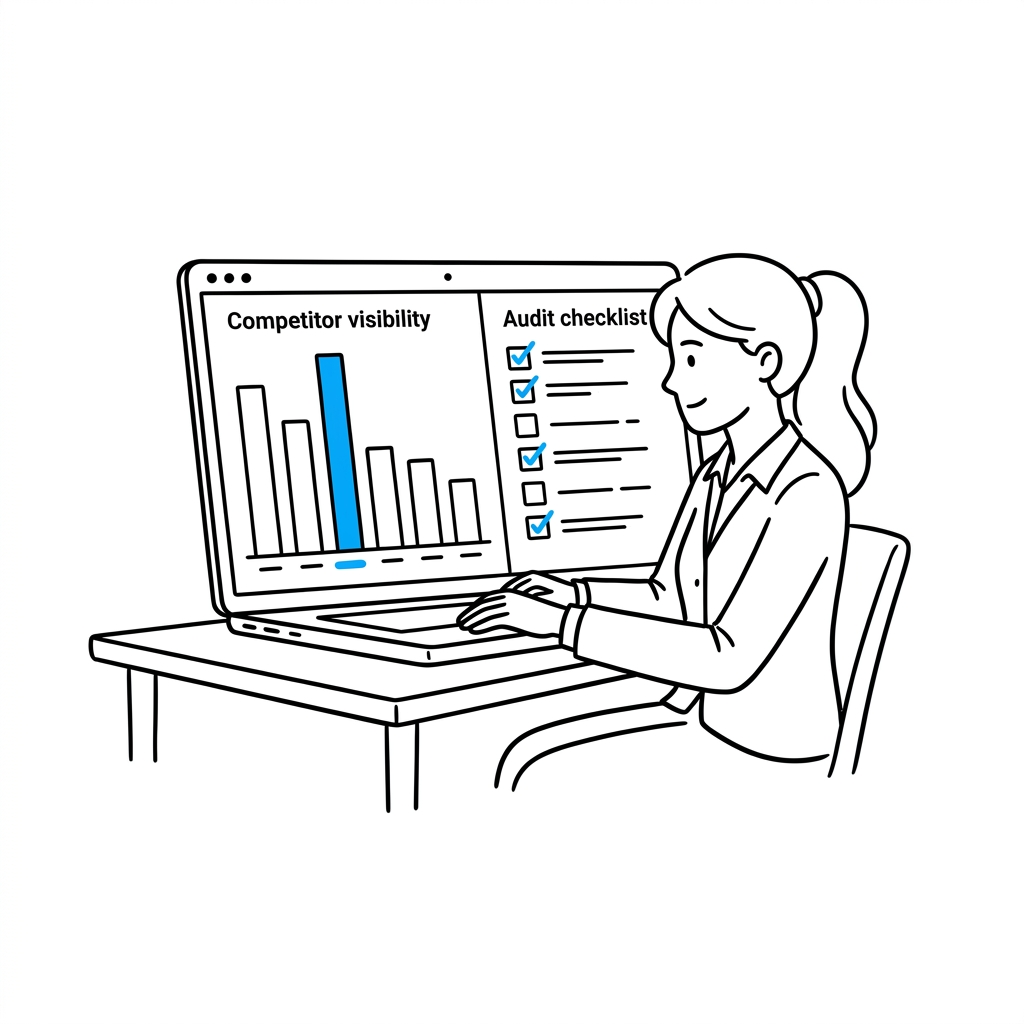
What AI SEO Agents for Ecommerce Actually Automate
"AI SEO agent" gets used loosely. The distinction that matters for ecommerce is between a tool that drafts content on request and one that audits your live pages, ships the fix, and re-checks the result on its own schedule.
| Task | Manual Approach | AI SEO Agent Approach |
|---|---|---|
| Technical/indexation audit | Spot-checked quarterly with a crawler tool, findings sit in a spreadsheet | Full-site crawl against live Search Console data, named URLs with named causes |
| Schema markup | Added page-by-page as time allows, often skipped on older SKUs | Applied catalog-wide (LocalBusiness, Product, FAQ) as a batch fix |
| Collection/category pages | New pages written when someone remembers to brief a writer | Gap-driven: new collection pages generated against uncovered long-tail terms |
| Verification | Rarely re-checked once "done" | Re-fetched and re-measured against the same baseline window automatically |
The pattern across every real deployment: the agent does the repetitive, high-volume, rule-governed work — crawling, schema, on-page fixes — and a human still decides strategy and reviews before anything ships to a large catalog.
Real Results: AI SEO Agents for Ecommerce in Action
Eyewear retailer (edeneyeoptics.com) — audit-fix-publish-verify loop. An AI SEO agent vendor ran its standard loop against this ecommerce eyewear site: an orphaned blog post was found and linked back into the site structure, schema was added across product and category templates, and a full on-page pass followed. Measured in a 28-day Google Search Console window, search impressions grew 10.7x (28 to 299), average position improved from 20.2 to 14.8, and the site earned its first two non-branded page-one rankings. The findings and fixes are published with dated before/after Search Console data, not composited estimates.
Cali1850 (ecommerce) — technical SEO plus AI content optimization. Digital agency Coalition Technologies paired technical SEO fixes with AI-assisted content optimization for this ecommerce account, tracked year-over-year through 2025. Organic sessions rose 223.28% YoY and organic revenue rose 188.73% YoY, alongside a 58.54% YoY lift in overall revenue — gains the agency ties directly to technical SEO foundations and AI-driven content work, not paid acquisition.
Both cases follow the same order of operations: fix what's broken (indexation, schema, orphaned pages) before publishing anything new, then verify against the same measurement window you started with. For a hands-on look at building that kind of multi-agent SEO workflow yourself, this recent walkthrough of running audit and content agents together is worth watching:
Common Mistakes When Deploying AI SEO Agents for Ecommerce
- Turning an agent loose on the catalog with no baseline. If you can't state your Search Console impressions and average position before the agent runs, you can't prove anything moved after.
- Skipping the audit and jumping to content generation. Every verified case study above fixed indexation, schema, and orphaned pages first. New collection pages published on top of broken technical foundations just add more unindexed URLs.
- Treating schema as a one-time task. New SKUs need Product schema the day they launch, not in the next quarterly audit.
- No re-verification step. An agent that publishes a fix but never re-checks Search Console against the original window is running on faith, not data.
- Running content and technical fixes as separate projects. The 188.73% organic revenue result above came from technical SEO and AI content optimization moving together, not from two disconnected initiatives competing for the same budget.

Where This Fits Your Stack
If you're building out the content side of this stack, AI content marketing for ecommerce covers the four-phase framework for scaling product descriptions and blog output without losing accuracy. For the tool-selection question before you commit budget, AI marketing tools for ecommerce breaks down the wider category. And if the visibility gap traces back to acquisition rather than search, Ecommerce customer acquisition strategy is the natural next read.
References
- Concat Pro — SEO/GEO Agent (AI Search Visibility Report + Content Opportunity Report) and Growth Rate Calculator
- AI Agents SEE — AI SEO Case Studies: real results from real clients (edeneyeoptics.com, 10.7x search impressions)
- Coalition Technologies — Biggest Wins: 2026 Case Studies (Cali1850, +188.73% organic revenue YoY)