Manual keyword research does not survive contact with 2026's search landscape.
Buyers now ask ChatGPT, Perplexity, and Google AI Overviews direct questions before they ever type a query into a search bar — and those engines answer from extracted entities and topics, not exact-match strings. If your team is still pulling keywords from a spreadsheet and a gut feeling, you are optimizing for a search engine that increasingly does not exist.
Keyword extraction — the automated identification of the terms, entities, and intents that actually describe your content and your market — is the fix. Done right, it replaces weeks of manual research with a repeatable pipeline that feeds both classic SEO and Generative Engine Optimization (GEO). Two real B2B companies prove the ROI is not theoretical: Lyzr.ai grew organic traffic 150% and impressions 200% in three months after layering NLP-driven keyword and entity extraction onto its content audits, and Cortex tripled total site traffic and grew qualified B2B leads 30% in six months by using NLP topic modeling to close content gaps competitors were already ranking for.
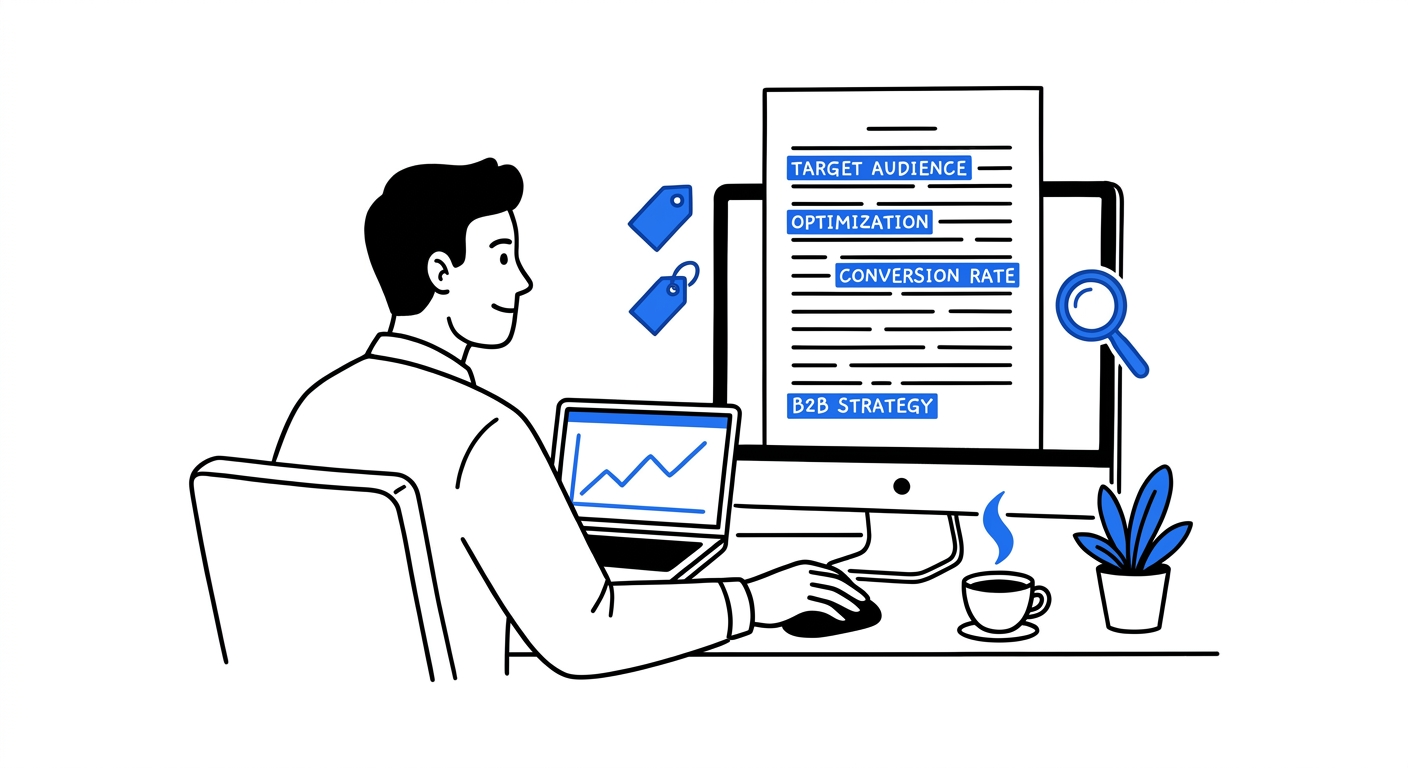
The 4-Layer Extraction Architecture
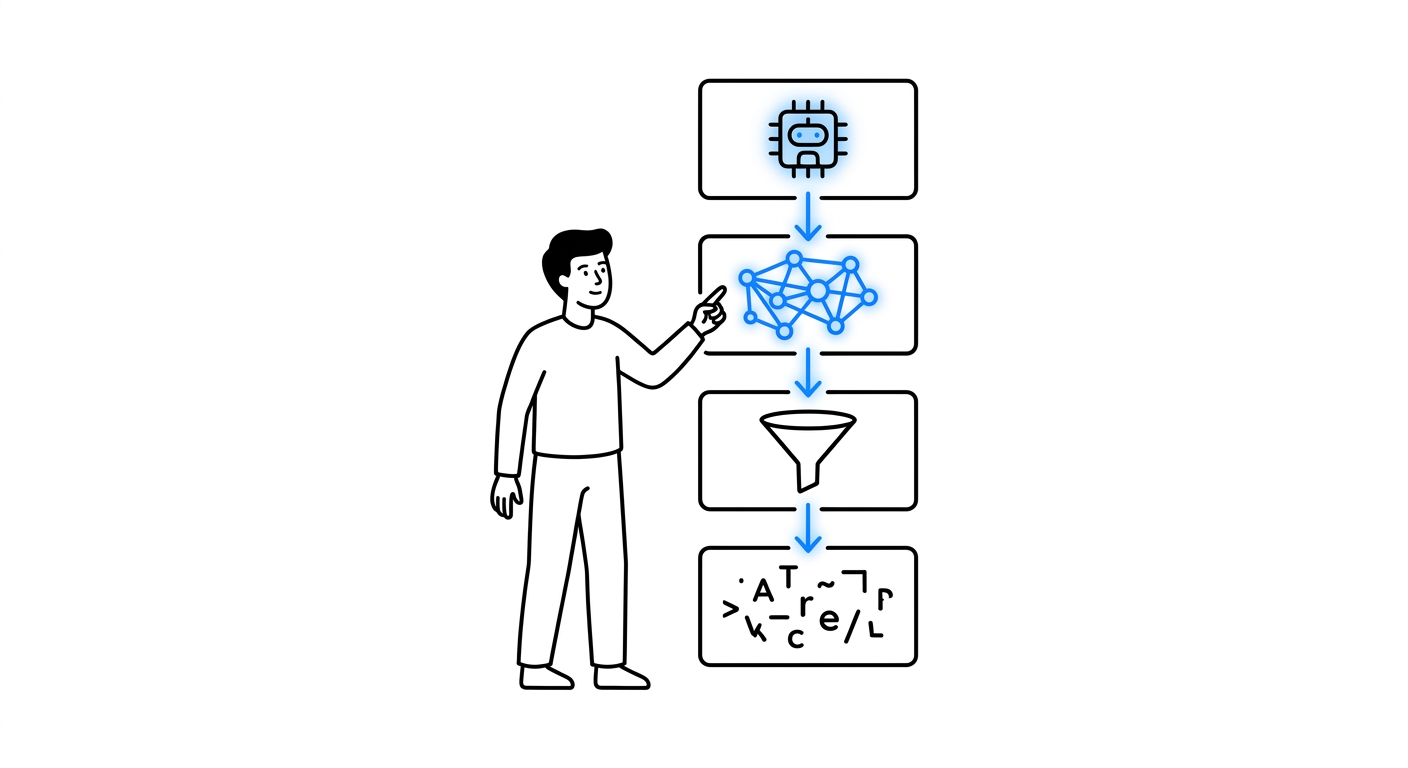
Modern pipelines do not rely on one algorithm. They stack four layers, each trading off speed for semantic depth:
- Statistical filtering — spaCy POS tagging, YAKE!, RAKE, and TextRank scan raw text (sales call transcripts, competitor pages, community threads) and generate candidate terms in near-zero latency.
- Semantic embeddings — KeyBERT scores candidates against document embeddings via cosine similarity; Maximal Marginal Relevance (MMR) removes near-duplicates like "B2B SaaS software" vs. "B2B SaaS solution." BERTopic/Top2Vec cluster unstructured text into latent themes.
- Entity recognition — custom spaCy or GLiNER models tag brand names, product features, and competitor entities, then link them to a knowledge graph so your content system understands relationships, not just strings.
- LLM reasoning — a GPT-4o or Claude-class model adds intent, persona, funnel stage, and GEO/AEO citation potential on top of everything the first three layers surfaced.
The output is not a keyword list. It is a structured map of entities and intents ranked by buyer relevance — the same input format AI answer engines use to decide who gets cited.
Manual vs. AI-Driven Extraction
| Manual Research | AI-Driven Extraction | |
|---|---|---|
| Time per 10 articles | 15-20 hours | 1-2 hours |
| Coverage depth | Analyst's known terms | Full semantic + entity graph |
| Competitor gap detection | Spot checks | Systematic, every crawl |
| GEO/AI-citation readiness | Rarely scored | Scored per passage |
| Scales with content velocity | No | Yes |
Cortex felt this gap directly: manual research capped their team at two articles a week. After switching to NLP-driven topical mapping, they scaled to five or six high-depth articles per week with the same headcount — and 80% of their traffic now comes from organic search.

A 3-Phase Workflow You Can Run This Month
Phase 1 — Harvest. Pull raw text from your highest-intent sources: sales call transcripts, support tickets, competitor top-ranking pages, and review sites. Run Layer 1 statistical extraction to generate a raw candidate pool in minutes, not days.
Phase 2 — Structure. Push candidates through semantic embedding and entity recognition. Group them into topic clusters, tag each with the entity type (product, feature, competitor, use case), and flag missing sub-topics competitors already cover.
Phase 3 — Prioritize and brief. Layer in LLM reasoning to score each cluster on buyer intent, funnel stage, and citation potential, then generate content briefs automatically. This is where Concat Pro's SEO/GEO Agent removes the manual bottleneck entirely — it ingests your product, audience, and market context, extracts the entities and keywords that matter, and outputs platform-ready, AI-answer-ready drafts without a human doing the first pass.
Before you brief a single article, run the projected traffic lift through a conversion rate calculator against your current landing page baseline — it turns "more keywords" into a defensible revenue forecast your growth lead can actually approve.
Common Mistakes
- Optimizing for strings, not entities. If your extraction pipeline stops at Layer 1, you are still keyword-stuffing — just with better tooling.
- Ignoring brand mention signals. Backlinks correlate only ~0.27 with AI citation likelihood; YouTube brand mentions correlate ~0.74. If your extraction strategy does not track where and how your brand is mentioned across video and community content, you are optimizing the wrong signal.
- Skipping the competitor gap pass. Cortex's biggest lever was not new keywords — it was the sub-topics competitors already ranked for that they were missing entirely.
- Treating extraction as a one-time project. Buyer language shifts every quarter. Pipelines need scheduled re-runs, not annual refreshes.
- No funnel-stage tagging. A keyword list without intent classification just moves the prioritization problem downstream to your writers.
Why This Matters for AI Search, Specifically
AI Overviews now appear on more than half of all Google queries, reaching 1.5 billion users a month. In this walkthrough of a 2026 ChatGPT-era SEO strategy, the core lesson tracks exactly what the extraction data shows: engines cite brands whose entities and mentions are structurally clear across the web, not brands with the most backlinks. Keyword extraction that stops at Google-style volume metrics misses this entirely — the entity and intent layers are what get you cited inside an AI-generated answer, not just ranked on page one.
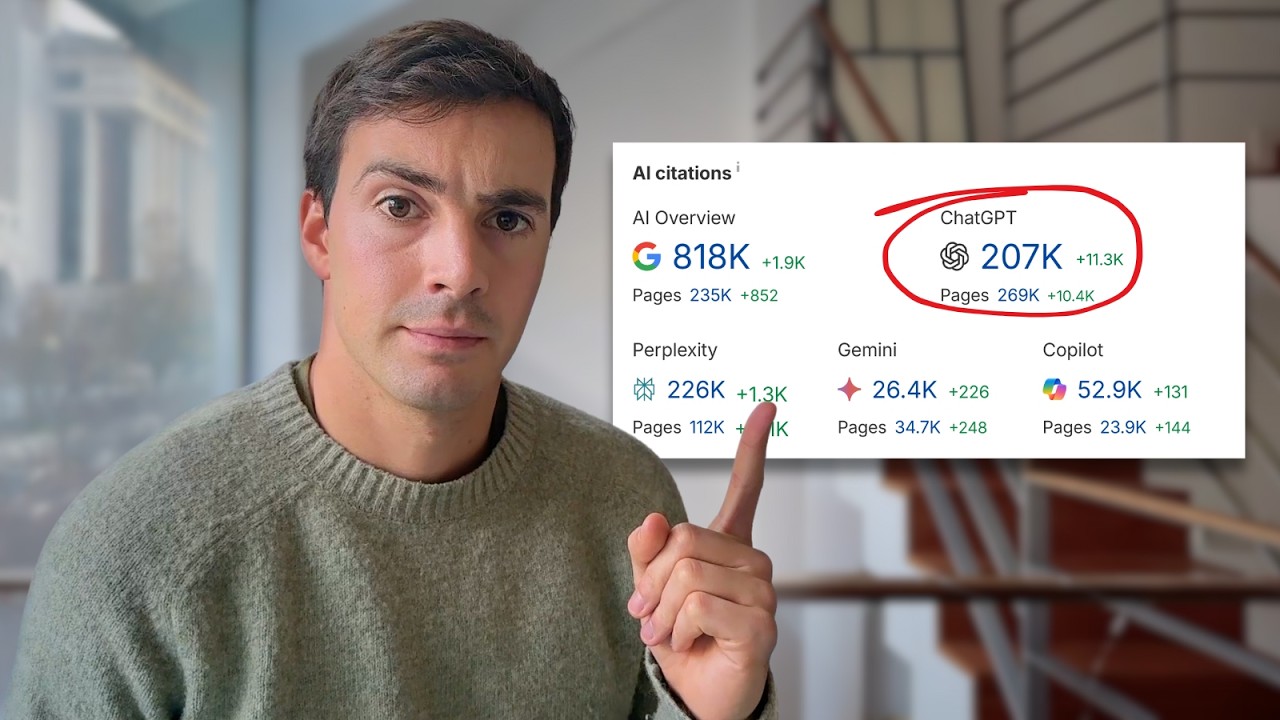 Watch: "My ChatGPT AI SEO Strategy (works in 2026)" — on brand-mention and entity signals for AI search visibility.
The Bottom Line
Extraction is infrastructure, not a one-off research task. Build the 4-layer pipeline once — statistical filtering, semantic embedding, entity recognition, LLM reasoning — and every downstream content, SEO, and GEO decision gets faster and more defensible. Lyzr and Cortex did not out-write their competitors; they out-structured them. Start a project with Concat Pro's SEO/GEO Agent to run this pipeline against your own product and market context.
References
- Concat Pro — SEO/GEO Agent
- Concat Pro — Conversion Rate Calculator
- YouTube — "My ChatGPT AI SEO Strategy (works in 2026)"