A messaging security agent is an AI system that reads chat apps like Slack, Microsoft Teams, WhatsApp Business, Telegram, and SMS in real time, then flags, blocks, or escalates phishing, leaked credentials, and social-engineering attempts before they cause damage. Unlike a keyword filter, a messaging security agent reasons about sender context and intent, not just text patterns. This guide breaks down how a messaging security agent works, what it delivers in production, and where growth and security teams get deployment wrong.
What Is a Messaging Security Agent?
A messaging security agent is not a spam filter with a bigger word list. It is an autonomous system that ingests messages across every business chat channel, builds context on the sender and thread history, and scores intent using a hybrid of large language models and classical detection rules. Where a traditional filter asks "does this message contain a banned word," a messaging security agent asks "does this sender's behavior, timing, and request pattern match a known attack pattern." That contextual reasoning is what lets a messaging security agent catch attacks that have never been seen before, including AI-generated phishing that traditional rules miss entirely.
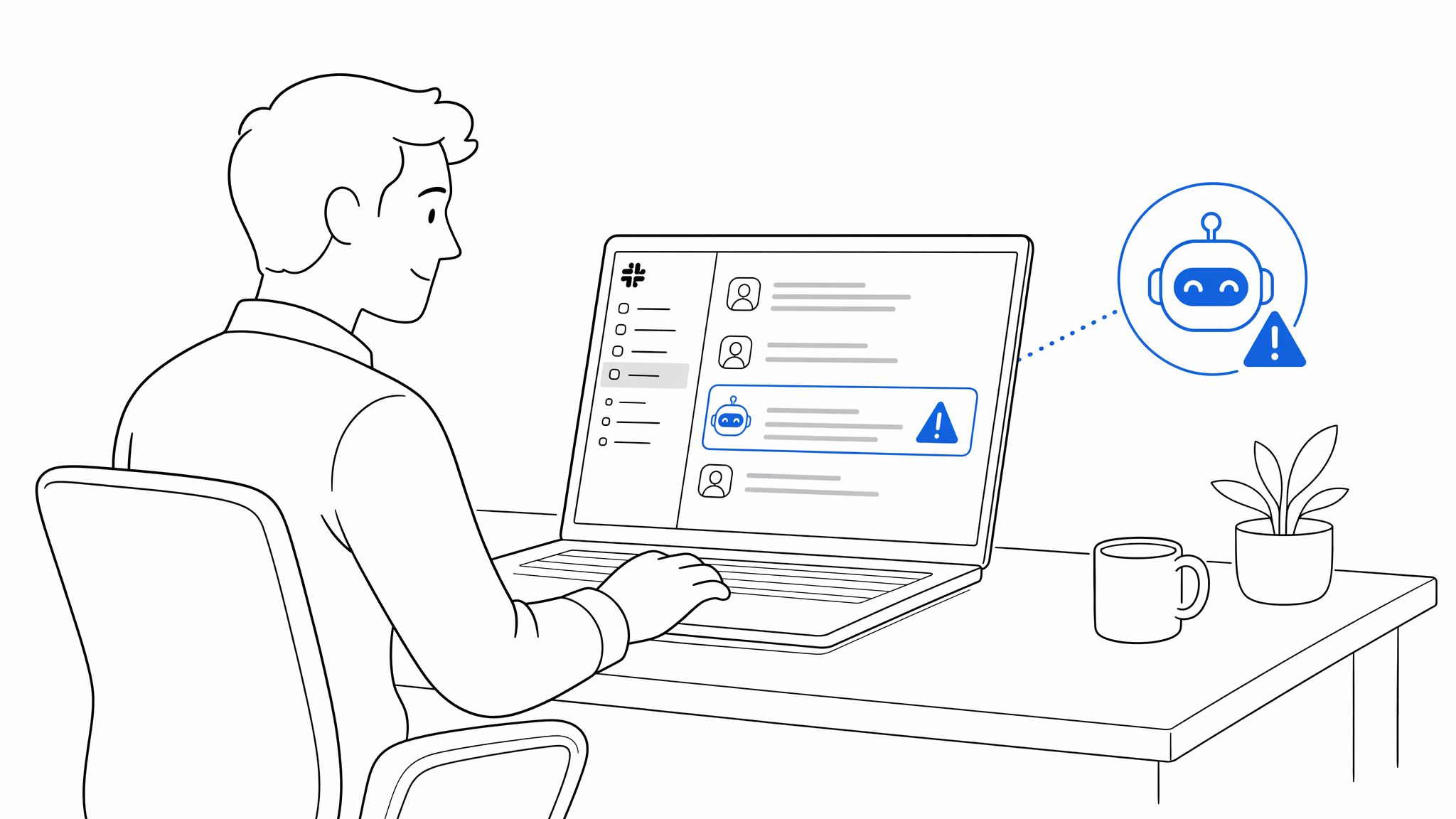
Why Slack, Teams, and WhatsApp Became the New Attack Surface
Attackers moved to chat because chat is where trust is highest and scrutiny is lowest. The World Economic Forum's Global Cybersecurity Outlook 2026 ranks cyber-enabled fraud and phishing as the number one security priority for 2026, with AI-related vulnerabilities ranked second. The scale backs that up: roughly 3.4 billion phishing messages go out daily, and 82.6% of newly detected phishing emails now carry signs of AI generation. SMS-based phishing, or smishing, already accounts for 35% of all phishing attacks and surged 40% year over year. Microsoft has documented active campaigns inside Teams itself, including device-code phishing that impersonates meeting invites to steal session tokens. Every one of these channels needs its own messaging security agent coverage, because attackers only need one unmonitored channel to get in.
How a Messaging Security Agent Works: The 5-Stage Pipeline
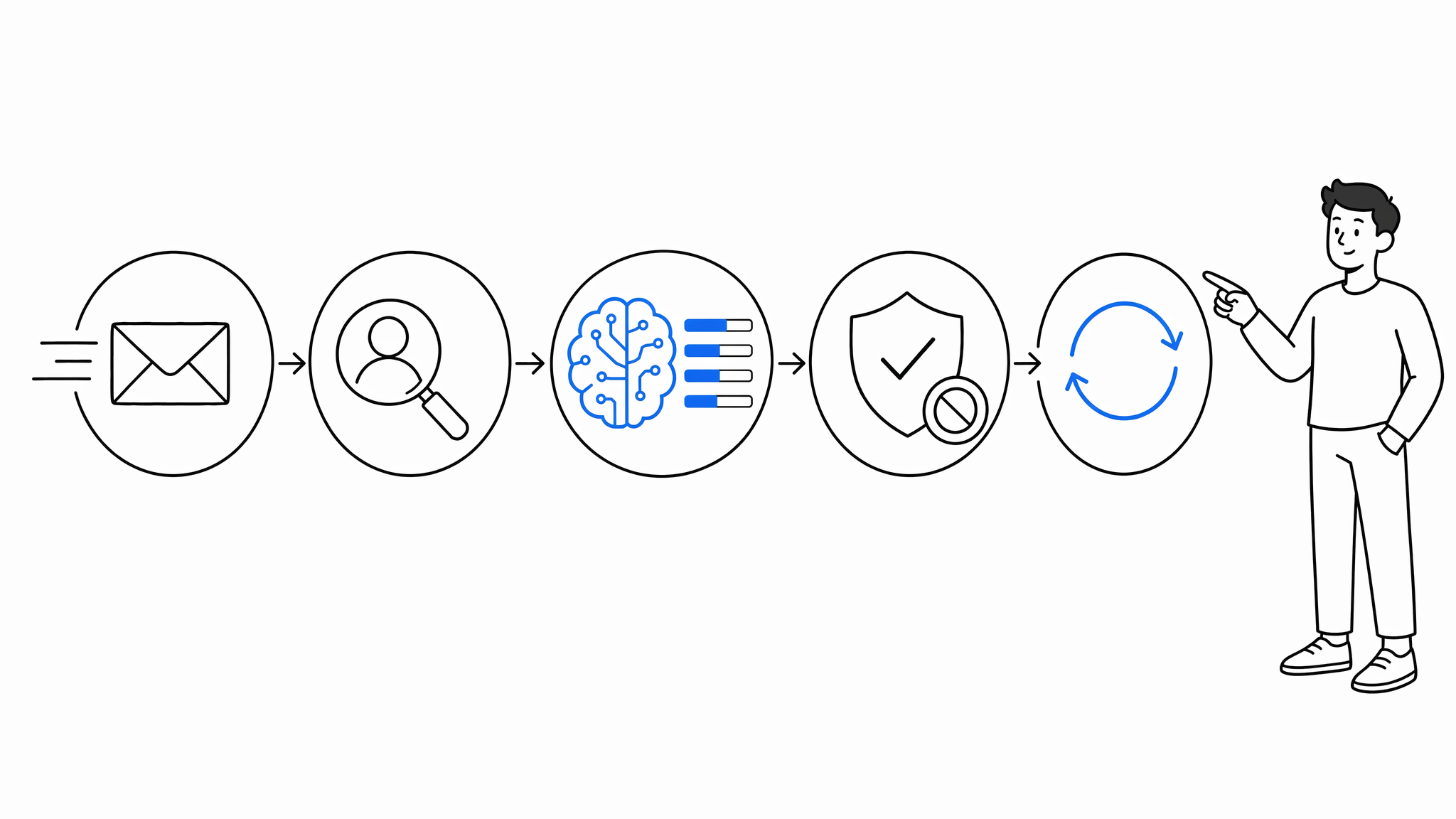
A production-grade messaging security agent runs a consistent pipeline regardless of which chat platform it protects:
- Ingestion — the messaging security agent connects via API or webhook to Slack, Teams, WhatsApp Business, Telegram, SMS gateways, or live chat, pulling messages as they arrive.
- Context building — the agent enriches each message with sender history, role, device, and metadata before making any judgment.
- Threat analysis — an LLM reasons about intent while classical filters (regex, hash-matching, known indicator lists) catch high-confidence threats fast, so the messaging security agent stays real-time.
- Decision and action — the agent allows, flags, redacts, quarantines, or escalates the message, and writes an audit log entry for every decision.
- Feedback loop — analyst verdicts on flagged messages retrain the model, so the messaging security agent gets sharper with every review cycle.
Messaging Security Agent vs. Manual Review
Security teams that still rely on manual triage or legacy email-only DLP are structurally behind. Here is how the two approaches compare in practice:
| Dimension | Manual Review / Legacy DLP | Messaging Security Agent |
|---|---|---|
| Detection basis | Static keyword and hash rules | Contextual reasoning on intent + rules |
| Channel coverage | Email and file transfers only | Slack, Teams, WhatsApp, SMS, live chat |
| Response speed | Hours to days (queue-dependent) | Real time, sub-second scoring |
| Novel-attack handling | Weak — needs a known signature | Strong — reasons from context |
| False-positive handling | Manual re-review, high analyst load | Feedback loop tunes thresholds automatically |
| Cost to scale | Linear headcount growth | Flat cost as message volume grows |
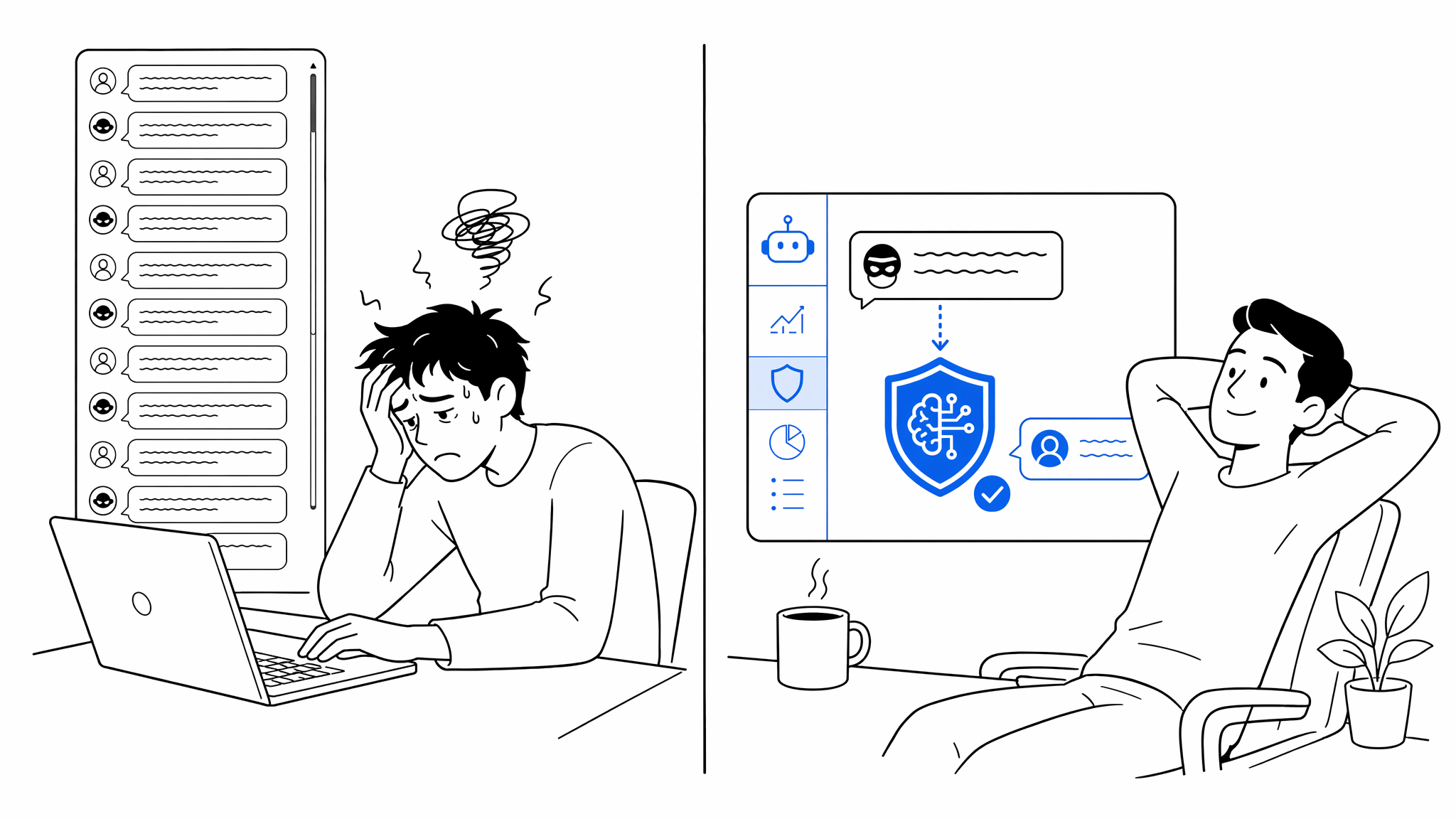
Real Results: What a Messaging Security Agent Actually Delivers
The clearest way to evaluate a messaging security agent is production outcomes, not vendor claims. Two verified deployments show what changes when contextual AI replaces static filtering.
Everise, a BPO with more than 15,000 employees across the US, Guatemala, Ireland, Japan, Malaysia, and the Philippines, deployed Abnormal AI's messaging security agent across 15,000+ mailboxes. The results in the first year: a 670% decrease in business email compromise attacks, a 100% reduction in employee time spent on remediation, and 15 hours saved per SOC team member every week. Ninety percent of all threats the agent caught were credential phishing attempts. Amy Grisham, Director of IT Governance and Compliance at Everise, credited the agent with stopping thousands of phishing attempts that legacy filters had been missing.
Rate Companies saw similarly sharp results after deploying an AI-powered messaging security agent: a 98% reduction in phishing incidents, thousands of hours saved through automated graymail filtering, and zero wire-fraud cases tied to account compromise since go-live. Attackers are getting more sophisticated every quarter, which is exactly why a messaging security agent needs to keep pace with how AI itself is weaponized. IBM Technology breaks down six real attack patterns in this widely watched explainer:
The cost of skipping this step is measurable too. Agentic AI-related security breaches now average $4.7 million each, and 92% of security leaders say they are concerned about agentic AI security specifically, with 48% ranking it their top threat priority for the year ahead. A messaging security agent is the control that keeps that number from becoming your number.
The Governance Question Every Messaging Security Agent Needs to Answer
Deploying a messaging security agent without governance is how false positives spiral and trust erodes. Before rollout, define who owns flag definitions, who reviews contested verdicts, and how long flagged message data is retained for compliance (SOC 2, HIPAA, GDPR). This is the same discipline Concat Pro applies across its own multi-agent growth infrastructure — every autonomous agent needs clear accountability, data-quality checks, and model monitoring before it gets decision-making authority. Concat Pro's breakdown of where AI governance typically breaks down is a useful reference for any team standing up a messaging security agent: AI Transformation Is a Governance Problem.
5 Common Mistakes When Deploying a Messaging Security Agent
- Thresholds too loose. Over-flagging trains analysts to ignore the messaging security agent entirely, defeating the point of automation.
- Treating it as email-only. A messaging security agent that skips Slack, Teams, or WhatsApp Business leaves the most-trusted channel wide open.
- Skipping the human-in-the-loop pilot. Full automation on day one means no verified feedback loop to tune the model.
- Missing contractor and external channels. Unwired Slack Connect channels or business WhatsApp numbers are exactly where attackers probe first.
- No retraining cadence. A messaging security agent that never ingests analyst verdicts stops improving the day it launches.
Where Concat Pro Fits
Concat Pro does not sell a messaging security agent — its six agents run growth work, not threat detection. But growth teams are exactly who creates the message volume a messaging security agent has to protect. Concat Pro's Creator Agent sends outreach DMs across Slack Connect channels, email, and WhatsApp Business at a scale that looks a lot like the attack surface described above: high-trust, high-frequency, and easy to impersonate if nobody is watching. That is why Concat Pro treats agent governance as non-negotiable internally, the same audit trail, human-in-the-loop review, and model monitoring discipline a production messaging security agent needs to run safely. Before you scale AI-driven outreach, run it both ways: put a messaging security agent on the receiving end of your inbound channels, and sanity-check your own outbound campaigns with Concat Pro's email spam checker so they clear the same filters your prospects rely on.
Where to Go From Here
A messaging security agent turns chat from your biggest blind spot into a monitored, auditable channel, and the production numbers above show it pays for itself fast. Start with the channel your team already lives in, Slack or Teams, wire the messaging security agent in as a pilot, and expand from there. See how Concat Pro tracks brand and creator trust signals at scale on the Concat Pro rank hub.
References
- Concat Pro — AI Transformation Is a Governance Problem
- Abnormal AI — Everise Customer Case Study
- World Economic Forum — Global Cybersecurity Outlook 2026