A server intelligence agent is an AI-powered software agent that continuously monitors, interprets, and acts on your infrastructure's behavior — CPU load, response time, memory pressure — in real time, without waiting for a human to read a dashboard. For growth teams, this is not an IT-only concern: every extra second of server response time chips away at Core Web Vitals, search rankings, and conversion rate.
Amazon found that every 100ms of added latency cost it 1% in sales. Google made page experience and Core Web Vitals a ranking factor back in 2021. Put those two facts together and a slow, unmonitored server stops being a backend problem — it becomes a growth problem. That's why a server intelligence agent belongs on the same roadmap as your SEO and content stack, not buried in a separate DevOps backlog.
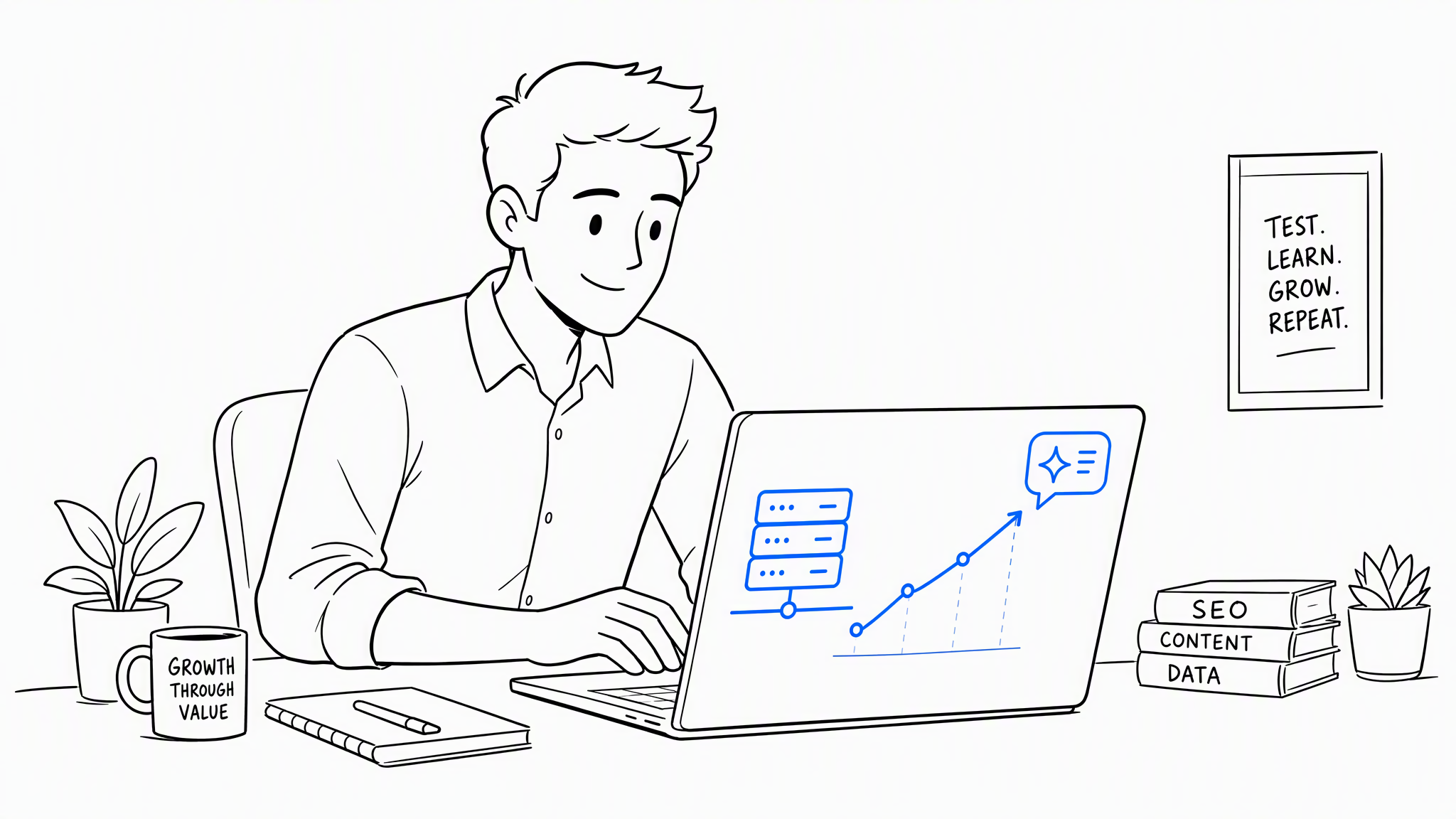
What Is a Server Intelligence Agent?
A server intelligence agent differs from a traditional monitoring tool because it interprets data at the source instead of just forwarding it for a human to read later. Traditional monitoring answers "did CPU cross 80%?" A server intelligence agent answers "is this deviation normal for this system right now, and what should happen next?"
A production-grade server intelligence agent typically:
- Collects telemetry from the OS, container runtime, network, and application layers continuously
- Learns a rolling baseline instead of relying on a fixed threshold
- Flags anomalies with context — which process, which deploy, which traffic pattern caused it
- Recommends or automatically executes safe remediation, like restarting a hung process or scaling a resource
- Escalates to a human only when the decision is high-risk or irreversible
Why Growth and SEO Teams Should Care About a Server Intelligence Agent
Server health stays invisible until it costs you rankings. Slow Time to First Byte drags down Largest Contentful Paint — one of Google's three Core Web Vitals. Google's own web.dev research shows the compounding effect across real companies: Vodafone improved LCP by 31% and saw 8% more sales; Tokopedia cut LCP from 3.78s to 1.72s and gained 23% longer session duration; Nykaa improved LCP by 40% and picked up 28% more organic traffic from tier-2 and tier-3 cities. None of those teams touched their content strategy — they fixed exactly what a server intelligence agent is built to catch before it becomes a ranking problem.
There's a second layer growth teams miss: AI crawlers like GPTBot, PerplexityBot, and ClaudeBot don't wait around for a slow server either. If your infrastructure times out or serves inconsistent responses during a crawl window, you lose citation opportunities in AI Overviews and ChatGPT search — the same GEO visibility your content team is optimizing for on the page itself.
How a Server Intelligence Agent Works: The 4-Phase Loop
- Observe. Stream real-time telemetry — CPU, memory, disk I/O, response time, error rate — without adding meaningful overhead to production.
- Contextualize. Compare current behavior against a learned baseline, not a static rule. A traffic spike during a product launch means something different than the same spike at 3 a.m.
- Reason. A reasoning layer, often LLM-based, classifies the anomaly as a normal spike, a resource leak, or an incident — and drafts a plain-language diagnosis instead of a raw metric dump.
- Act or escalate. Auto-remediate low-risk issues like restarting a hung process or scaling a resource; escalate high-risk or irreversible actions to a human with full context already attached.
Manual Monitoring vs. AI Server Intelligence Agent
| Task | Manual / Traditional Monitoring | AI Server Intelligence Agent |
|---|---|---|
| Detection | Static threshold alerts, after the fact | Learned baseline, flags deviation in real time |
| Diagnosis | Engineer reconstructs the story from five dashboards | Root-cause context attached automatically |
| Response time | Minutes to hours, human-paged | Seconds, auto-remediation where safe |
| SEO / CWV impact | Discovered after rankings already dropped | Caught before Core Web Vitals degrade |
| Coverage | Business hours, on-call rotation gaps | 24/7, no alert fatigue |
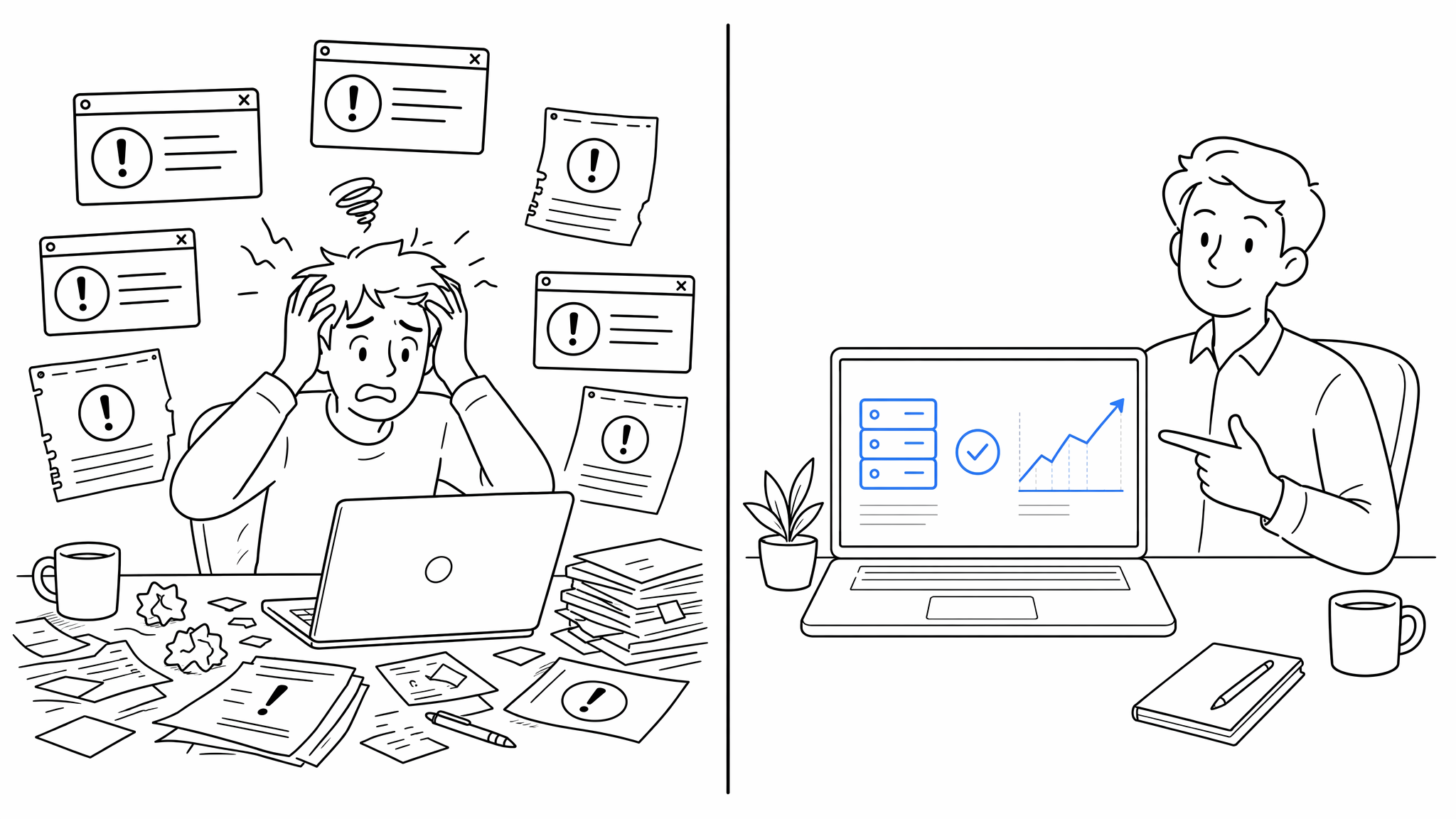
Real Growth Results From AI-Driven Infrastructure Intelligence
Amazon. The often-cited internal study found every 100ms of added page latency cost 1% in sales — the original data point that put server response time on every growth team's radar, years before "server intelligence agent" was a category.
A major U.S. retailer. Facing nearly 8,000 registers, 293 store databases, and constant alert noise, the retailer deployed AI-driven Business Health Monitoring across every location. The result: a 70% decrease in downtime hours per month, a 51% reduction in mean time to resolution, and 75% lower IT maintenance workload — freeing teams to focus on growth initiatives instead of firefighting.
Nykaa. The e-commerce beauty retailer improved LCP by 40% through faster server response and rendering, catching and fixing performance regressions early instead of after a ranking drop. The payoff: 28% more organic traffic from tier-2 and tier-3 Indian cities, with zero change to the content itself.
Common Mistakes When Adopting a Server Intelligence Agent
- Treating it as a pure DevOps purchase with no SEO or growth stakeholder in the room
- Granting broad auto-remediation rights on day one instead of starting read-only
- Skipping the audit trail — if nobody can answer "what happens when it's wrong," that's a governance gap, not a technical detail
- Ignoring predictive alerts because the team already feels it has "enough dashboards"
- Never correlating uptime and response-time data with Search Console or Core Web Vitals field data
Where Concat Pro Fits
Concat Pro's Website Agent simulates both user and AI-crawler perspectives on your site, surfacing the technical SEO bottlenecks that a server intelligence agent's uptime data alone won't catch — messaging gaps, crawlability limits, and conversion friction. Pair it with the SEO/GEO Agent to make sure your now-reliable infrastructure is also winning citations in AI Overviews and ChatGPT search, and track the resulting traffic lift with the tactics in our content marketing ROI guide.
Watch: What Is AIOps?
References
- Concat Pro — Website Agent: Diagnose, Optimize, and Rebuild Webpages for Growth — https://concat.pro/products/website-agent
- Google web.dev — The Business Impact of Core Web Vitals — https://web.dev/case-studies/vitals-business-impact
- Digitate — How a Major U.S. Retailer Reduced Downtime by 70% with AI-Driven Store Readiness Monitoring — https://digitate.com/blog/us-retailer-ai-store-readiness-monitoring/