You can vibe code a working app in an afternoon. Type a prompt, watch Claude or Cursor scaffold the frontend, ship a link to friends. That part is solved. The part nobody's prompt handles is what comes next: who finds the app, why they sign up, and why they stay. That gap is what "vibe business" describes, and it's the actual bottleneck for almost every AI-built product hitting the market in 2026.
What "Vibe Business" Actually Means (Beyond Vibe Coding)
Vibe coding is describing a feature in plain English and letting AI write the code. Vibe business is the next layer: multi-agent systems that also handle the database, auth, payments, deployment, SEO, and marketing — the full lifecycle, not just the commit. ByteMonk's "Vibe Coding Is Not Enough. Here's What's Next" (397K subscribers, published April 2026) demos this directly: a single prompt into Atoms (formerly MGX) spins up a course-selling platform with Stripe billing, an admin panel, and a live database in about 30 minutes, with separate agents acting as PM, architect, and engineer. The video is the clearest public explanation of why "vibe coding" and "vibe business" aren't the same claim.
The shift matters because building is no longer the constraint. Lovable, a vibe-coding platform, went from $1M to $100M ARR in eight months and reportedly crossed $400M ARR within 14 months with fewer than 150 employees. Code generation scaled that fast. Distribution and conversion did not scale with it — which is exactly where most vibe-coded products stall.
Where Concat Pro Fits Into the Vibe Business Model
This is the layer Concat Pro is built for. Once your AI agent has shipped the product, you still need to answer three questions a code generator can't: where do you rank, who's converting, and what should you fix first?
- SEO/GEO Agent audits your vibe-coded site's content and structure so it actually surfaces in Google and AI Overviews, not just in your own testing.
- Rank benchmarks your visibility against competitors in your niche, so you know whether your SEO traffic is a growth channel or a vanity metric.
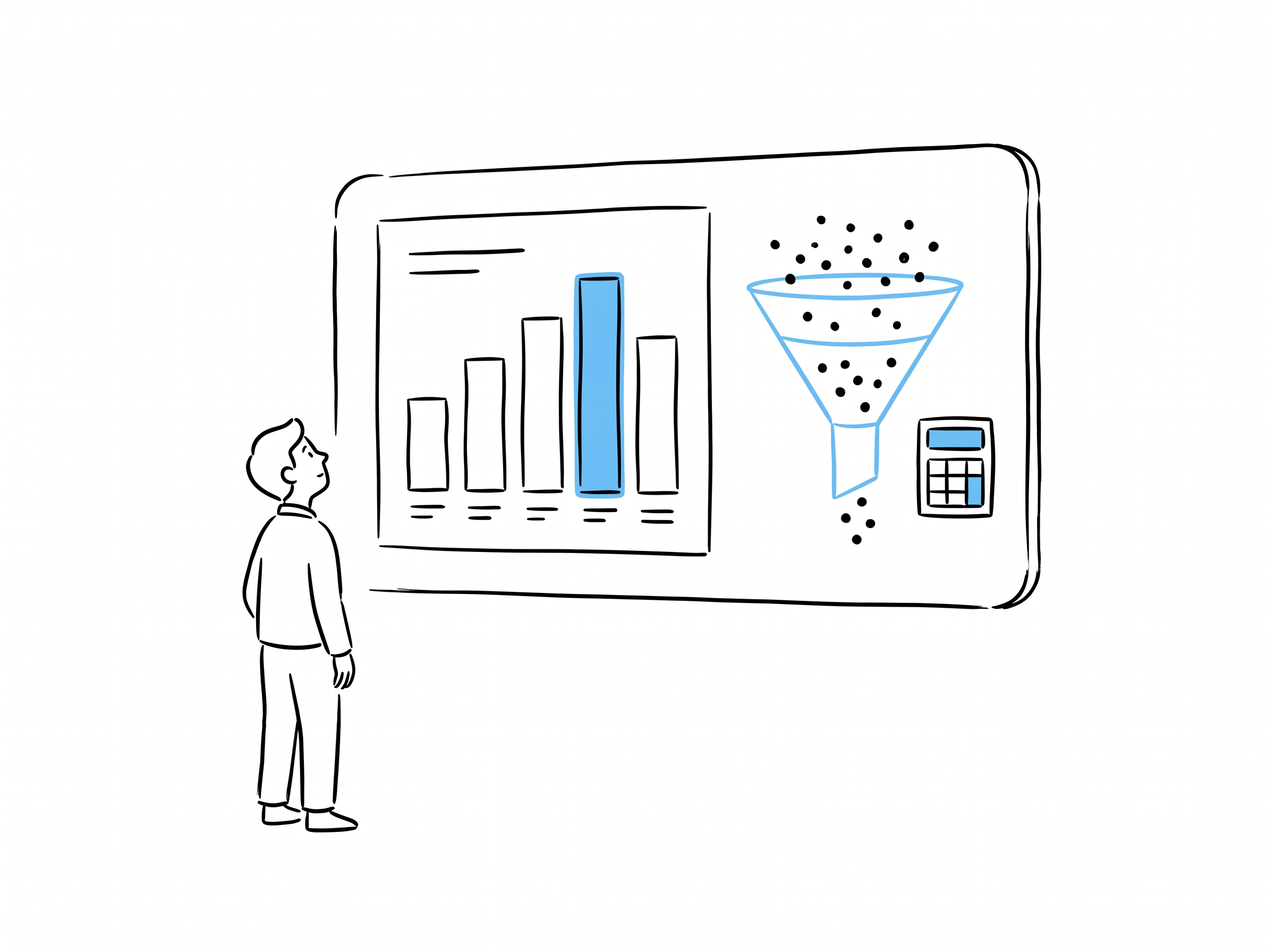
- Conversion Rate Calculator turns raw visits into a number you can act on — sessions, signups, and paying customers, side by side, before you spend another dollar on content or ads.
- Ad Agent takes over paid acquisition testing when SEO alone isn't enough, running structured experiments instead of one agency's best guess.
If you built the product with AI, run growth with AI too. The whole point of a vibe business is that no single person — or agency — has to own every function manually.
The Real Case: A Solo Founder Vibe-Coded His Way to $7M ARR
Josh Mohrer, former Uber NYC GM with no coding background, started vibe-coding an AI note-taking app called Wave in November 2022 using ChatGPT, then Cursor and Claude Code. In a Mixergy interview published February 2026, he says the company now runs at roughly $7M ARR, keeps about $3M in profit after app store fees, and he's still the entire team.
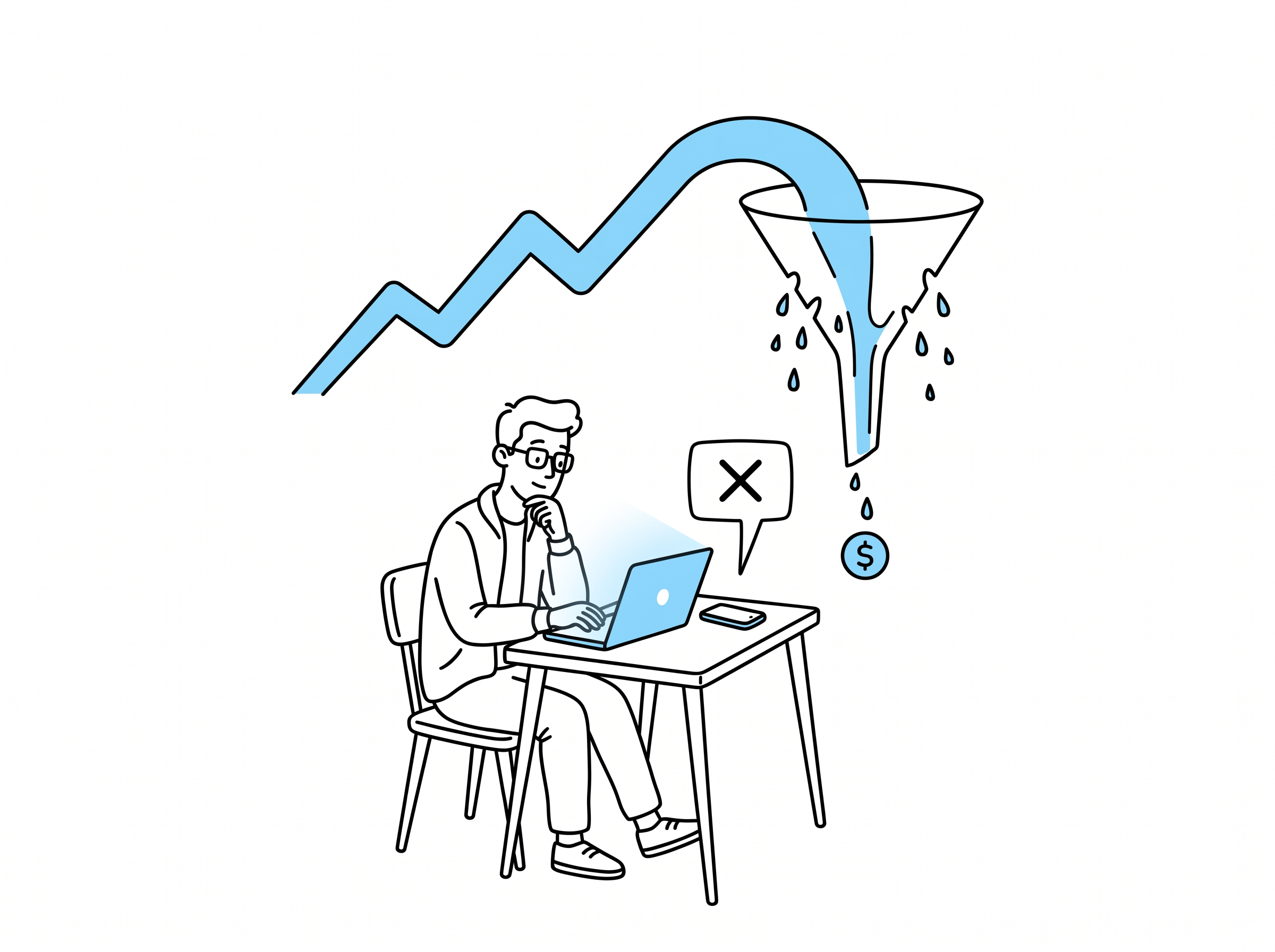
Here's the part that matters for anyone chasing the same playbook. Mohrer built two side products, Wave Pod and Wave Tube, purely as SEO plays. They pull "a couple thousand visits a day" and generate around 550 free signups a month — and by his own account, "none of them are actually Wave users... they don't convert." He's also cycled through multiple paid ad agencies over the years; each one promised results, and each one failed to make Meta ads work again after an earlier stretch that took him from $1M to $6M ARR. Vibe coding got him a real product and real traffic. It did not solve conversion or paid acquisition — the two problems an SEO/GEO Agent, Ad Agent, and a conversion calculator exist to fix.
Vibe Coding vs. Vibe Business
| Vibe Coding | Vibe Business | |
|---|---|---|
| Scope | Frontend/feature code | Full lifecycle: code, infra, SEO, marketing, ops |
| Output | A working prototype | A product that ranks, converts, and retains |
| Bottleneck it removes | Engineering time | Engineering and growth-team time |
| Failure mode if ignored | Buggy app | Traffic that "doesn't convert" (see Wave AI above) |
A 4-Phase Framework to Turn a Vibe-Coded Product Into a Real Vibe Business
- Ship the MVP. Use your AI coding agent to get a working product live — this part now takes days, not quarters.
- Benchmark visibility before you invest. Run Rank against direct competitors to see if you're even in the conversation before writing content or buying ads.
- Fix conversion before scaling traffic. Plug your funnel into the Conversion Rate Calculator; if signup-to-paid is under 2-3%, more traffic just amplifies the leak.
- Automate acquisition, don't outsource it blind. Hand SEO to the SEO/GEO Agent and paid tests to Ad Agent so growth scales the same way your codebase did — see our AI marketing agent guide for how teams structure this handoff.
Common Mistakes
- Treating SEO traffic as success on its own, without measuring downstream conversion.
- Hiring a new ad agency every time the last one fails, instead of running structured, agent-driven tests.
- Building more features before checking whether existing visitors convert at all.
- Assuming a vibe-coded MVP is "done" — it's the starting line for the growth work, not the finish line.
For a deeper comparison of agency-run growth versus agent-run growth, see AI growth agent vs. marketing agency.
References
- Concat Pro — SEO/GEO Agent, Rank, and Conversion Rate Calculator
- Mixergy — "The $7 Million Vibe Coded App", interview with Josh Mohrer (Wave AI), February 2026
- ByteMonk — "Vibe Coding Is Not Enough. Here's What's Next", YouTube, April 2026