"Vibe business" is what happens after vibe coding: instead of only prompting an AI to write code, you use AI agents to run the whole idea-to-revenue loop — validate, build, ship, and find your first paying customers. For a beginner, that sounds like a shortcut. The real data says it is a shortcut on the build side only. Getting paid still takes a plan.
Search interest backs this up: "vibe coding for beginners" already pulls about 390 monthly searches with medium competition and a rising trend, per Google Keyword Insight data. Beginners are searching for this before they start typing prompts — which is the right instinct.
Where Concat Pro Fits for a Vibe Business Beginner
Before you spend a single dollar on ads or an influencer shoutout, two Concat Pro tools solve the two problems beginners hit right after shipping: nobody knows the product exists, and nobody can tell if it's actually growing.
Rank is Concat Pro's curated leaderboard of top creators and channels by platform and niche — for example, the top 50 Instagram business-consultant accounts or the top TikTok travel influencers. As a beginner with zero audience, you don't need a media budget to start outreach; you need a shortlist of real creators in your niche to pitch for a first wave of users. Rank gives you that starting point instead of a blind cold-DM spree.
Growth Rate Calculator answers the question every beginner asks after their first 30 days: "is this actually working?" Enter your starting and ending revenue (or signups) and it returns a simple growth rate or CAGR — the same math used to judge whether 15-25% month-over-month is healthy for early-stage SaaS. That number, not a vibe, is what tells you whether to keep building or to stop.

Real Vibe Business for Beginners Case Studies
Two documented cases show what a true beginner can realistically do — and what it actually costs in time.
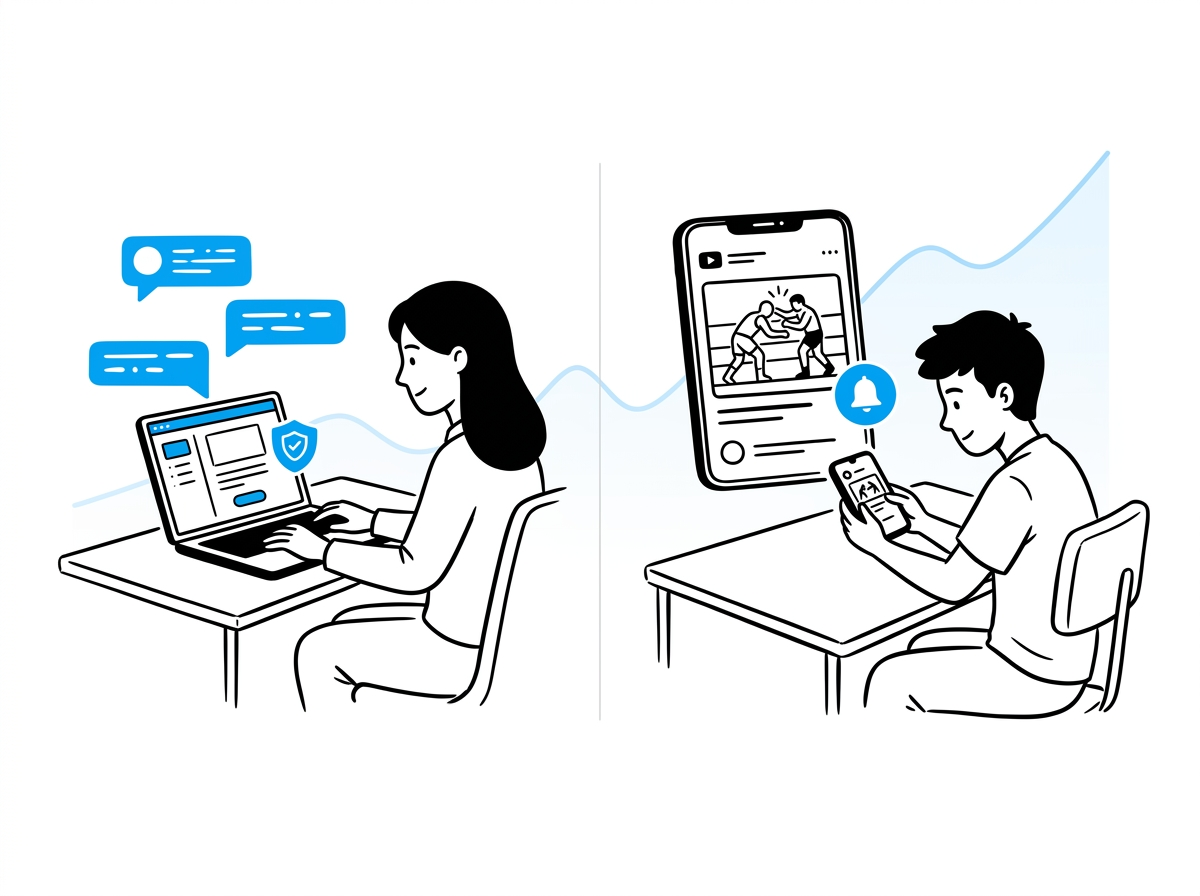
Plinq — non-coder to ~$456K ARR in 18 months. Sabrine Matos came from growth marketing, not engineering, and built Plinq's women's-safety platform on Lovable with no formal technical training. The business crossed 10,000 users and roughly R$2.2M ARR (about $456K). But the founder's own account is explicit about the caveats: she had deep domain knowledge from her prior career, picked a niche with clear pain, and worked 50+ hours a week for a year and a half. Vibe coding removed the technical barrier; it didn't remove the work.
Wrestle.ai — an actual first-time builder at 18. George Lampropoulos says he didn't know how to code when he started. He built an app that lets wrestlers upload match footage for AI-generated technique feedback, priced at $9.99/month or $59.99/year. His own RevenueCat dashboard showed roughly $8K in monthly subscriptions plus annual-plan collections pushing total monthly revenue above $17K. It's a smaller, scrappier outcome than Plinq — and a more typical beginner starting point.
Both stories point the same direction: the AI build step is now nearly free. Distribution and a specific, explainable customer problem are what separate a shipped app from a paying business.
A 4-Phase Framework for Getting Started
| Phase | Manual approach | Vibe business approach |
|---|---|---|
| 1. Learn | Months of tutorials before writing real code | Small throwaway projects with an AI builder to learn the basics |
| 2. Validate | Build a full MVP before talking to anyone | Use AI to build a minimal demo, then test it on real prospects |
| 3. Build | Hire or become a full-time developer | AI-assisted production build, learning engineering practices alongside it |
| 4. Distribute | Cold outreach with no shortlist | Use Rank to find niche creators, price-test openly, track growth weekly |
Skipping phase 2 is the single most common beginner mistake — both featured founders spent real time with prospective customers before scaling the build.
Common Mistakes Beginners Make
- Treating a case study as a template. Plinq's outcome depended on Matos's prior domain expertise; copying her tactics without her market knowledge produces different results.
- Building before validating. Every documented $10K+/month vibe-coded app had either an existing audience, a presale, or a narrow, easy-to-explain problem before it scaled — not just a good prompt.
- Confusing a busy month with real growth. Run your numbers through a growth-rate calculation instead of eyeballing a revenue screenshot; a single strong week can look like a trend and isn't.
- Ignoring the "graduation" costs. Several beginner builds needed a paid developer or security review once real users showed up — budget for that instead of being surprised by it.

Watch: Building an App as a Complete Beginner
For a step-by-step look at what the build phase actually involves, Mikey No Code's "How to Build an App with AI in 2026 as a Beginner (Vibe Coding + No Code)" (128K+ views) walks through building and submitting a real app using only AI tools, no prior coding experience assumed — a useful reality check on how much of the "beginner" promise is genuinely true.
Where to Go Next
Once you've shipped something and validated a first few users, the next questions are usually whether the idea is worth pursuing further, how to think about pricing your first paying customers, and what belongs in your stack once you're past the beginner stage — covered in Top Vibe Business Solutions. Run your own numbers with the Growth Rate Calculator and check Rank for a first outreach list before you spend on ads.
References
- Concat Pro — Rank and Growth Rate Calculator
- Steal What Works — "Which vibe-coded apps make over $10K/month?" (Plinq and Wrestle.ai revenue data)
- Mikey No Code, YouTube — "How to Build an App with AI in 2026 as a Beginner"