Vibe Business Service: How to Actually Run One Without Breaking It
Every "vibe coding" guide covers the same 20 minutes: describe an app in plain English, watch Lovable or Bolt scaffold it, ship a demo. Almost none of them cover what happens next — when that vibe-coded product has to become a vibe business service: software you build fast with AI and then run, on an ongoing basis, either as a paid service for clients or as your own recurring offering. That's a different job than shipping a prototype, and most founders discover the gap only after real users show up.
Where Concat Pro Fits Into a Vibe Business Service

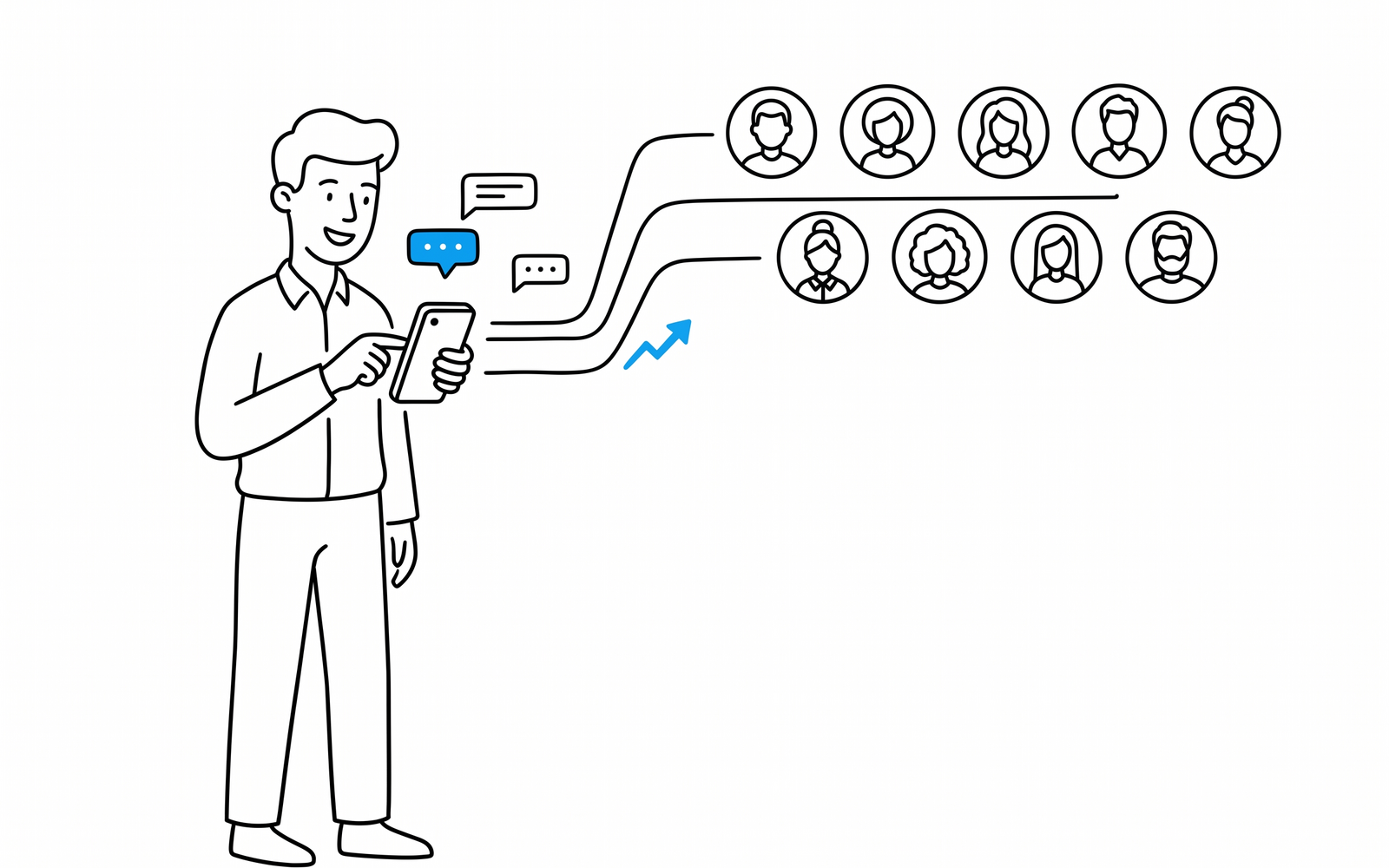
Running a vibe business service means two things have to work at once: the product has to hold up under real usage, and you have to keep finding the next client, partner, or user without a dedicated growth team. This is the exact gap Concat Pro is built for once the build phase is done. Rank surfaces top influencers and channels across your niche, giving a solo operator a starting point for finding relevant creators or partners to reach instead of scrolling platforms manually. Once you have a shortlist, the Creator Agent turns it into structured outreach — sequenced messages and tracked replies — instead of a spreadsheet nobody updates. And before you commit a week to a growth push, the free Growth Rate Calculator takes a start value, an end value, and an optional number of periods, and returns your Simple Growth Rate or CAGR, so you know whether last month's push actually moved the number or just felt busy.
What "Vibe Business Service" Actually Means
Two models fall under this term, and conflating them is why so many founders get stuck:
- Build-for-hire. An agency or freelancer uses vibe coding tools to build and maintain software for clients — faster delivery, but real accountability once a client's revenue depends on the app.
- Productized service, vibe-coded. The product itself is a service business (a creator-management platform, a booking tool, a niche SaaS) that was built rapidly with AI and now has to run reliably for paying users.
Both share the same failure mode: speed to demo does not equal readiness to operate. A prototype that works for one test user is not the same system that has to hold up for a hundred paying ones.
Real Case: Hardening a Vibe-Coded Service Business
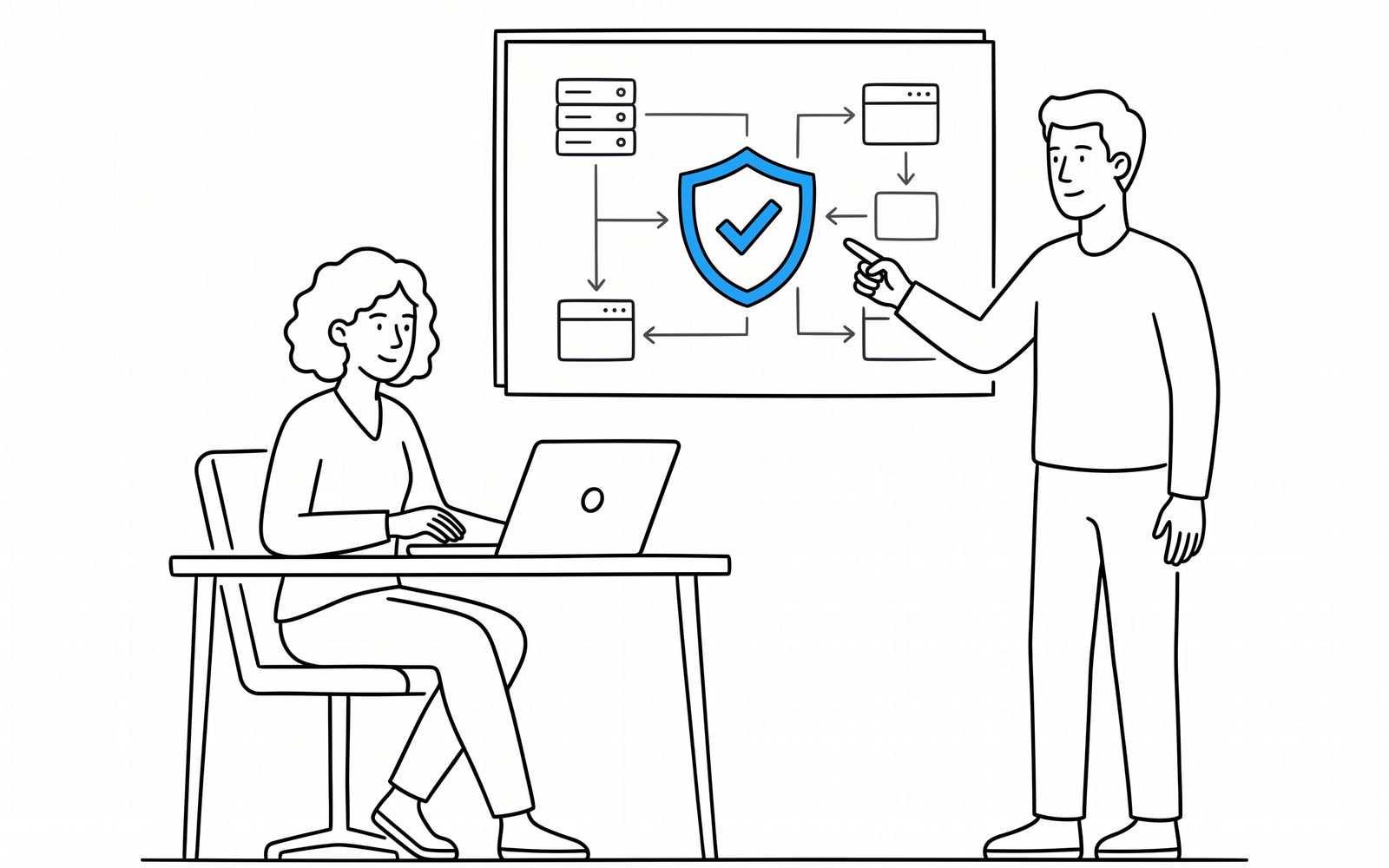
Gaincafe Technologies documented a concrete example in 2026. A client, Creator Solutions AI, had already built a working multi-tenant platform for managing creators, agencies, and managers — a genuine vibe business service, built rapidly with AI-first tools, with real users onboarding and sensitive financial data flowing through it. A full rewrite was off the table because the business was already running. Gaincafe's team ran a structured audit, found gaps in row-level security and authentication boundaries, then executed a phased hardening plan: a properly scoped role-based auth layer, tenant-level access controls on every sensitive table, rate limiting on financial endpoints, and a CI/CD pipeline covering the most-used functions — all without changing what end users saw. The platform went from a fragile prototype to a system reliably handling concurrent agency workflows. The lesson generalizes past this one case: the moment a vibe-coded service business has real users and real money moving through it, "it works on my machine" stops being an acceptable bar.
DIY Vibe Coding vs. Running a Vibe Business Service
| Building a Personal Vibe-Coded App | Running a Vibe Business Service | |
|---|---|---|
| Users | You, maybe a few testers | Paying clients or end users |
| Failure cost | Annoying | Lost revenue, lost trust |
| Security bar | Optional | Non-negotiable (auth, data isolation) |
| Growth motion | None needed | Ongoing client/partner acquisition |
| Measurement | Vanity — "it launched" | Growth rate, retention, response rate |
Common Mistakes
- Treating "it demoed well" as "it's production-ready." Most vibe-coded backends ship with default-open access rules that were never meant to survive contact with real data.
- Growth as an afterthought. A service business with no repeatable way to find its next ten clients plateaus the moment the founder's personal network runs out.
- No baseline for growth. Without tracking a real growth rate month over month, you can't tell a genuine trend from a lucky week.
- Skipping outreach structure. One-off DMs to prospective clients or partners convert far worse than a sequenced, tracked follow-up process.
For more on turning discovery into a repeatable growth motion once your service is stable, see Concat Pro's breakdown of growth tools for creator startups and the case for running growth in-house instead of retaining an agency — both apply directly once your vibe-coded service has to scale past its first few clients. If you're weighing whether your whole stack should run on one connected system rather than disconnected tools, this look at AI-native growth architecture is the deeper version of the same argument.
Ivan KV's widely watched breakdown, Top 3 Business Ideas For Vibe Coders (Shark Numbers, published December 2025, 2.6M+ views), makes the same case from the builder's side: turning a vibe-coding skill into an actual business means combining AI-built products with real payment infrastructure and a distribution plan — not just shipping a demo and hoping.
The Bottom Line
A vibe business service only survives past the demo if two things happen in parallel: the codebase gets hardened for real users, and someone owns finding the next client without waiting for referrals. Skip either one, and speed to launch turns into speed to churn.
References
- Concat Pro — Rank, Creator Agent, and Growth Rate Calculator
- Gaincafe Technologies — "Is Your Vibe Coded App Ready for Scale? The Complete 2026 Guide", Creator Solutions AI case study
- Shark Numbers (Ivan KV) — "Top 3 Business Ideas For Vibe Coders", YouTube, December 2025