Most ecommerce teams treat AI social media marketing as a content-speed hack: type a prompt, get ten captions, post faster. That is not why AI is changing paid and organic social right now. Meta's ad-retrieval system, code-named Andromeda, rolled out globally at the end of 2025 and now rewards accounts that feed it many creative variants, not accounts that post fast. Platforms are matching individual shoppers to individual ad creatives, and the accounts winning are the ones that treat creative variation, audience signals, and reporting as one connected system instead of three separate jobs.
That shift is the real opportunity — and the real operational problem. Someone on the growth team has to source enough creator content, generate enough ad variants, and prove which variant actually drove revenue, every week, without a five-person production team.
How Concat Pro Powers AI Social Media Marketing for Ecommerce
Concat Pro is built as an AI CMO, and three of its live agents map directly onto the creative-volume problem above.
Creators agent finds creators aligned with your brand, audience, and growth strategy — the fastest way to build the pool of authentic, people-first footage that AI ad systems now favor over polished studio content. Instead of manually scrolling TikTok and Instagram for a week, you get a shortlist matched to your niche before you brief anyone.
Ads agent runs AI-powered influencer ads optimized for performance and growth. It is the piece that turns one piece of creator content into the multiple ad variants Andromeda-style systems need to test — without spinning up a separate creative team for every campaign.
Rank is a curated leaderboard of top-tier creators by platform and niche — think "Top 50 TikTok Beauty Creators" or "Top 20 YouTube Food Channels." Use it as your starting shortlist before outreach, so your creator-sourcing step for social ads starts from a vetted list instead of a cold search.
Growth Rate Calculator takes an initial value, a final value, and an optional number of periods, and returns a Simple Growth Rate or CAGR — useful for turning "engagement is up" into a number you can actually defend in a reporting meeting, and for checking a campaign's growth against ecommerce revenue benchmarks (roughly 10-20% per year is the normal range the calculator's own benchmark table cites).
None of this replaces your media buyer. It replaces the two hours a week someone spends manually finding creators, guessing at ad variants, and eyeballing whether a growth number is real.

The Four-Phase Framework
- Source, don't scroll. Build a creator shortlist through Rank and creator-discovery outreach before a campaign brief exists. Aim for 8-12 creators per niche so you always have fresh footage in the queue.
- Generate variants, not one hero ad. For every piece of creator content, produce 4-6 ad variants (different hooks, captions, first three seconds) instead of one "best" version. Feed the algorithm choice; let it find the winner.
- Scale the winners incrementally. Increase budget on a winning variant in 20-30% steps rather than doubling overnight — sudden spend jumps reset the algorithm's learning phase and spike CPA.
- Report growth rate, not raw deltas. Standardize every campaign readout as a period-over-period growth rate so a launch-week spike never gets confused with durable growth.
Real Growth Cases
The clearest recent proof that creative volume — not creative polish — drives ROAS on social comes from paid-media agency Naniza's 2026 breakdown of scaling Meta ads under Andromeda.
JNPR Spirits, a DTC non-alcoholic spirits brand, restructured its Meta account around a creative-volume framework: 3-4 focused campaigns, an ABO-test-then-CBO-scale loop, and 20-30% incremental budget increases instead of large jumps. Over 12 months, revenue grew 265% year-over-year, cost per acquisition dropped 41%, and ROAS improved from 2.8x to 4.6x.
Letshelter, another ecommerce client on the same framework, cut cost per order by 56% while increasing monthly ad spend by 180% — proof that the volume approach scales spend without the usual efficiency penalty.
Both brands won by treating social ad creative as a pipeline with many inputs, which is exactly the workflow the Creators and Ads agents above are built to support.
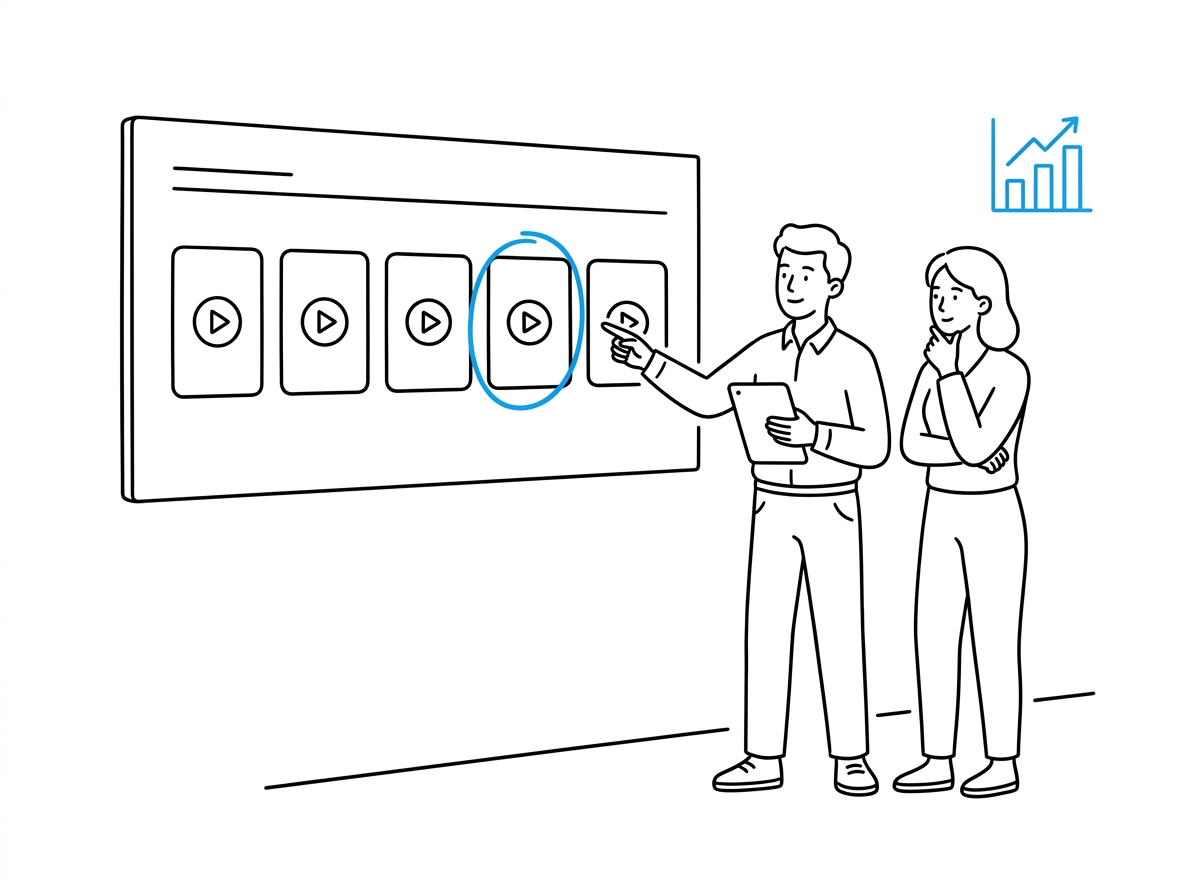
AI Social Media Marketing for Ecommerce, Explained on Video
For a practical, recent walkthrough of how the broader algorithm shift is reshaping social strategy in 2026 — including how AI is changing what gets seen and shared — watch Jade Beason's "Marketing is changing! 2026 Social Media Marketing Trends" (13,474 views, published February 2026).
Manual vs. AI-Assisted Social Marketing
| Task | Manual approach | AI-assisted approach |
|---|---|---|
| Creator sourcing | Scroll TikTok/Instagram, DM cold | Rank leaderboard + Creators agent shortlist |
| Ad creative | 1 hero ad per creator clip | 4-6 variants generated per clip |
| Budget scaling | Double spend after a good week | 20-30% incremental steps, ABO-test then CBO-scale |
| Reporting | "Engagement is up" | Standardized growth rate / CAGR per period |
Common Mistakes
- Scaling budget too fast. Doubling spend on a winning ad resets Meta's learning phase and inflates CPA — scale in small steps instead.
- Shipping one ad per creator. A single polished ad starves the algorithm of the variety it needs to find the best match.
- Reporting raw percentage jumps. A 300% week-over-week spike from a tiny base is not the same as sustained growth — always calculate against a consistent baseline.
- Treating creator outreach as one-off. Refresh your shortlist every quarter; stale creator lists produce stale creative.
Once the creative and reporting loop is running, the next gap is usually retention and personalization — worth reading alongside this: AI personalization in ecommerce, AI analytics for ecommerce, and AI lead generation for ecommerce cover the pieces that turn social traffic into repeat revenue.
References
- Concat Pro — Rank and Growth Rate Calculator
- Naniza — How to Scale Meta Ads for Ecommerce in 2026
- Jade Beason (YouTube) — Marketing is changing! 2026 Social Media Marketing Trends