A "vibe business" is what happens when vibe coding stops being a side-project trick and becomes the operating model for an entire company. You describe the outcome in plain language, AI writes the code, drafts the copy, and runs the workflow, and you focus on the one thing it can't do: judging whether the market actually wants it. So how does vibe business work in practice? It runs on a loop — pick a problem, ship the smallest version, put it in front of real people, read the signal, scale or kill — fast enough that a solo founder can out-execute a team ten times their size.
How Does Vibe Business Work With Concat Pro
This is where most solo operators get stuck: AI can build the product in a weekend, but nobody can find it, and there's no team to run growth in parallel. That's the gap Concat Pro closes. Say you vibe-coded a niche SaaS tool over the weekend — the loop's "build" step is done, but "get it in front of real people" now needs an actual growth motion, not more guessing.
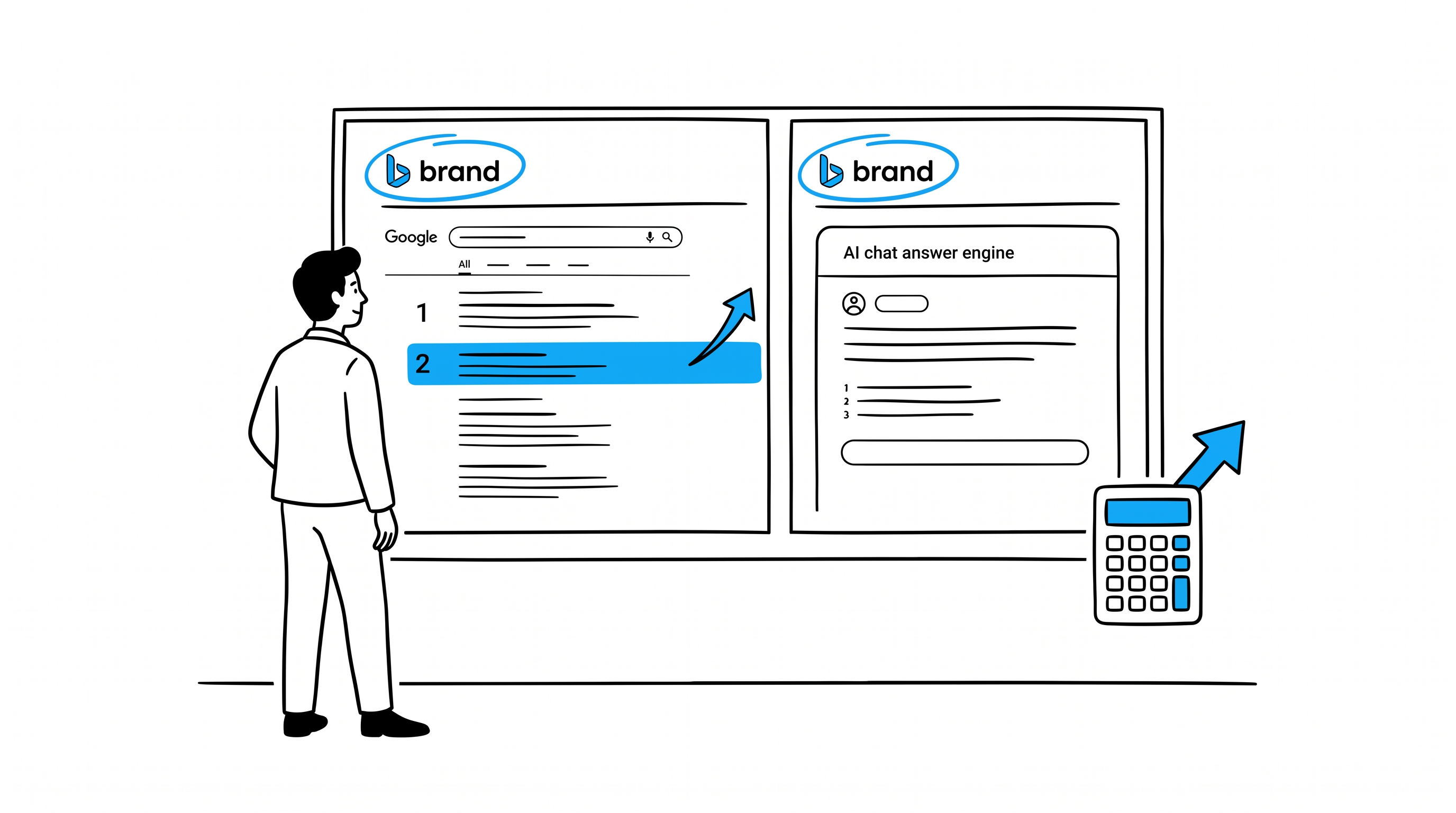
Start with Rank to see where you already show up — and where competitors beat you — across Google and AI answer engines like ChatGPT and Perplexity, before writing a single line of marketing copy. Feed that gap analysis into the SEO/GEO Agent to draft and ship content targeting the exact terms your buyers search, so distribution starts on day one, not month three. Then, before scaling spend or hiring, run the numbers through the Growth Rate Calculator — if week-over-week growth doesn't clear the bar, that's your signal to kill or pivot, not push harder. That's the vibe business loop minus the guesswork: build fast with AI, verify distribution and growth with data, then decide.
The Six-Step Vibe Business Loop
Vibe business isn't "no process" — it's a tight, repeatable loop, adapted from the framework laid out by IFQ.AI's Vibe Business From First Principles:
- Pick a real problem and a real customer. Not a feature idea — a specific person's specific pain, one you can name.
- Load market context into your AI stack. Competitors, pricing, existing solutions — so the AI isn't building blind.
- Build the smallest verifiable thing. A landing page, a single workflow, a paywall — not a roadmap.
- Get it in front of real people. Distribution is not optional homework for later; it's part of the build.
- Verify with real signals. Payment, retention, repeat usage — not likes, views, or "great feedback."
- Scale what works, kill what doesn't. No sunk-cost attachment to code you didn't personally write.
The mantra behind it: you judge, AI executes, the market pays.
Vibe Business vs. Traditional Manual Operations
| Manual business build | Vibe business | |
|---|---|---|
| Time to first version | Weeks to months | Days |
| Team required | Devs, designers, ops hires | 1–2 people + AI tools |
| Validation method | Pitch decks, surveys | Real payments, real usage |
| Cost to test an idea | $5K–$50K+ | Near-zero |
| Failure cost | Sunk salaries, sunk months | A weekend |
The core difference isn't speed for its own sake — it's that failure gets cheap enough to test ten ideas instead of betting everything on one.
Real Vibe Business Growth Cases
Career coach Julia Starr used the AI app builder Lovable to vibe-code "Threshold," a paid app replicating her own coaching methodology — built during a two-day hackathon and refined over roughly 50–60 additional hours using ChatGPT for prompt workshopping and Claude to analyze user-test transcripts. She tested a $150 price first; users said no, so she dropped it to a one-time $29. Result: 75% of visitors who reach the paywall convert, and the app now runs largely hands-off, feeding her higher-ticket coaching practice. (Source: Business Insider.)
Indie developer Vadim Savin took a public build-in-public approach with notjust.dev: shipping a portfolio of small vibe-coded apps and publishing real revenue numbers along the way instead of a polished after-the-fact success story. That discipline — ship, measure, publish the number, repeat — is the loop in action, not a one-off launch.
Watch: How to Get the Most Out of Vibe Coding
For a deeper, hands-on look at running this loop, watch Y Combinator's Startup School session on vibe coding — a practical playbook from YC partners on directing AI to build and ship real products fast. It's the same discipline vibe business runs on: pick the tool, describe the outcome, then judge the result.
Common Mistakes to Avoid
- Starting from the tool, not the pain. "I want to use AI to build X" is a solution looking for a problem.
- Chasing vanity metrics. Signups and views don't pay rent; payment and retention do.
- Automating an unvalidated process. Speeding up a broken workflow just breaks it faster.
- Skipping the market-verification step. If you haven't put it in front of strangers who could say no, you haven't tested anything.
- Refusing to kill what isn't working. The whole point of cheap builds is that walking away costs nothing.
The Bottom Line
Vibe business works because it collapses the distance between idea and evidence — AI handles execution, you handle judgment, and the market tells you the truth faster than any deck ever could. If you're already assembling your stack, our breakdown of tools startups actually use to grow and how lean teams handle AI content creation are natural next steps once your first vibe-coded build is live.
References
- Concat Pro — Rank, Growth Rate Calculator, and the SEO/GEO Agent for turning a vibe-coded build into a distribution motion.
- Business Insider — "I vibe-coded an app with Lovable that replicates my coaching methodology. It's now largely passive income."
- Y Combinator (YouTube) — "How To Get The Most Out Of Vibe Coding | Startup School"