Vibe coding lets anyone describe an app in plain English and watch an AI model generate the code. Vibe business takes that one step further: using the same describe-and-generate loop to run the marketing, pricing, and growth of what you just built. The pitch is seductive — no developer, no agency, no headcount. But not every founder or project is a fit, and picking wrong wastes weeks. This article breaks down who should actually use a vibe business model, who should wait, and where a tool like Concat Pro fits once you've decided to build.
Who Should Use Vibe Business: The Non-Technical Builder
The clearest fit is the non-technical builder with a specific, describable problem. Michael Xeus, a solo founder with no coding background, used vibe coding to build and sell a micro-SaaS tool in 72 hours, spending roughly $80 a month on tool costs and generating $1,276 in revenue and $2,457 in net profit in the first month, with 47 paying customers by month one. What made him a good fit was not technical skill — it was the ability to describe the problem precisely, the patience to iterate on AI output instead of expecting a one-shot result, and enough baseline technical literacy to sanity-check what the AI produced.
That last point matters because Xeus's own project hit a wall: the final 10% of the build, involving security and data handling, needed a $150 freelance developer plus paid security consulting. That is the honest shape of vibe business today — great for getting to a working, sellable product fast, weaker once you need production-grade security or complex backend logic.
Once you're past the build and into growth, this is where Concat Pro's SEO/GEO Agent and Rank become relevant early, not as an afterthought. A vibe-coded product still needs to be found. Concat Pro's SEO/GEO Agent generates search- and AI-answer-ready content directly from your brand facts, and Rank shows the top-ranked influencers and channels within a given platform and category — useful the moment a solo builder needs to find the right creators to reach for early distribution, instead of guessing who to contact.
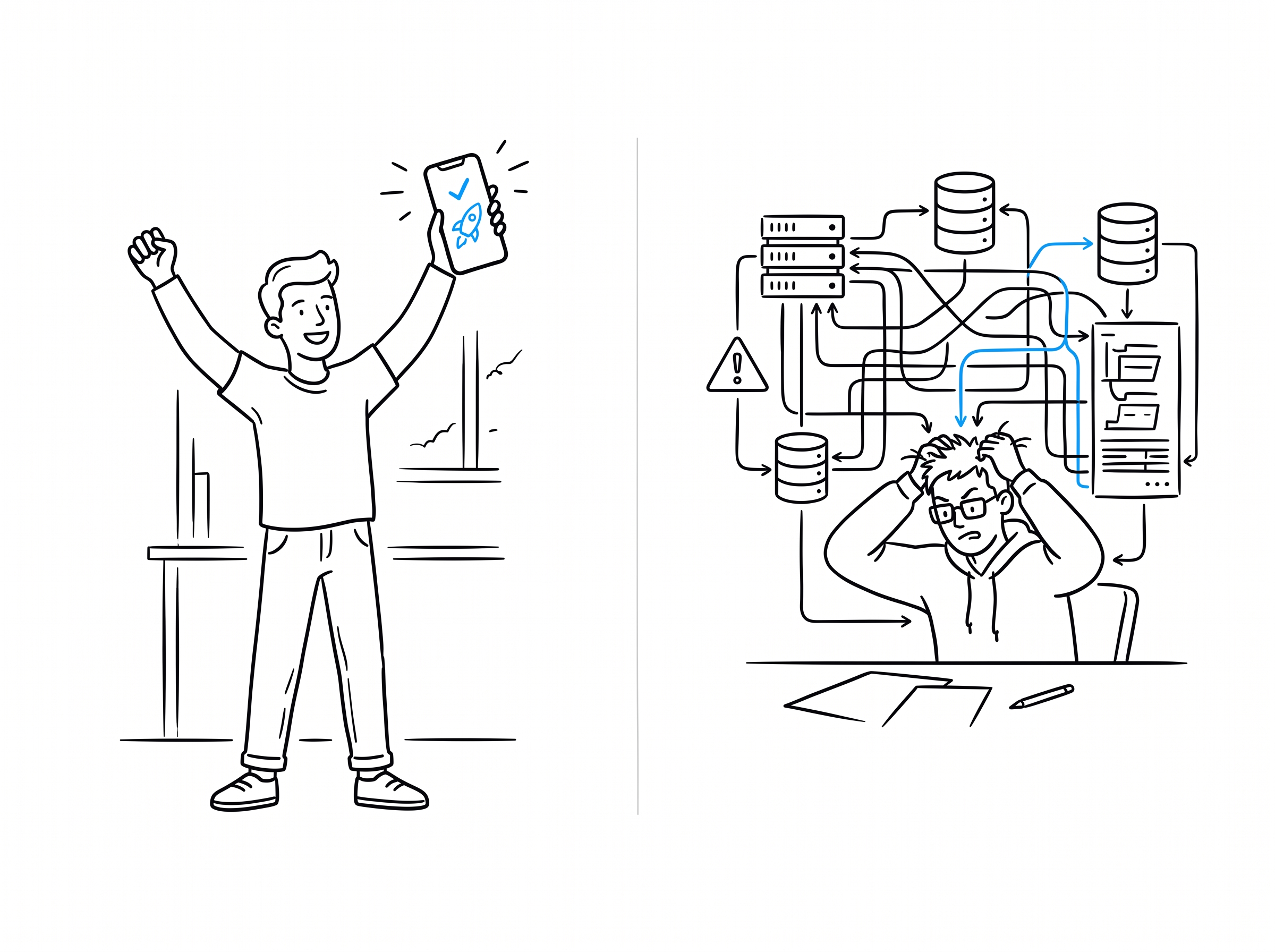
Who Should Use Vibe Business for Internal Tools and MVPs
Forbes contributor Jodie Cook frames the fit criteria clearly: vibe coding is the biggest unlock for non-technical founders when the target is internal tools, MVPs, landing pages, dashboards, or workflow automations — projects where speed matters more than architectural purity. Her piece also cites accelerating enterprise and developer adoption data from Gartner and GitHub as evidence this isn't a fringe habit anymore. If you are validating an idea, replacing a spreadsheet, or shipping a landing page to test demand, vibe business is close to the ideal use case: low stakes if it breaks, high value if it saves you a hiring cycle.
Who Should Wait: Complex, Regulated, or High-Scale Products
The same Forbes analysis draws the opposite line just as clearly: complex systems that need to scale to millions of users, or that handle sensitive financial or health data, are a poor fit for vibe coding in its current state. This tracks with what Xeus found in practice — the deeper the system goes into security, compliance, or heavy concurrent load, the more you need an actual engineer, not just an AI that writes plausible-looking code. If your founder-market fit questions are still unresolved, that's fine — build fast and cheap to answer them. If you already know the answer is "yes, and it needs to handle real user data at scale," treat vibe coding as a prototyping phase, not the production plan.
In the YouTube walkthrough "Best Vibe Coding Tools in 2026", creator Mikey No Code grades four leading AI builders against real projects — websites, games, and full web apps — and the pattern holds: tools that handle simple, well-scoped builds cleanly still struggle with complex business logic and native auth at scale. That's a useful gut check regardless of which side of the fit line you're on.

What to Check Before You Commit
- Can you describe the problem and the user in two or three plain sentences? If not, wait — vague prompts produce vague products.
- Does the project touch payments, health records, or regulated data? If yes, plan for a paid security review, the way Xeus did.
- Are you trying to validate demand or scale an existing hit? Vibe business is built for the former.
- Do you have a plan for getting found once it's live? Building fast doesn't make you discoverable — that's a separate, deliberate step.
On that last point, Concat Pro's Growth Rate Calculator is a quick way to sanity-check whether your early user numbers — like Xeus's 47 customers in month one — represent momentum worth doubling down on, or a plateau that needs a different channel strategy before you scale spend.
If you want the fuller picture, Concat Pro's guides on what a vibe business actually is, the tools stack behind it, and whether the numbers hold up go deeper into each stage than this fit framework can.
Bottom Line
Vibe business rewards non-technical builders solving describable problems, teams shipping internal tools or MVPs, and anyone willing to budget for the last 10% that AI can't finish alone. It's a weaker fit for regulated, high-scale, or security-critical products — at least until the tooling matures further.
References
- Concat Pro — What Is a Vibe Business? The AI-Run Company Model, Explained
- Jodie Cook, Forbes — Vibe Coding Is The Biggest Unlock For Non-Technical Founders Right Now
- Michael Xeus, Medium — From Prompt to $12,000: How I Used Vibe Coding to Build and Sell a Micro-SaaS in Exactly 72 Hours