A shopper lands on a product page at 11pm with one question standing between them and checkout — "does this run true to size?" — and no one is there to answer it. That single unanswered question is why AI chatbots for ecommerce have moved past the novelty stage: they're now a measurable revenue lever, not just a support-cost cutter. Below are two named brands with public before-and-after numbers, what it costs to get the rollout wrong, and where a visibility-and-ROI tool like Concat Pro fits before you sign a chatbot contract.
Where Concat Pro Fits Before You Deploy AI Chatbots for Ecommerce
Concat Pro doesn't build the chatbot widget that sits on your product pages — that's not what it does, and this article won't pretend otherwise. What it does is close the two gaps that decide whether a chatbot rollout actually pays for itself.
First, a chatbot can only recommend and answer from what it can find. Concat's SEO/GEO Agent generates SEO-friendly, AI-answer-ready content — sizing guides, FAQ pages, shipping policies — adapted to each platform and published in one click, so both your own chatbot and outside AI shopping assistants like ChatGPT have an accurate, citable source to pull from instead of guessing or sending the shopper to a competitor.
Second, Concat Rank surfaces top influencers and channels across industries and platforms, giving you a starting point for creator research and helping you find relevant people to reach with your product. Once your chatbot has real before-and-after numbers worth talking about, Rank is how you find the right voices to feature that win — instead of cold-scrolling TikTok and LinkedIn guessing who covers ecommerce CX.
Before committing budget to any chatbot platform, run your numbers through the Growth Rate Calculator. Plug in your current cart-abandonment rate, average order value, and monthly traffic, and model what recovering even a few points of abandoned-cart revenue is worth per month. That single step is what separates the brands below — who can point to a specific euro figure — from teams that installed a chat widget and never measured whether it moved anything.

Real Growth Cases: AI Chatbots for Ecommerce in Action
eye-oo, an online eyewear retailer, deployed a Tidio-powered AI chatbot to greet visitors, answer product questions, and recover abandoned carts automatically. The chatbot drove €177,000 in revenue directly attributed to its conversations, lifted sales by 25% through automated cart-recovery messages, and produced 5x more conversions from chatted visitors than from visitors who never opened the widget. Average reply time fell from roughly 5 minutes to about 30 seconds — fast enough that the question that used to lose a sale at 11pm now gets answered before the shopper leaves the tab.
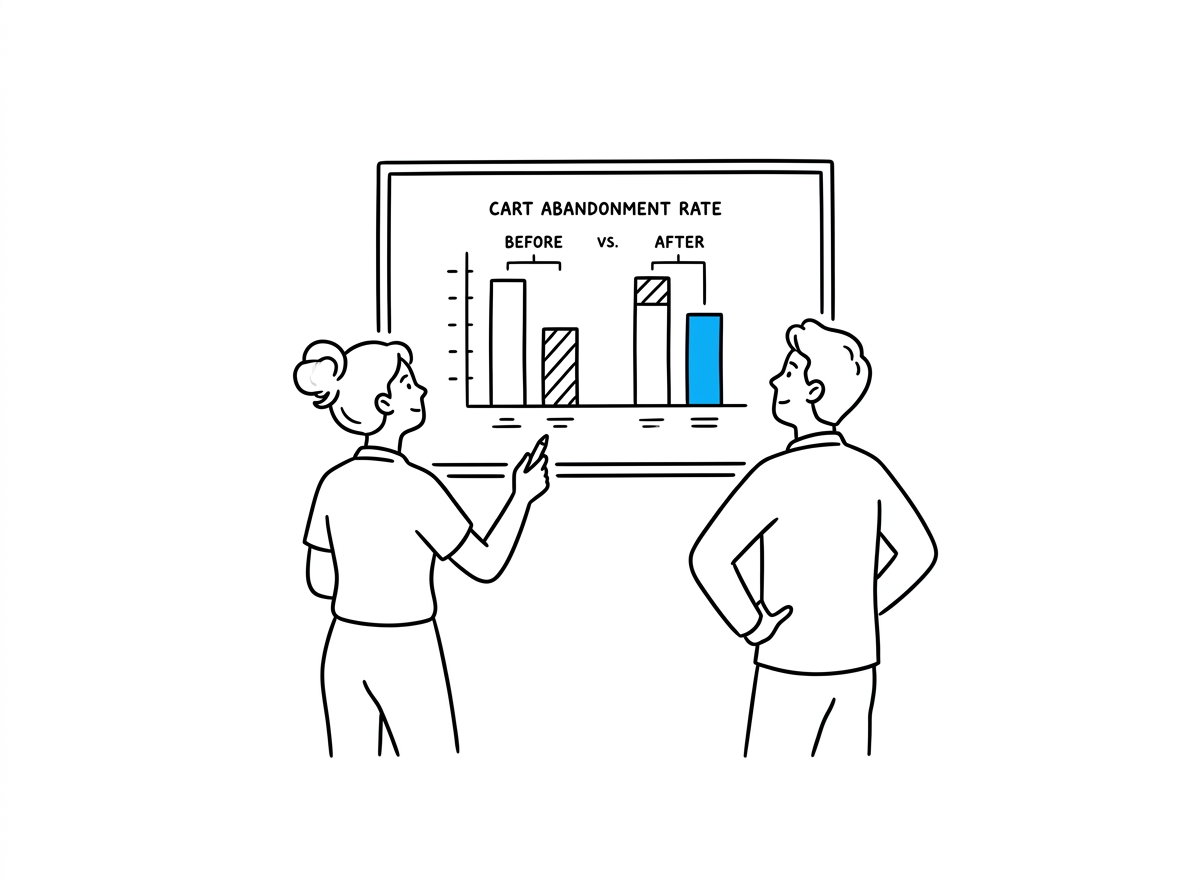
Ad Hoc Atelier, a fashion marketplace, saw an even starker before-and-after. Before its chatbot rollout, conversion sat at 0.35% and cart abandonment ran at 83%, with customer replies taking roughly 3 hours. After deploying an AI chatbot, conversion rose to 0.9% — a 157% increase — cart abandonment dropped to 73%, and response time collapsed to about 1 minute. Neither brand rebuilt its store or repriced its catalog; both changed how fast a real question got a real answer. (Source: Tidio — 8 Ecommerce Brands That Increased Sales With AI Chatbots)
For a broader look at which AI chatbot approaches are actually worth adopting this year, this recent breakdown is worth watching:

Manual Support vs. AI Chatbots for Ecommerce
| Task | Manual Approach | AI Chatbot Approach |
|---|---|---|
| Reply time | Hours, queue-dependent (Ad Hoc Atelier: ~3 hrs before) | Seconds to ~1 minute (Ad Hoc Atelier: after) |
| Abandoned carts | Recovered only via scheduled email blasts | Chatbot messages in real time as visitors hesitate |
| Sizing / product questions | Answered if an agent is online | Answered instantly, any hour |
| Conversion impact | Untracked, assumed flat | eye-oo: 5x more conversions from chatted visitors |
| Measuring ROI | Rarely tied to a dollar figure | Growth Rate Calculator models cart-recovery revenue before rollout |
Common Mistakes When Deploying AI Chatbots for Ecommerce
- Launching without a citable knowledge base. A chatbot that can't parse your sizing chart or return policy will guess — or worse, escalate every question to a human, erasing the speed gain. Fix the content layer with the SEO/GEO Agent first.
- Treating it as a cost-center only. eye-oo's 25% sales lift and Ad Hoc Atelier's 157% conversion jump show chatbots are a revenue channel, not just a way to answer fewer tickets by hand.
- No dollar baseline before rollout. "Replies feel faster" isn't a result. Run your current cart-abandonment and traffic numbers through the Growth Rate Calculator so the after-number means something.
- Ignoring the handoff point. Both case studies kept a path to a human for anything the bot shouldn't resolve alone — the fastest deployments still fail gracefully.
- Skipping distribution once you have real numbers. A verified before-and-after case is worth featuring — use Rank to find creators and channels already covering ecommerce CX before you write the case study up yourself.
Putting It Together
Both eye-oo and Ad Hoc Atelier ran the same underlying play: replace a multi-hour or multi-minute reply gap with an instant one, and let the chatbot catch hesitation at the cart before it turns into a bounce. Before you sign with a vendor, confirm your product content is citable, model the cart-recovery math, and pick the specific friction points — sizing questions, shipping status, cart hesitation — to automate first. For related workflows, see how AI customer service for ecommerce tackles the support-ticket side of the same automation, how AI lead generation for ecommerce uses chatbots to capture intent before checkout, and AI in ecommerce examples for more verified cases across the funnel.
References
- Concat Pro — SEO/GEO Agent, Rank, and Growth Rate Calculator
- Tidio — 8 Ecommerce Brands That Increased Sales With AI Chatbots: eye-oo (€177K attributed revenue, 25% sales lift, 5x conversions) and Ad Hoc Atelier (0.35%→0.9% conversion, 83%→73% cart abandonment)
- Jon Law — Here's What AI Chatbots to Use in 2026 | Chatbot Guide