AI for Ecommerce Sales: Turning Product Pages Into a 24/7 Sales Floor
A shopper lands on a product page, has one question about fit or use case, can't find the answer, and leaves. That single unanswered question is the most expensive moment in ecommerce, and it happens thousands of times a day on stores that still treat the product page as a static brochure. AI for ecommerce sales exists to close that exact gap: instead of a shopper bouncing to a competitor's search result, an AI agent answers the question, recommends the right item, and pushes the sale forward in the same conversation.
This is not the same problem as AI customer service or AI personalization, even though the three overlap. Customer service AI resolves tickets after a purchase. Personalization AI reshuffles what a shopper sees. AI for ecommerce sales sits earlier and more directly on revenue: it is the AI acting as the sales associate, in the moment a shopper is deciding whether to buy, upsell in hand.
How Concat Pro Supports Your AI for Ecommerce Sales Stack
Concat Pro does not build the AI shopping assistant that closes the sale on your product page — that is a job for a dedicated conversational-commerce platform. What Concat Pro does is the growth-ops layer that makes an AI-for-ecommerce-sales rollout accountable instead of a guess.
Before you sign a vendor contract, Concat Pro's Growth Rate Calculator lets you model the dollar value of a projected AOV or conversion lift against your current baseline — plug in your current average order value and your projected lift from an AI sales agent pilot, and see the monthly revenue difference before you commit budget, then re-run the same numbers after launch to confirm the lift actually happened. Once you have real numbers to talk about, Concat Pro's Rank surfaces curated top-tier creators across YouTube, Instagram, TikTok, and X by platform and niche, so you can find creators already active in your category to feature the AI-powered shopping experience instead of guessing which accounts to pitch. And when you are ready to promote the win, Concat Pro's Ad Agent generates video, image, and creative ad assets from your brand identity, audience insights, and campaign goals, then lets you refine and publish across platforms in one click, so the campaign announcing your new AI sales agent does not stall in a separate creative-production queue.
Put simply: the AI sales agent changes the conversation a shopper has on your site. Concat Pro proves what that change is worth, finds the audience worth telling, and ships the ad that tells them.

Real Growth Cases: AI for Ecommerce Sales in Action
Victoria Beckham Beauty deployed Alhena AI's Shopping Assistant, built around a "Main Agent" architecture with a dedicated AI Stylist and Fit Assistant, to give online shoppers the same guidance a customer would get from a knowledgeable in-store sales associate. The AI plugs directly into the brand's order management system, product catalog, and knowledge base, and was fine-tuned to replicate the brand's in-store tone rather than sound like a generic bot. Instead of answering one FAQ at a time, the AI Stylist proactively recommends complete looks rather than single items. The result: a 20% increase in average order value and a 10% lift in overall online sales revenue, available 24/7 across regions. "For us, Alhena was almost a no-brainer. From pre-Alhena, the average order value has actually gone up by 20%," said Ewan Qualters, Victoria Beckham's Global Digital Director.
Tatcha, the prestige skincare brand, used the same category of AI shopping assistant to scale its signature ritual-building experience — the layered, education-heavy routine that usually depends on an in-store or live-chat associate walking a customer through product order and skin type. With AI handling that guided-selling conversation at scale, Tatcha measured a 3x conversion rate compared to its site average, a 38% lift in average order value, and 11.4% of total site revenue directly attributed to AI-assisted conversations.
Both cases point to the same mechanic: the AI is not just answering questions faster, it is running the same guided-selling script a top human associate would run, at a volume no human team could staff.
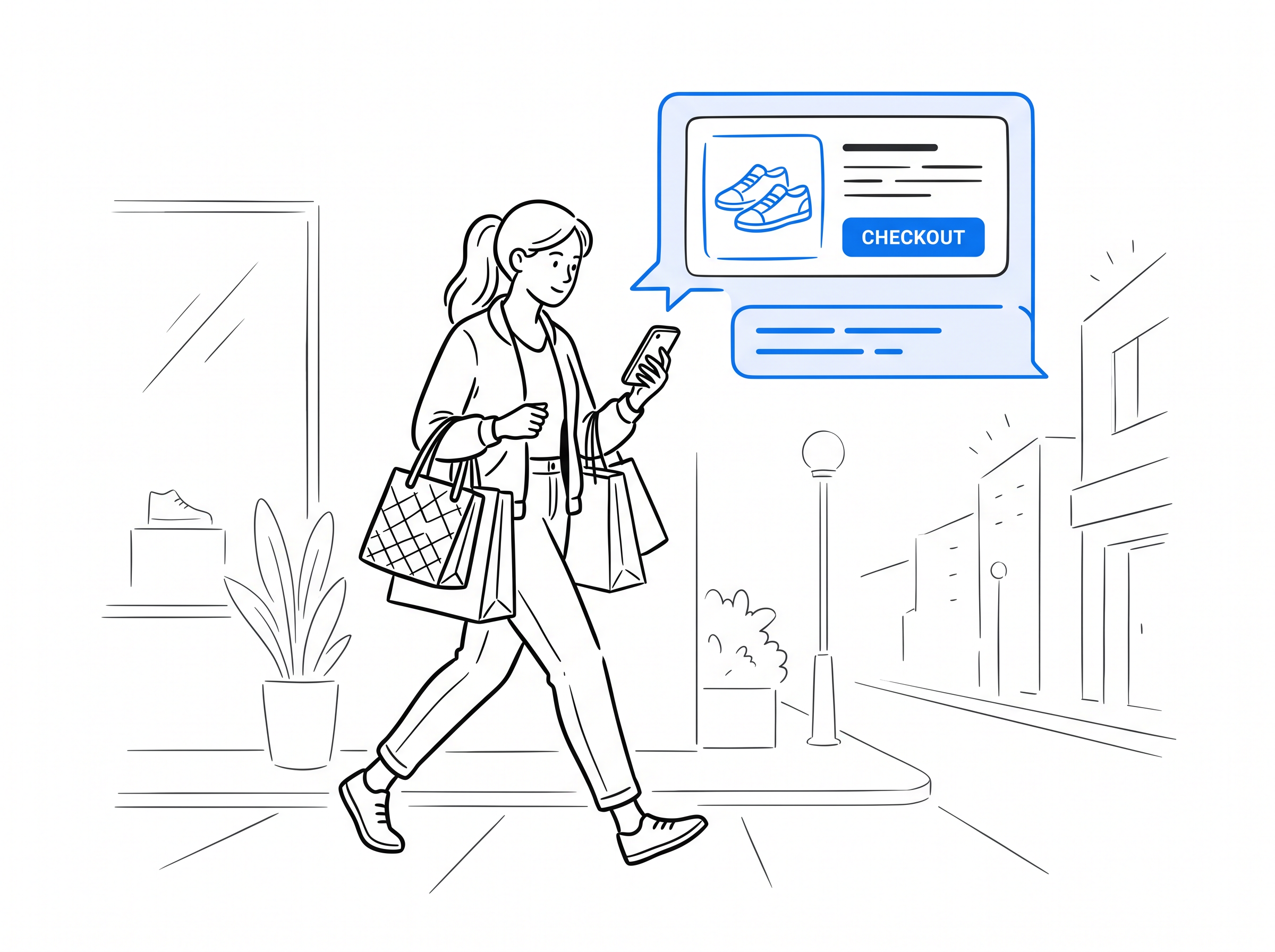
Manual Selling vs. AI for Ecommerce Sales
| Manual / Static Approach | AI for Ecommerce Sales | |
|---|---|---|
| Product guidance | FAQ page or live chat queue, business hours only | AI Stylist / Sales Agent answers instantly, 24/7, across regions |
| Cross-sell logic | Static "frequently bought together" block | Recommends complete looks or bundles based on the live conversation |
| Scaling with traffic | Requires proportional headcount growth | Same AI handles one conversation or ten thousand |
| Measuring impact | "Feels like it's working" | AOV and conversion tracked against a real pre/post baseline |
| Documented lift | Flat, or declining as catalog grows | 20% AOV / 10% revenue (Victoria Beckham); 3x conversion / 38% AOV / 11.4% of revenue (Tatcha) |
A 4-Phase Framework for Deploying AI for Ecommerce Sales
- Diagnose the moment shoppers actually stall. Pull session recordings or heatmaps on your top product pages. If hesitation clusters around fit, ingredients, or "which one is right for me," that is a guided-selling gap an AI sales agent closes — not a discount problem.
- Pilot on one high-traffic category, not the whole catalog. Both Victoria Beckham and Tatcha scoped their AI shopping assistant to a specific guided-selling use case (styling, ritual-building) before expanding it storewide.
- Model the payoff before you scale spend. Take your pilot's AOV or conversion delta and run it through Concat Pro's Growth Rate Calculator against your current baseline, so leadership sees a dollar figure, not a percentage in a slide.
- Promote the win, then reinvest. Once the pilot has a real number attached, use Concat Pro's Ad Agent to turn it into campaign creative, and check Concat Pro's Rank for creators in your category who can put the new experience in front of a qualified audience.
Common Mistakes in AI for Ecommerce Sales Rollouts
- Launching a generic chatbot instead of a guided-selling agent. A bot that only answers shipping FAQs will not move AOV. The lift in both case studies came from proactive product and styling recommendations, not ticket deflection.
- Deploying storewide on day one. Without a scoped pilot and a control period, you cannot tell whether a lift came from the AI agent or from seasonality.
- Skipping the baseline. If you do not know your pre-AI AOV and conversion rate cold, you cannot prove the after-number means anything.
- Treating it as a one-time integration. The AI needs live access to inventory, pricing, and the product catalog — a stale knowledge base quietly erodes the trust that drives conversion.
- Never turning the win into a growth loop. A 20% AOV lift is a marketing asset. Brands that stop at "it works internally" leave the campaign, and the next wave of customers it could attract, on the table.
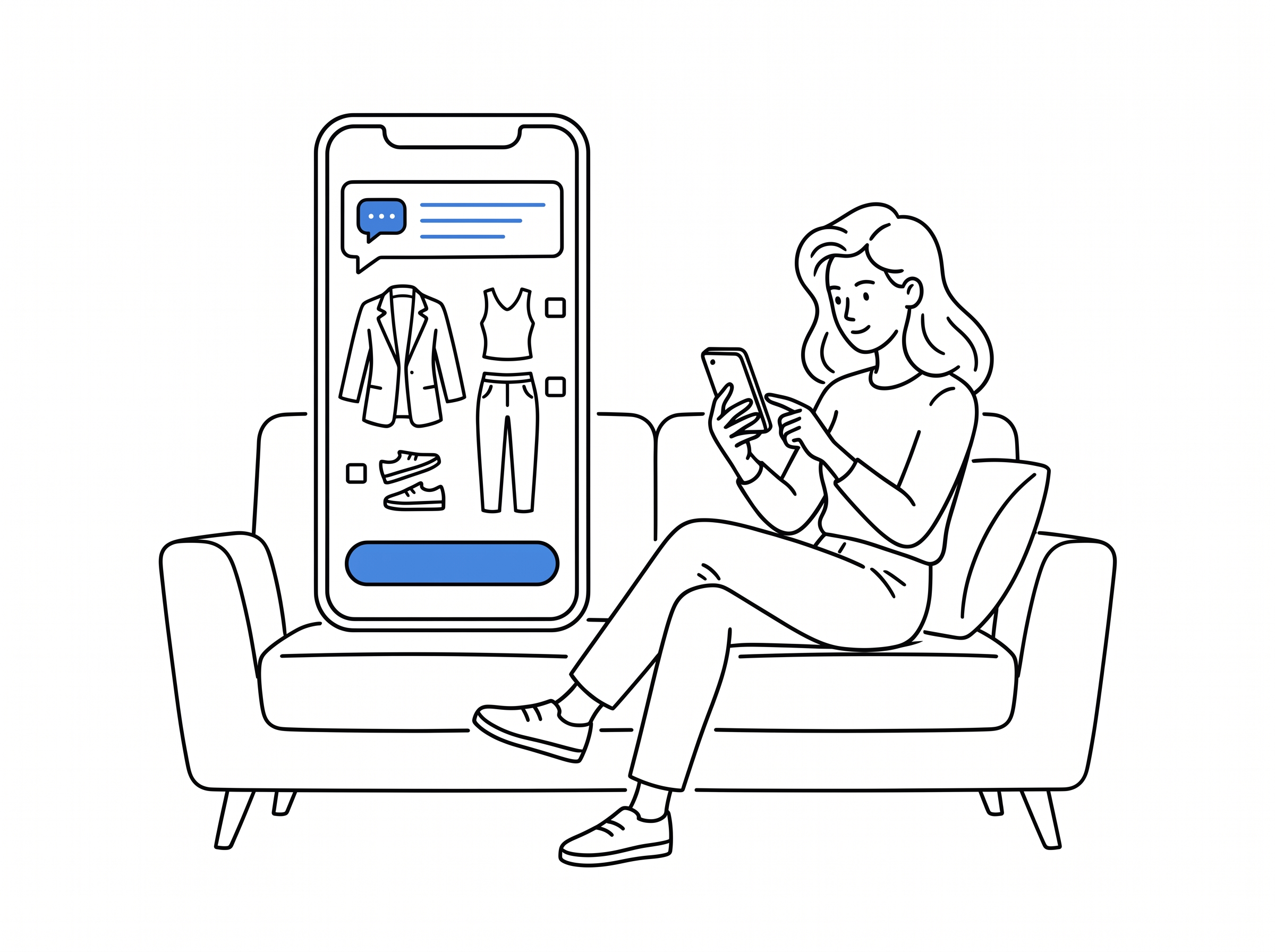
Watch: How AI Agents Are Changing Ecommerce Sales
Where to Go Next
AI for ecommerce sales works best alongside the rest of the AI-driven growth stack, not instead of it. If your bottleneck is earlier in the funnel, AI lead generation for ecommerce covers how quizzes and chatbots turn cold traffic into owned contacts before they ever reach a product page. If shoppers are converting but your support queue can't keep pace with the same volume, AI customer service for ecommerce breaks down how AI ticket automation absorbs volume growth at flat headcount. And if the gap is that every shopper sees the same homepage regardless of behavior, AI personalization in ecommerce walks through the three levers that actually move revenue.
The Bottom Line
Victoria Beckham's 20% AOV lift and Tatcha's 3x conversion rate did not come from a chatbot that answers FAQs faster. They came from an AI agent running the same guided-selling conversation a top human associate would run, available to every shopper, every time zone, every day. Diagnose where your own guided-selling gap sits, pilot narrow, model the payoff before you scale spend, and treat the result as a growth asset instead of a line item you forget to revisit.
References
- Concat Pro — Growth Rate Calculator, Rank, and Ad Agent
- Alhena AI — Victoria Beckham Case Study: 20% AOV Increase, 10% Revenue Lift
- Alhena AI — Tatcha Case Study: 3x Conversion Rate, 38% AOV Uplift, 11.4% of Site Revenue