A catalog of 2,000 SKUs needs 2,000 distinct, search-ready descriptions. Most teams ship 200 and copy-paste the rest, which is exactly why duplicate-content warnings and flat category-page traffic show up six months later. An AI product description generator for ecommerce closes that gap, but only if you pair it with a system that keeps the output on-brand and measurable. Here is the workflow, the real numbers behind it, and where it breaks.
How Concat Pro Fits Into Your AI Product Description Generator for Ecommerce Workflow
Concat Pro is not another description generator competing with the tool your team already uses. It is the layer that makes AI-written product copy actually perform once it is live. Three pieces do the work, and all three are shipped, documented product features today.
- SEO/GEO Agent first learns the product, audience, market, and keyword landscape, then generates platform-adapted, SEO- and AI-answer-ready content and publishes it in one click. Point that discipline at the category and buying-guide pages around your product catalog — the comparison posts and "how to choose" content that AI answer engines cite when someone asks "best running shoes for flat feet" — and you get the SEO/GEO Agent's Competitor SEO Intelligence Report and AI Search Visibility Report to check whether those pages are actually being surfaced.
- Rank surfaces top influencers and channels by platform and niche. Once a product line has rewritten descriptions, use Rank to find creators who can talk about the new listings — turning a copy refresh into a launch moment instead of a quiet CMS update.
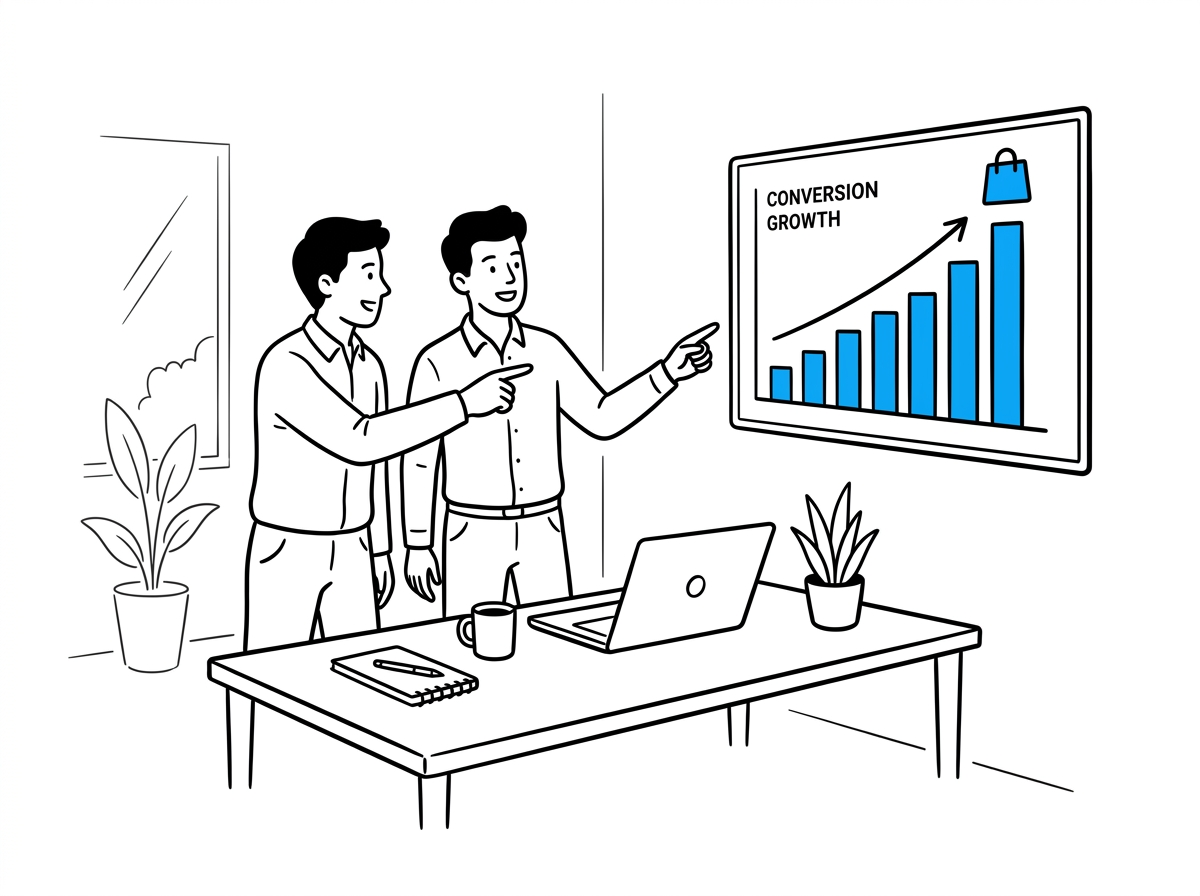
- Growth Rate Calculator turns "conversion felt better after the rewrite" into a defensible number: (End − Start) / Start × 100 for the weeks before and after, benchmarked against the on-page 10–20%/yr ecommerce revenue growth band.
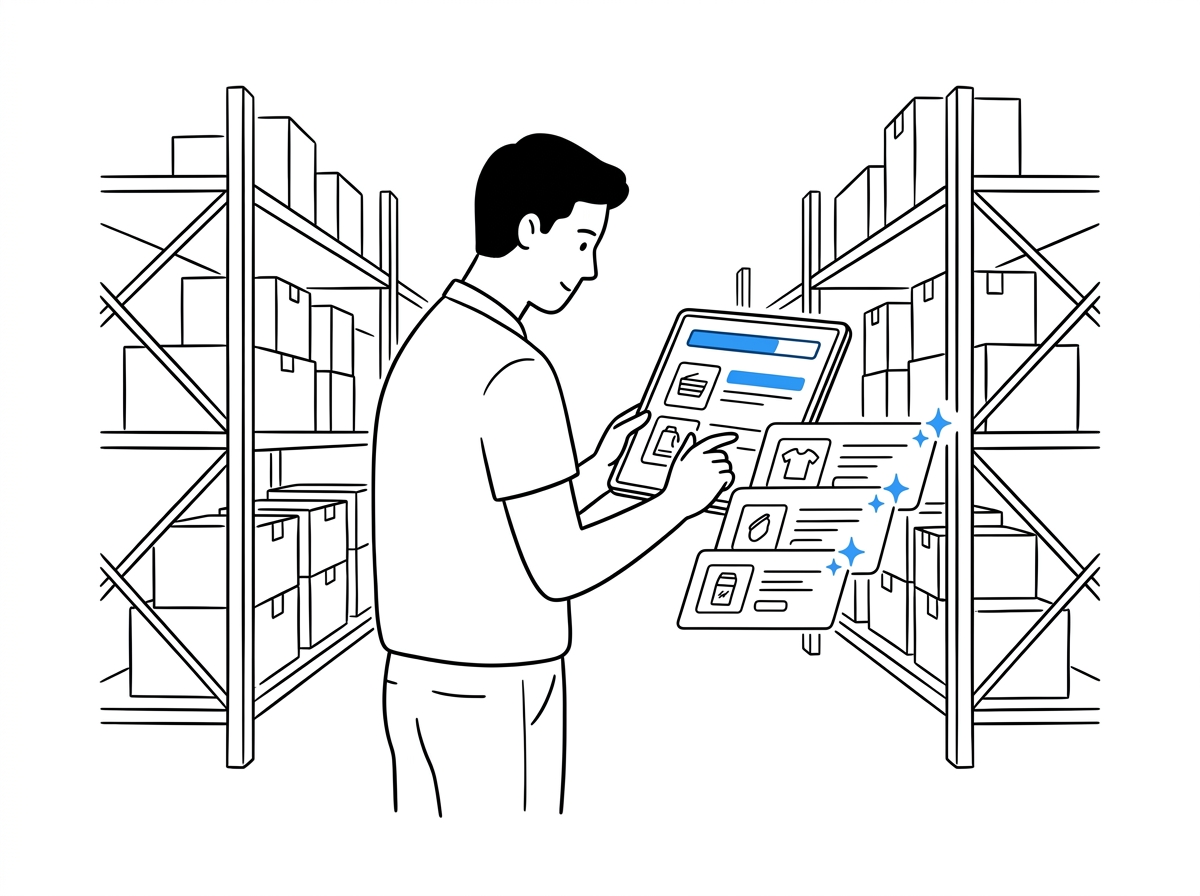
The Three-Phase Rollout
| Phase | What happens | Owner | Time (1,000 SKUs) |
|---|---|---|---|
| 1. Feed the model | Pull specs, materials, keywords, and brand tone rules into the generator's prompt or bulk template | Ops/Merchandising | 1–2 days |
| 2. Generate and QA | Bulk-generate, spot-check accuracy against source specs, flag anything hallucinated | Copy/QA | 2–4 days |
| 3. Publish and measure | Push live, track rankings and conversion by category, feed winners back into the prompt library | Growth | Ongoing |

Manual vs. AI: What Actually Changes
| Manual writing | AI product description generator | |
|---|---|---|
| 1,000 SKUs | Weeks of writer time | Hours to a few days with QA |
| Consistency across catalog | Drifts as writers rotate | Enforced by template/prompt rules |
| Cost per SKU at scale | Rises with catalog size | Flattens after setup |
| SEO duplicate-content risk | High if descriptions get copied from suppliers | Low — each listing is generated fresh |
| Brand voice risk | Low if writers are trained | Real — needs a QA pass and Brand Soul input |
Common Mistakes
- Skipping the QA pass. Bulk-generated copy can invent specs the product doesn't have. Every description needs a human check against the source spec sheet before it ships.
- Feeding the model nothing. The less product data and keyword direction you give the generator, the more generic the output — and generic descriptions rank worse and convert worse.
- Treating description rewrites as a one-time project. Catalogs change. Descriptions need the same content-ops cadence as blog content, not a single sprint.
- Never measuring the before/after. Without a growth-rate calculation on the specific SKUs touched, you can't prove the rewrite mattered — or catch a rewrite that quietly hurt conversion.
What the Data Actually Shows
Adidas gave Jasper's AI product description generator 150 shoe models and came away with 7,500 product descriptions written in 24 hours — a 3x increase in content production versus their prior manual process, according to Jasper's own case study of the engagement. That is the enterprise end of the range.

Mid-size catalog operators see similar mechanics play out at a smaller scale. Describely's documented customer results include Target Australia generating 1,000+ complete product descriptions every week at 98% first-generation accuracy, and GoSparky scaling from 4,500 to 30,000 live product listings using the same bulk-generation-plus-enrichment workflow. A third Describely customer, GiftUniverse, processed 78 products in two hours — work that had previously taken the team nearly two weeks. The pattern across every case: the generator removes the writing bottleneck, and a review layer catches what the model gets wrong before it goes live.
None of these brands treated the generator as a one-and-done project. Target Australia's 1,000-per-week cadence only works because someone owns the QA loop every week, not just at launch. That is the part teams underbudget for — the tool solves the writing-speed problem, but someone still has to own accuracy, tone, and the feedback loop that makes each batch better than the last.
Concat Pro doesn't build or replace that generator — it applies the same understand-audience-then-generate-then-publish discipline to the SEO/GEO content that surrounds your catalog, which is where a lot of newly-AI-written product pages fail to actually get found. For the personalization and merchandising layers that sit next to product copy, see AI Personalization in Ecommerce and AI Product Recommendations for Ecommerce. If your real bottleneck is turning better copy into more checkouts, AI Conversion Optimization for Ecommerce covers the funnel side.
A Launch Checklist
- Brand voice rules and banned phrases documented before the first bulk run
- Product spec sheet cross-checked against a sample of generated output
- Target keywords assigned per category, not copy-pasted across SKUs
- Growth Rate Calculator baseline captured before publishing
- Rank shortlist of creators ready if the rewrite doubles as a launch
- Re-check cadence scheduled (quarterly, or on every catalog refresh)
An AI product description generator for ecommerce buys back the weeks a manual rewrite would cost. What decides whether that time turns into revenue is whether the copy stays accurate to the product, on-brand, and gets audited against real conversion numbers afterward — not whether the tool can generate fast.
References
- Concat Pro — SEO/GEO Agent, Rank, Growth Rate Calculator
- Jasper — Adidas case study: 7,500 product descriptions in 24 hours
- Describely — Target Australia and GoSparky AI product description case studies