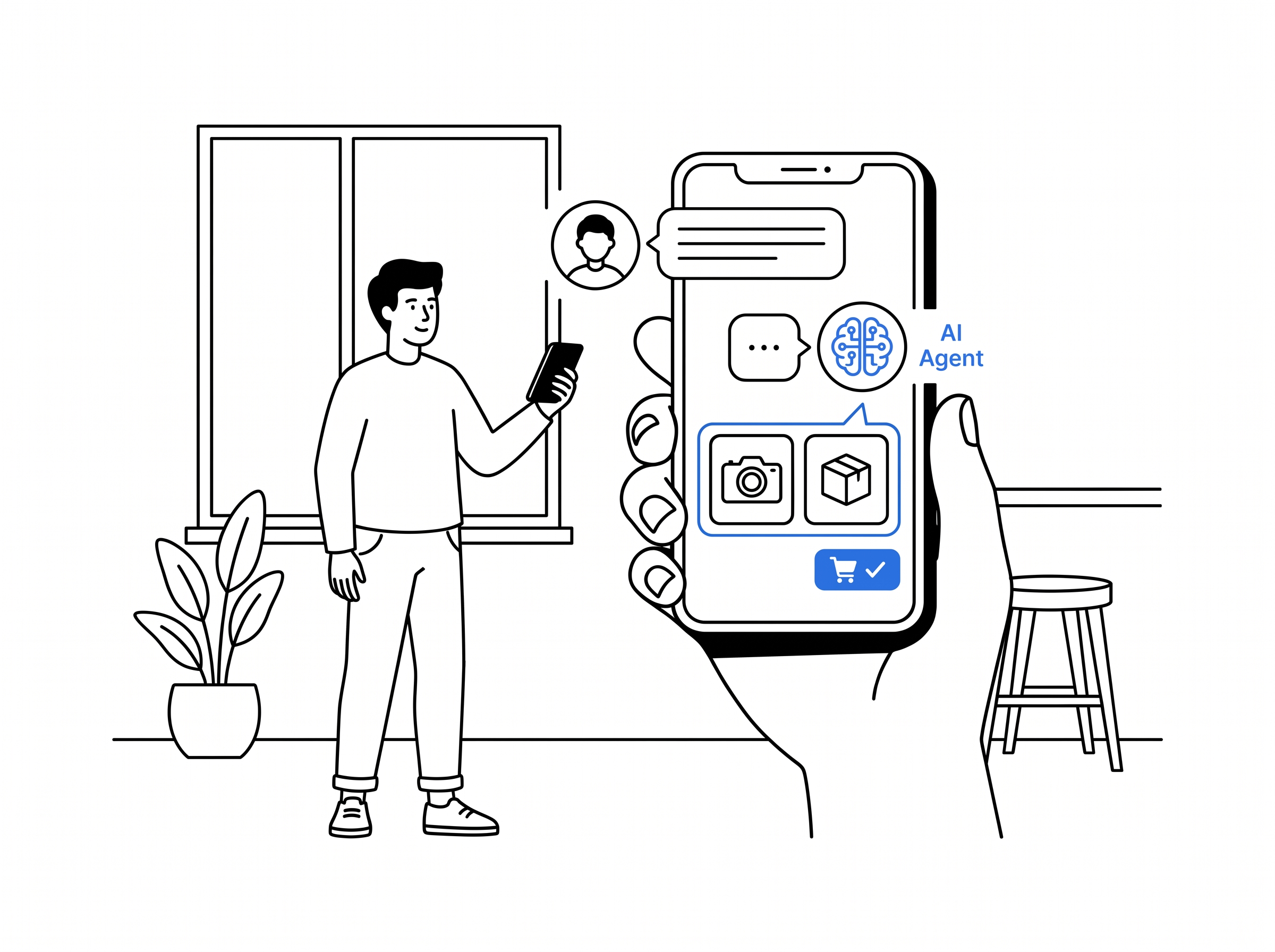
A shopper lands on a product page at 11 p.m., unsure whether a $400 camera kit will work with the tripod they already own. A search bar can't answer that. A support ticket takes a day. An AI sales agent trained on the full catalog answers in seconds, recommends the compatible mount, and hands the shopper a cart link. That's the shift "AI sales agents for ecommerce" describes: not a chatbot that deflects tickets, but software that runs the sales conversation itself, in real time, on every product page.
The phrase has almost no tracked search volume yet — it's a coined term riding the much larger wave of "AI agents" and "conversational commerce" interest, not an established SEO keyword. That's worth saying plainly instead of inventing a number: this is an emerging category, and the retailers moving early are the ones generating the case data below.
Where Concat Pro Fits Into AI Sales Agents for Ecommerce
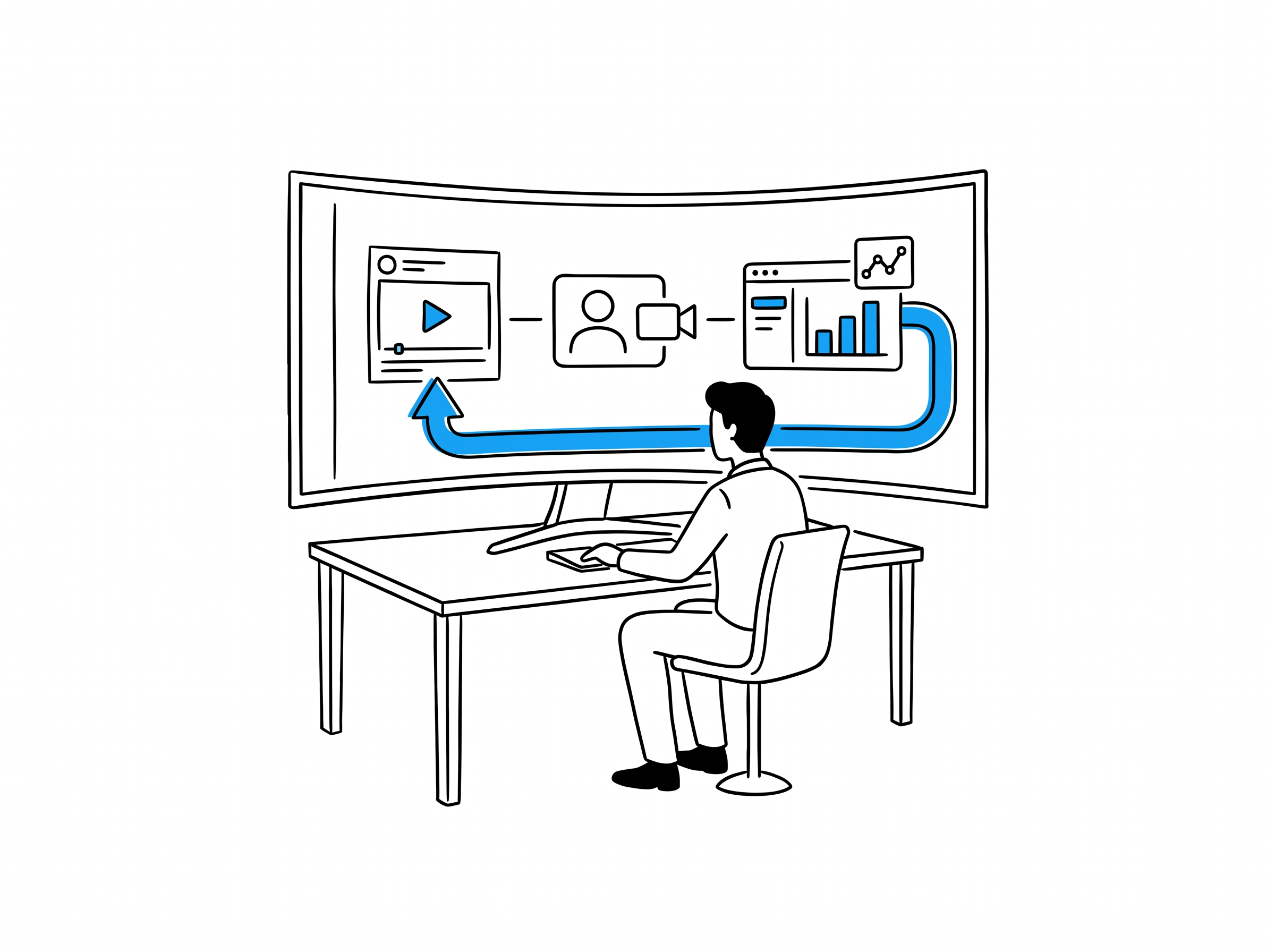
Concat Pro doesn't build the on-site chat agent itself, but it runs the growth loop around one. Three agents map directly onto the workflow:
- Ad Agent generates and publishes video and image ad creatives across platforms from your brand identity, audience insights, and campaign goals, then supports A/B and multivariate testing. That means the traffic you drive into the store is built from the same audience segments your sales agent will end up talking to — not a mismatched cold audience.
- Creator Agent discovers and evaluates creators matched to your product, audience, and budget, and automates outreach and partnership-pipeline management. Comparison videos and honest reviews it surfaces become exactly the kind of trust content a well-trained sales agent can reference when a shopper asks "is this actually good for X."
- Data Agent unifies performance data across content, ads, and campaigns into one dashboard and feeds validated signals back into your other agents — closing the loop on what a sales agent actually converts, not just what it talks about.
A concrete example: a specialty retailer with a bundle-heavy catalog uses Creator Agent to source comparison-video creators, Ad Agent to turn that footage into paid variants, and once an AI sales agent goes live on-site, Data Agent tracks whether the resulting assisted orders are actually more profitable — checked against real cost structure with the Margin Calculator — not just higher in AOV. Creator sourcing itself starts with Rank to shortlist channels already trusted in that niche.
How AI Sales Agents for Ecommerce Actually Work
The mechanics are consistent across implementations:
- Catalog training — the agent ingests product specs, compatibility data, sizing charts, and policies so it can answer with facts, not guesses.
- Real-time Q&A — shoppers ask natural-language questions about fit, compatibility, or use case; the agent answers inline on the page.
- Bundling and upsell logic — based on what's in the cart, the agent surfaces the accessory or plan that actually fits, rather than a generic "customers also bought."
- Cart handoff — the agent hands off a pre-filled cart or checkout link the moment intent is confirmed.
- Human escalation — anything outside the agent's confidence threshold routes to a person, so the agent never guesses on a refund or warranty edge case.
Manual Sales Support vs. AI Sales Agent
| Manual (Live Chat / Email) | AI Sales Agent | |
|---|---|---|
| Response time | Minutes to hours | Seconds, 24/7 |
| Coverage | Business hours, limited staff | Every product page, every visitor |
| Consistency | Varies by rep | Same catalog facts every time |
| Upsell logic | Ad hoc, rep-dependent | Rule-based, applied every conversation |
| Cost to scale | Linear with headcount | Marginal cost near zero past setup |
Real Results: Two Retailers Turned Conversations Into Sales
Videoguys, an Australian specialist camera, video, and audio retailer, deployed a catalog-trained AI sales and support agent across its store. Over a 12-month run (July 2025–July 2026), the agent closed a 32.41% assisted conversion rate — roughly one in three conversations became a sale — and drove a 113% AOV uplift on AI-assisted orders versus the store average.
TWL, an Australian activewear and fitness retailer, put an AI sales agent ("Coach Lou") on its landing page and every product page. In six months it handled over 2,000 conversations, converted at 45.37%, and lifted AOV by 35.68% on assisted purchases compared to non-assisted ones.
Both cases point to the same pattern: the agent isn't just answering questions, it's actively closing higher-value carts because it can reason across the full catalog in the moment a shopper is deciding.
This walkthrough shows the practical setup side — training a Shopify-connected agent on live catalog and order data — which is the same groundwork behind both case studies above.
Common Mistakes When Deploying AI Sales Agents for Ecommerce
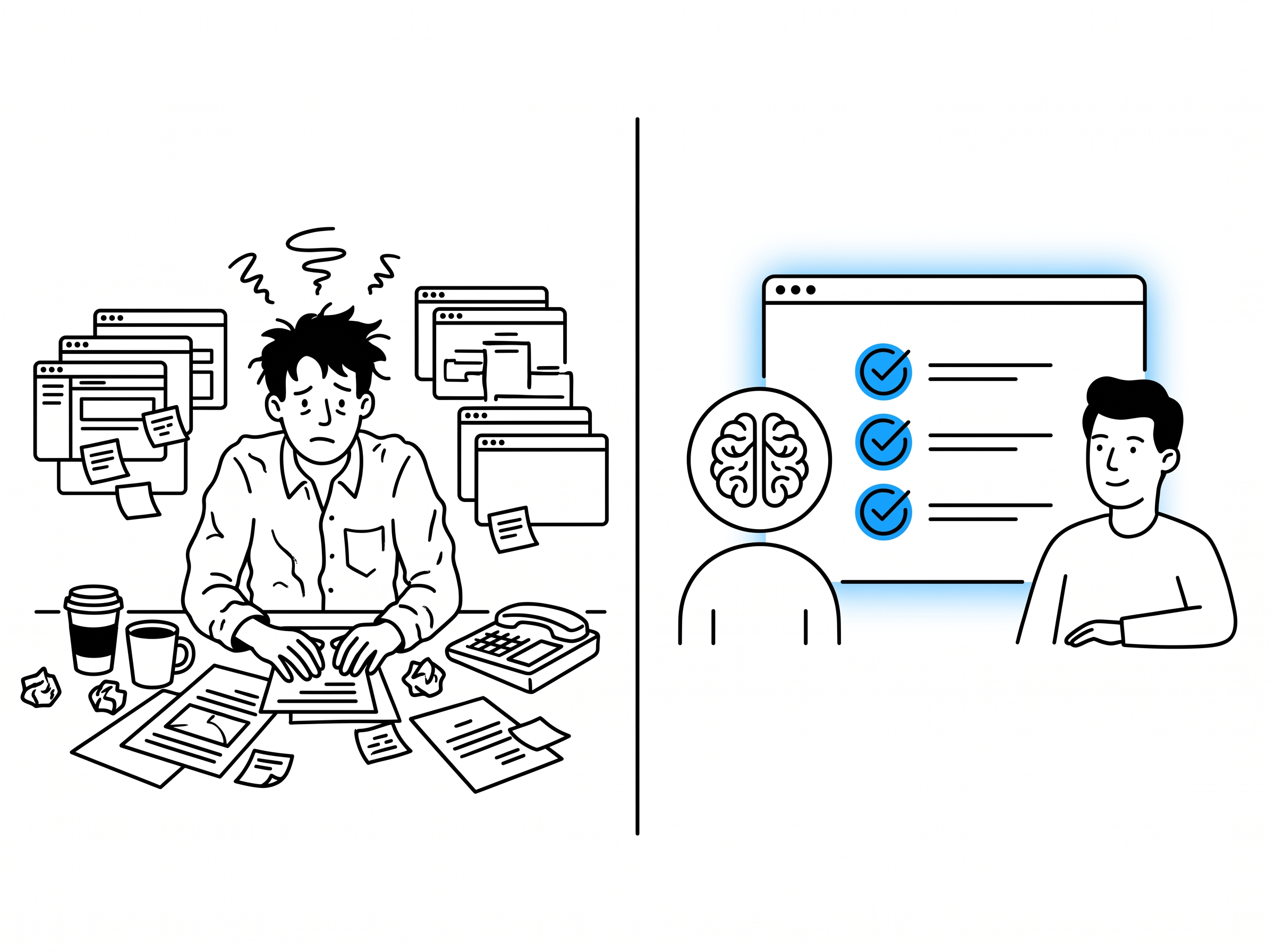
- Launching on dirty catalog data. If specs, sizing, or stock data are wrong, the agent repeats the error confidently — worse than no answer at all.
- Skipping the human escalation path. Refunds, warranty claims, and edge cases need a person; routing everything through the bot erodes trust fast.
- Judging success by conversion alone. A higher assisted conversion rate means little if the AOV lift doesn't clear margin — check it before declaring a win.
- One tone for every brand voice. An agent that sounds generic undercuts the brand trust that got the shopper to engage in the first place.
- No feedback loop. Treating the sales agent as a closed system wastes the conversation data it generates — that data should inform your next ad creative and creator brief, not sit unused.
Next Steps
Before wiring up an AI sales agent, get the growth loop around it right. Use Creator Agent to source the comparison content shoppers actually trust, and Ad Agent to put it in front of the right audience — the playbook for that pairing is covered in more depth in AI Advertising for Ecommerce and AI Social Media Marketing for Ecommerce. If you're focused on the discovery and AI-search side of the equation rather than on-site selling, AI Agents for Ecommerce covers that adjacent angle. Once a sales agent is live, run the resulting AOV numbers through the Margin Calculator before scaling spend against it.