Most "vibe coding" advice for beginners is about building your own app. This is not that. If you want to get paid by building for other people — a vibe business service — the first week looks nothing like a solo builder's roadmap. You need a narrow offer, a price, and a repeatable process before you touch a client project, or you'll spend three weeks impressing yourself and zero dollars impressing anyone else.
Starting a Vibe Business Service for Beginners: The First Two Checks
Before you post "I build apps with AI" anywhere, run two 15-minute checks. Skipping them is the single biggest reason beginner service offers go nowhere.
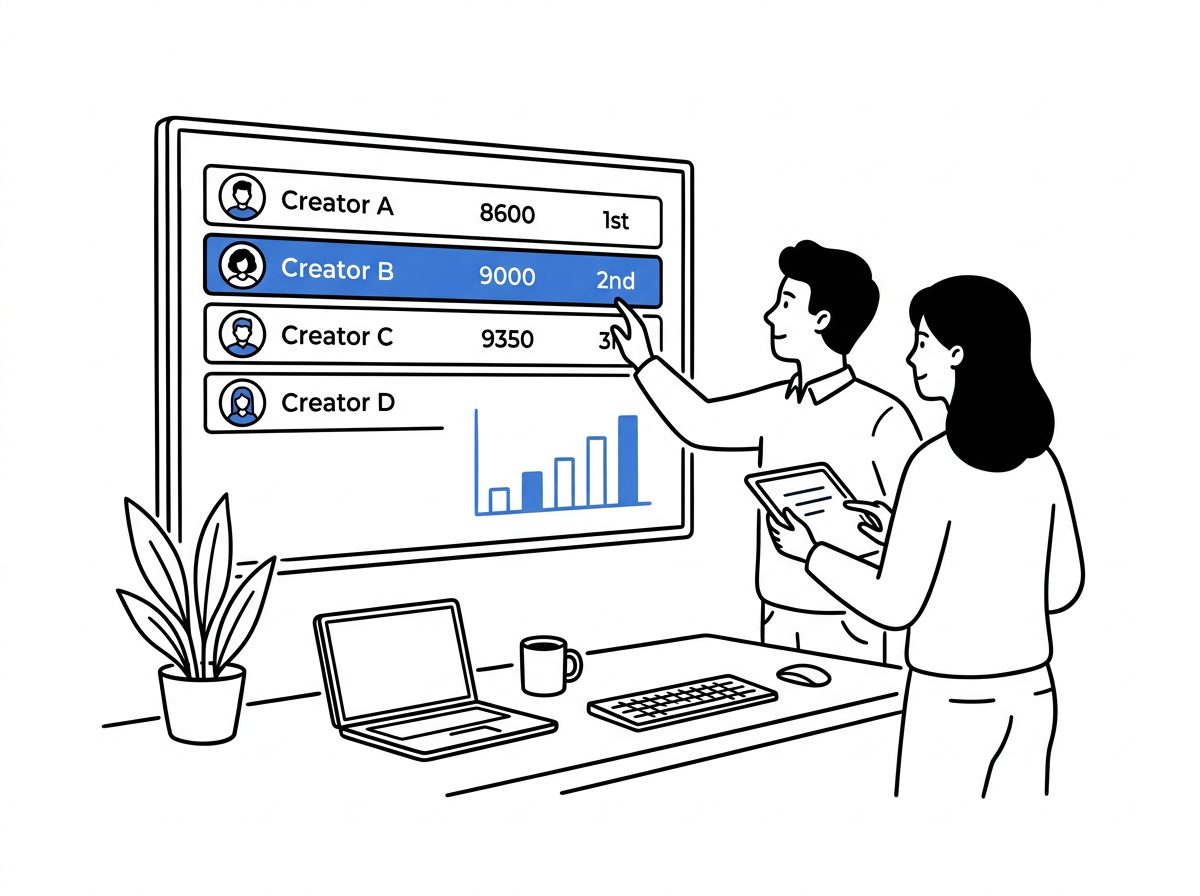
Check who else is already selling this. If your planned service is "AI apps for real estate agents" or "AI dashboards for e-commerce brands," Rank gives you a fast, curated read on who already has an audience in that space — leaderboards of top creators and channels by platform and niche. If three well-followed accounts already own your exact angle, you don't need to abandon the idea, but you do need to narrow it further before you pitch anyone.
Price the first engagement with math, not a guess. Beginners either lowball their first client to "get experience" or pull a number out of thin air. Concat Pro's Growth Rate Calculator takes a start value, an end value, and a time period and returns a real growth rate instead of a feeling — useful for modeling what happens to your revenue as you go from one client on a $200 project to three clients on a $99/month retainer. Run the numbers before you quote a price, not after the client already said yes.
A Beginner-Replicable System: The 21-Day MVP Approach
Prajwal Tomar didn't start with an app — he started with a process. Through his agency Ignyt Labs and his "AI MVP Builders" community, he built what he calls the 21-Day MVP System: a fixed pipeline that runs from Dribbble for design inspiration, into Lovable for a quick prototype, into Cursor and Claude Code for the real build, with CodeRabbit doing the code review before anything ships to a client. He treats the AI "like a super smart intern" — load the context, review before shipping, never accept the first draft as final. That structure is what turned one-off client builds into a repeatable business: his agency has shipped 45-plus MVPs for founders using the same loop every time, and he now runs the agency alongside several other AI-driven ventures at roughly $20,000 in monthly recurring revenue.
The lesson for a beginner isn't "go build 45 apps." It's that a fixed, written-down process — same tools, same review step, same delivery checklist every time — is what makes a first client repeatable into a second and third one, instead of every project starting from a blank page.
What a First Offer Actually Looks Like
Structure beats ambition here. A widely cited beginner playbook for AI-service side hustles lays out concrete, narrow packages rather than vague "AI consulting": a scoped "AI customer support setup" for around $200 as a one-time project, or an "automated social posting system" for about $150, then converting the same client onto an ongoing $99/month retainer for upkeep once the initial build is live. None of these require custom infrastructure — they're built on top of tools the client already half-understands, wrapped into a productized package with a fixed price attached. That's the beginner move: sell a specific, bounded outcome, not "AI stuff," then use the retainer to turn a one-off sale into recurring revenue.
Manual Freelancing vs. a Vibe-Coded Service Offer
| Step | Traditional freelance dev | Vibe business service |
|---|---|---|
| Niche research | Days of cold browsing competitor sites | 15 minutes scanning Rank |
| First build | 2-4 weeks of custom development | Working prototype in hours via Lovable/Cursor |
| Pricing | Guessed hourly rate | Modeled against real growth math with the Growth Rate Calculator |
| Delivery | Ad hoc, different every project | Fixed checklist (design → build → review → ship) |
Common Mistakes Beginners Make
- Selling "AI stuff" instead of one outcome. "I build custom GPTs for real estate agents" beats "I do AI consulting" every time.
- Skipping the review step. Shipping the AI's first draft straight to a client is how buttons that don't work end up in production.
- Pricing without a benchmark. Guessing a rate, then panicking when a client pushes back, is avoidable with 10 minutes of real math.
- Rebuilding your process every time. If your second client's delivery doesn't look like your first, you don't have a service business yet — you have a series of one-off favors.
Where This Goes Next
Once you've landed and delivered a first engagement, the questions change: how do you price beyond the first client, and how do you keep an already-live service from breaking under real users? Our beginner playbook covers the earliest non-technical starting steps if you haven't picked a tool yet, our pricing comparison breaks down what the underlying tools actually cost at solo scale, and once you're past the demo stage, how to run a vibe business service without breaking it is the next read.
For a broader view of realistic income paths — including the "micro niche online services" model that maps directly onto a first AI service offer — Shane Hummus's "7 REALISTIC Claude AI Side Hustles For People With Full-Time Jobs" is worth the watch: 325,000-plus views and a clear breakdown of why a narrow, specific offer beats a broad one.
Starting a vibe business service isn't about learning to code faster than everyone else. It's a repeatable delivery process, a price backed by real math, and one narrow offer you can explain in a single sentence.
References
- Concat Pro — Rank and Growth Rate Calculator.
- John Ellison, "The Vibe Coding Wave Is Here: 5 Builders Who Turned Vibe Coding Into Serious Money" — Prajwal Tomar / Ignyt Labs 21-Day MVP System case study.
- Shane Hummus, "7 REALISTIC Claude AI Side Hustles For People With Full-Time Jobs", YouTube, published July 2026, 325,000+ views.